TAG
#designer-study
0 reviews · 63 essays
Related essays
Inside Oskar van Deventer's Philosophy — Looking Nice Can Just Be an Accident
"They require the overcoming of difficulty. And some of them happen to look nice as well." The Dutch engineer behind 800-plus mechanical puzzles refuses to call himself an artist. Including the design he abandoned as impossible to manufacture — and that reached shelves eight years later.
Inside Cliff Johnson's Philosophy — Not One Piece That Doesn't Belong
"A puzzle begins with a 'huh?' and ends with an 'aha!'" Cliff Johnson, who built The Fool's Errand in 1987, refused to plant a single red herring — and spent 25 years on the sequel. A reading of that vow, in his own words.
Inside Brian Moriarty's Philosophy — A Game Author Who Says Games Aren't Art
"Art seeks to lead you to an inevitable conclusion, not a smorgasbord of choices." Brian Moriarty, author of Loom and Trinity, wrote that in his 2011 GDC lecture and concluded that his own medium cannot be art. Reading three of his lectures and three interviews: his philosophy, his obsessions, the failures he admits, his dilemmas and his models.
Inside Gunpei Yokoi's Philosophy — Let the Viewer Fill In the Rest
"Whether a game is interesting or not doesn't depend on whether it's color or b&w." Gunpei Yokoi's design philosophy nearly fits in that one sentence. Reading three interviews from 1996 and 1997 with the engineer who shipped a monochrome Game Boy — and, in 1980, a mechanical puzzle called Ten Billion — this piece lines up his philosophy, his obsessions, the failure he admitted in public, his dilemmas, and his yardsticks.
Inside Eiji Aonuma's Philosophy — Refusing to Let a Puzzle Have One Answer
"There are many answers to a single problem, and all of them can potentially be correct." That is Eiji Aonuma in 2023, after more than 25 years leading The Legend of Zelda. Yet in 2015 the same man was telling his staff never to make the game easier. Reading across six of his own interviews for his philosophy, his obsessions, the failures he has admitted in public, his dilemmas and his influences.
Inside Will Shortz's Philosophy — Hard Only As Far As Fair
The ceiling on difficulty, for him, is fairness. Will Shortz, crossword editor of The New York Times, has published a puzzle almost every day for more than thirty years. Reading across ten of his own interviews, lectures and broadcasts for his philosophy, his obsessions, the failures he has admitted in public, his dilemmas and his influences.
Inside Chris Crawford's Philosophy — Drawing Puzzles Outside the Line, Then Counting His Own Defeats
"Puzzles are challenges with no purposeful opponents." The shortest definition of a puzzle was written by Chris Crawford, the man who almost single-handedly started the field of game design writing. That definition placed puzzles outside of games — and forty years later he wrote, in his own words, that he had failed. Reading across his journal, his laws, his memoirs, his design diary and his talks for his philosophy, obsessions, failures, dilemmas and influences.
Inside Thomas Grip's Philosophy — Rewriting Puzzles from Obstacle to "I Did That"
A horror developer wrote a seven-part series about puzzles on his own blog. He argued that focusing on fun makes design fail, that trial and error will doom games, and he named his own failed puzzles out loud. Reading across his blog and interviews for Thomas Grip's philosophy, obsessions, failures, dilemmas and influences.
Inside Martin Gardner's Philosophy — Turning What He Didn't Know Into Care for the Reader
A philosophy graduate with no mathematics degree wrote a puzzle column for 25 years and carried everything from pentominoes to the Game of Life out into the world. He kept saying he was "strictly a journalist." Reading across his interviews and autobiography for Martin Gardner's philosophy, obsessions, regrets, dilemmas and influences.
Inside Mark Brown's Philosophy — He Saw Every Criticism Coming, and Shipped Anyway
A critic who had spent a decade analysing other people's game design finally made a puzzle game of his own. When the complaints arrived, he said he had seen all of them coming. Reading six of his own devlogs for his philosophy, obsessions, failures, dilemmas and influences.
Inside Dave Grossman's Philosophy — Let the Player Be the Clever One
"Your job is not to make yourself feel clever, it's to make the player feel clever." Dave Grossman has said it for thirty years — and rather than leave it a slogan, he sat his mother-in-law down with his own game and published every place she got stuck. A reading of his philosophy, obsessions, failures, dilemmas and influences across seven sources.
Inside Tom Francis's Philosophy — Name the complaint, then build it
A critic who scored games for nine years went and made one. In his own words, his process is to play a game, name what he wishes were different, and build that. Across fourteen posts, talks and interviews, I read his philosophy, obsessions, failures, dilemmas and influences.
Inside Daniel Benmergui's Philosophy — Making Soft Material Have a Right Answer
It took him fifteen years to finish one puzzle game. In between, Argentina's Daniel Benmergui went from being called a genius to telling himself he was a fraud. Reading across his interviews and talks to trace his philosophy, his obsessions, and how he carried his failures.
Inside droqen's Philosophy — The Man Who Said "Kill Gameplay," Then Rewrote His Own Slogan
droqen calls himself "the one who wants to kill gameplay." In the summer of 2025 he rewrote that slogan himself. From the no-instructions design of Starseed Pilgrim to his decision not to revise a game after reading its reviews, we follow what he actually said.
Inside Tim Schafer's Philosophy — Make Being Stuck the Fun Part
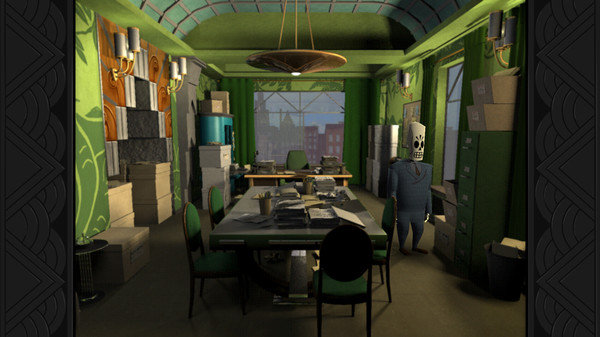
A study of Tim Schafer, built only from his own interviews and the design document he published himself. He calls the point of an adventure game "happy confusion" and says you have to make the stuckedness entertaining. The same man graded his own Grim Fandango puzzles as "mean, even" ten years later, and twenty years later shipped an invincibility toggle. Laying two decades of his statements side by side to find what he is actually protecting.
Inside Keita Takahashi's Philosophy — The Mechanic of Adding No Mechanics
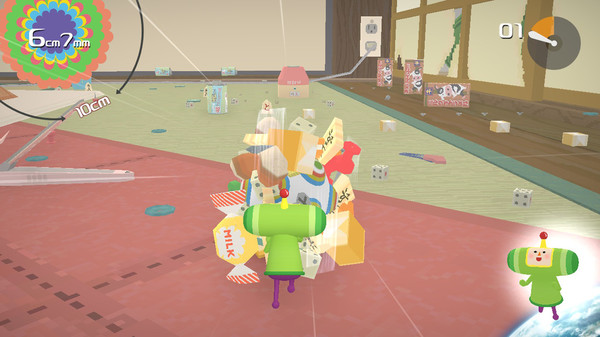
A study of Keita Takahashi, the creator of Katamari Damacy, built only from his own words. In late 2025 he said himself that his new game to a T "didn't sell well," and moved his family back to Japan. Yet back in 2009 he was already saying he felt unsuited to the games industry. This is a reading of why he kept making things anyway, assembled by laying twenty years of his statements side by side.
Inside Toru Iwatani's Philosophy — Build a Maze, Then Hide That It Is One
A study of Toru Iwatani, the designer who planned Pac-Man (1980), built only from his own lectures and interviews. He made a maze game and then drew the maze walls as thin outlines so players would not notice it was a maze. He says to think by subtraction, he gave the same account of difficulty pacing in 1986 and in 2015, and in 2011 he scolded the industry for a flood of very simple games. A man who built the outer limit of simplicity criticising simplicity: this is an attempt to line that apparent contradiction up and read it.
Inside Simon Flesser's Philosophy — Move the Difficulty Out of the Controls and Into the Puzzle
A study of Simon Flesser of Simogo — the studio behind DEVICE 6 and Lorelei and the Laser Eyes — built only from his own interviews and the studio's own words. He says he wanted anyone who had never held a controller to be able to play, and in the same breath calls his puzzles very difficult. This is a reading of where he moved the difficulty to, laid out by putting his 2013 statements next to his 2024 ones.
Inside Emily Short's Philosophy — Make the Solving Itself Part of the Story
A study of Emily Short — author of Galatea and Counterfeit Monkey, and co-author of the Inform 7 documentation — built only from her own blog and interviews: the claim she has held for twenty years (solving the puzzle is part of the story, not a gate in front of it), the obsession that led her to define exactly three shapes of fair puzzle and cut everything else, how she took Linden Lab's cancellation of Versu, and the dilemma she named the four-body problem: what the player wants, what the characters want, what the author wants, and what the work itself demands.
Inside Nicky Case's Philosophy — Don't Hand Over Answers, Make People Love the Question
A study of Nicky Case, maker of Parable of the Polygons and The Evolution of Trust, built only from their own blog posts and talks: the claim they have not moved from in a decade (don't hand over the answer, make people love the question), the obsession with turning explanation into a puzzle, the failure they documented when playtesters of We Become What We Behold 'got it' but felt nothing, the dilemma of staying honest while strangers pay the rent, and the influences they actually credit — Bret Victor, Vi Hart and Ian Bogost.
Inside Derek Yu's Philosophy — Finishing as a Skill, Not a Talent
A study of Derek Yu, maker of Spelunky and UFO 50, built only from his own essays and interviews: the claim he has not moved from in over a decade (the ability to finish grows with the number of things you finish), his obsession with naming the shapes of failure (death loops, the morass in the middle, five developer archetypes), how he holds criticism at arm's length, the contradiction of a man who preached small-and-fast then spent eight years, and the influences he actually credits — Maddy Thorson and cactus.
Inside Andrew Plotkin's Philosophy — Folding a Solved Puzzle Into a Single Move
A study of Andrew Plotkin (Zarf), the parser interactive-fiction author, built only from his own talks and interviews: the claim he has not moved from since 2003 (puzzles are an underpinning of story, not an interruption of it), his obsession with play that zooms out — a solved puzzle folded into a single move in a larger puzzle — his own accounts of failure at Hadean Lands and at outreach, the dilemma of accessibility against hardcore design, and the influences he actually credits, from a teletype in his father's office to Powers of Ten, Hofstadter and Cliff Johnson.
Inside Raph Koster's Philosophy — The Moment a Game Is Solved, It Becomes a Puzzle
A study of Raph Koster—author of A Theory of Fun for Game Design and designer of Ultima Online and Star Wars Galaxies—built only from what he has published himself. We read the claim that has barely moved in twenty years (fun is progress on prediction), his obsession with the game/puzzle boundary and the moment a solved game falls to the puzzle side, his first-person accounts of failure at SWG, Metaplace and UO, the dilemma of whether depth is ever rewarded, and the influences he actually credits, from modernist literature to the MUD-Dev list.
Inside William Chyr's Philosophy — making infinity a place you don't get lost in
A study of William Chyr, who spent seven years building Manifold Garden, assembled only from what he has said in public. The balloon installation artist driven into games by a latex allergy. His two constraints: everything visible is reachable, and no invisible colliders. His insistence that the leap must come from the player's agency, not the designer's instruction. The coinage he threw out — "exampuzzles". The 2015 slump and the switch from sprint to marathon. The dilemma between authorship and keeping a studio alive. And the influences he names himself: Escher, Tadao Ando, Frank Lloyd Wright, Portal, Starseed Pilgrim. Six primary sources, closing with Kizuki's own reading.
Inside Ernő Rubik's Philosophy — insisting it was found, not invented
A study of Ernő Rubik built only from what he has said in public. The 1974 wooden prototypes that all fell apart. The month-plus it took him to solve his own object. The vocabulary he keeps returning to — "the cube was not created as a puzzle; I discovered the potential of a puzzle." His view that rules are to be exhausted rather than broken. The slogan about unsolvable problems that he retracts in the same breath. His distance from his creation's fame. And the influences he does name: his father's glider designs, and Mother Nature. Seven primary sources spanning 2010 to 2024, closing with Kizuki's own reading.
Inside Ken Wong's Philosophy — a whole world inside one frame
A study of Ken Wong — lead designer of Monument Valley and creator of Florence — built only from what he has said in public. Starting production on the assumption that "70, 80, 90 percent" of the work will be thrown away. The "little worlds" rule that no puzzle information leaves the screen. Illusions built like magic tricks. His admission that the team lacked the vocabulary to discuss music, and the anxiety during Florence about wasting someone else's money. The line he drew for himself on representation. And his 2019 restatement that his most famous game is not a puzzle game at all. Ends with Kizuki's own reading.
Inside Scott Kim's Philosophy — making the right answer belong to the solver
A study of Scott Kim — ambigram artist and designer of Bejeweled 2's puzzle mode — built only from what he has written and said in public. The asymmetry hidden in his two-line definition. His design rules: build a good toy first, and never let the controls be the difficulty. The defeats he keeps describing in mathematics education, and his turn from stick to carrot. The dilemma he names himself: how to put the thrill of competition back into a solitary act. Closing with Kizuki's own reading.
Inside Andrew Shouldice's Philosophy — designing the time before you understand
A study of TUNIC's Andrew Shouldice built only from what he has said in public. The three phases of a secret from his GDC 2023 talk — ignorance, knowledge, understanding — and his statement that the middle one interests him most. The policy that framing communication as a mystery makes "the revelation all the sweeter." The reviewer who beat the final boss in No Fail Mode, and the exception he added afterwards. Why refusing to filter players by difficulty was a definitional matter rather than a kindness. Ends with Kizuki's own reading.
Inside Terry Cavanagh's Philosophy — he starts by assuming it won't sell
A study of Terry Cavanagh — who has sold exactly three games — built only from what he has said in public. The 2017 line: he always starts off assuming it will be a freeware game. The habit of tuning difficulty to his own reflexes. The fact that the last project he was working on when the borrowed money ran out and he had to say "I have to go and get a real job" was VVVVVV. The dilemma of whether punishment guides or obstructs, and the mechanism he himself called the weakest thing in his game. Closes with Kizuki's reading.
Inside Petri Purho's Philosophy — creativity can't be scored, so hand the judging to the world
A study of Petri Purho — the developer who won the IGF Grand Prize with Crayon Physics Deluxe and then spent his next GDC talk attacking his own game — built only from what he has said in public. The one sentence he has repeated for twelve years: it isn't about the right solution, it's about a creative one. The self-punishing monthly prototype habit. The defeat of failing to detect creativity, the clone affair, and the road to saying flatly, of Noita, that simulation can get in the way of better gameplay. Closes with Kizuki's reading.
Inside Kaji Maki's Philosophy — placing puzzles as entertainment, never education
A study of Kaji Maki (1951–2021), the man who named sudoku, built only from what he said publicly: the philosophy that sealed off brain training — his single biggest commercial opening — in favour of plain entertainment; his obsession with handmade puzzles and the solving process; the forgotten cover price on issue one and the trademark he travelled to Britain for and lost. It covers the dilemmas of reach versus revenue and a small company facing global demand, and closes with Kizuki's reading.
Inside Asher Vollmer's Philosophy — loading years of depth into a single swipe
A study of Asher Vollmer, creator of Threes!, built only from his own words: the longevity design that stretches 'simple to learn, impossible to master' across years, his obsession with keeping placeholder art pretty, the cloning episode where he blamed himself for not going free and then recovered his pride, and the efficiency-versus-rest dilemma. It closes with Kizuki's reading.
Inside Jakub Dvorský's Philosophy — Dropping Words, Building a World You Can Touch
A study of Amanita Design founder Jakub Dvorský, read across primary interviews in Adventure Classic Gaming (2009), MCV/DEVELOP (2011), bounthavy (2020) and TouchArcade (2024). It traces the origin of his wordless design, his obsession with atmosphere and hand-drawn worlds, his aim to build 'an interactive toy' you keep playing rather than a puzzle you defeat, his dilemmas of kindness versus difficulty and commerce versus authorship, and the Czech animation and science-fiction he himself names as influences — grounded only in what he has said in public.
Inside Frank Lantz's Philosophy — giving weight to the abstract
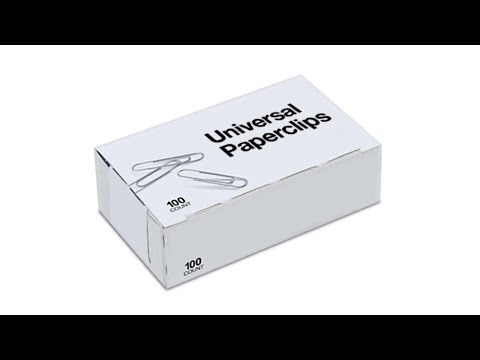
A study of Frank Lantz, founding chair of the NYU Game Center and maker of Universal Paperclips and Drop7, drawn from his own essay The Truth in Game Design (2010), a long Thought Economics interview (2024), PC Games Insider (2017), and his own notes on his work. Grounded only in his public statements, it reads his philosophy of games as an art of systems and as psychology experiments we run on ourselves, his obsession with embodying abstract ideas, the failure of Bite Me answered by "solving it all too well" in Leviathan, the dilemma of comfort versus truth, and the influences he acknowledges himself — Bostrom, Stapledon, Wittgenstein and von Neumann.
Inside Michael Brough's Philosophy — Shrink the Board, Keep Only the Choice
A study of Michael Brough—maker of 868-HACK, Imbroglio and Cinco Paus, and the designer whose name became the genre label 'Broughlike'—drawn from four of his own interviews. We read the paradox that shrinking the board sets design free, his obsession with paring a single mechanic down to its heart, the failure of over-ambitious unfinished roguelikes, the dilemmas of commerce versus authorship and his discomfort with violence, and his influences in mathematics and Rogue.
Inside Jason Rohrer's Philosophy — playing life and death through constraint
A study of Jason Rohrer, who with the five-minute Passage told a whole life and death through rules, drawn from three interviews: Critical Inquiry (2011), Handmade Pixels (2017) and Gamasutra (2011). Grounded only in his public statements, it reads his philosophy of speaking through interaction rather than narrative, his obsession with turning constraint into an expressive tool, the failure of trying to eliminate tedium and his change of heart toward "punishment," the dilemma of highbrow versus accessible, and the influences he acknowledges himself — Rod Humble, Raph Koster and Scott McCloud.
Inside Hiroyuki Imabayashi's Philosophy — The Cargo That Blocks Its Own Removal
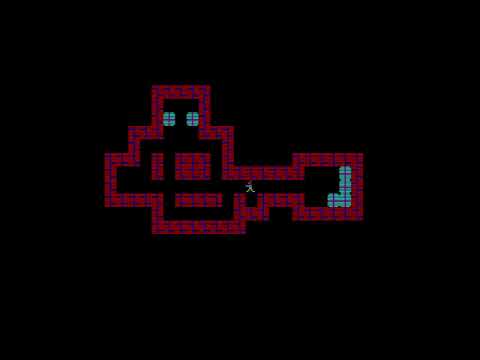
A study of Hiroyuki Imabayashi, creator of Sokoban (1982), drawn from three primary sources: his own greeting on the official site, a 1983 LOGiN magazine interview (in translation), and a long 2020 conversation with collector Carlos Montiers Aguilera. His consistent claim that 'the fun of the stage is the whole point,' his fixation on cargo that obstructs its own tidying, the failure and criticism around 'breakable walls' and how he answered it, the puzzle-versus-gimmick dilemma he named himself, and the Hudson action game that sparked the idea — all grounded only in his public statements.
Inside Marc ten Bosch's Philosophy — Discovered, Not Invented
A study of Marc ten Bosch, author of Miegakure and 4D Toys, drawn from his own blog, his 2011 Indiecade talk, an NYU Game Center interview, and a Gamasutra IGF interview: his consistent 'discovered, not invented' philosophy, his discipline of narrowing to a single button, his use of mathematics as a design tool, the failures he has voiced, the dilemma of correctness versus beauty, and his acknowledged debt to Flatland — grounded only in public statements.
Inside Jon Ingold's Philosophy — Keeping the Story Alive by Letting You Keep Failing
A study of inkle's Jon Ingold through his interviews and his own essays. We read the philosophy behind 'the job of a designer is to replicate the feeling of the experience', his insistence on embedding deduction in dialogue rather than a UI, and his obsession with letting the player 'fail forward' — neither losing nor winning, but squeaking through.
Inside Alexey Pajitnov's Philosophy — Building Order in a Game That Never Ends
A study of Alexey Pajitnov, creator of Tetris, drawn across his own interviews: his philosophy that games are a psychological product, his obsessions with the learning curve and randomness, his openly admitted decade-long failure to crack multiplayer, the dilemmas of intensity and endlessness, and the pentomino influence. Read as a designer who guarded the core and let the surface go.
Inside Jason Roberts's Philosophy — Turning the Space Outside the Frame into a Playground
A study of Jason Roberts — who made Gorogoa, drawing and coding almost all of it alone — drawn strictly from his own GDC talk and interviews: a philosophy of the 'frame' born from an abandoned comic, the obsession of a visual acrostic that gives everything two faces, the failure of a man who thought he couldn't finish anything, the commerce-versus-authorship dilemma that meaning must be real, and influences from Escher to a puzzle book (Maze) he never solved. It closes with one paragraph reading him as a designer who believes in the outside of the frame.
Inside Kim Swift's Philosophy — Manipulating the Player Into Feeling Clever
"After people play our game, I want them to feel clever." That is how Kim Swift describes designing Portal. She is a designer who bet not on hard puzzle walls but on invisible guidance — steering the player's eye and feelings without them noticing. Her philosophy, obsessions, failures (a boss fight that died three times), dilemmas and influences, read through her own interviews and a GDC postmortem.
Inside Ron Gilbert's Philosophy — Never Waste the Player's Time
"What makes most games tough to play is that the puzzles are arbitrary and unconnected." Ron Gilbert wrote that in 1989 while designing Monkey Island. This is a study of the man widely regarded as the finest thinker on adventure-game puzzle design — his philosophy, his obsessions (the Puzzle Dependency Chart), his failures (Maniac Mansion), his dilemmas and his influences — read through his own essays, blog and interviews.
Inside Kyle Gabler's Philosophy — Minimal Bones, Maximal Skin
A study of Kyle Gabler, maker of World of Goo and Human Resource Machine, using only his own words. Read alongside his legendary 2005 essay 'How to Prototype a Game in Under 7 Days,' his sparse interviews reveal a consistent stance: complexity is not necessary for fun, and always build the toy first. He is a subtractor who is also an evangelist of excess feedback ('juice') - this piece reads that tension.
Inside Fumito Ueda's Philosophy — Subtracting Toward Emotional Space
A reading of Fumito Ueda, creator of ICO, Shadow of the Colossus, and The Last Guardian, drawn from four of his own interviews. What did the man behind "design by subtraction" actually remove, and what was he trying to keep? His philosophy, obsessions, failures, dilemmas, and influences, grounded only in his own words.
Inside Bennett Foddy's Philosophy — Designing Failure to Fight Meaninglessness
A study of Bennett Foddy (QWOP, Getting Over It) drawn strictly from his own interviews and blog: a philosophy that starts from the paradox that "games don't matter," the obsession of cataloguing frustration by "flavor," his admission that he couldn't beat his own game, the dilemma between encouragement and taunt, and influences from Sexy Hiking to the unfair old games of his childhood. It closes with one paragraph reading him as a designer who fights the absence of meaning.
Inside Zach Gage's Philosophy — Rebuilding Games You Already Know
A study of Zach Gage (SpellTower, Really Bad Chess, Good Sudoku, Puzzmo) drawn strictly from his own interviews: the design philosophy of rebuilding familiar classics; the graphic-design ‘three reads’ and hands-on prototyping; his habit of diving into genres he dislikes; his ethics against infinite engagement and his handling of chance; and influences from his mother's newspaper to Spelunky to Sid Meier as a foil. It closes with one paragraph reading him as a conceptual artist who left the gallery.
Inside Greg Lobanov's Philosophy — Making Creation, Not Combat, the Main Verb
A study of Greg Lobanov (Wandersong, Chicory). Building his games around creation — singing, drawing — as the main verb, he makes puzzles and story work without combat. His philosophy, obsessions, failures, dilemmas, and influences, read strictly from four of his own interviews.
Inside Alexander Bruce's Philosophy — Doubt conventions down to their reasons
A study of Alexander Bruce, author of Antichamber, based only on his interviews and GDC talks: a philosophy of doubting conventions down to their reasons, an obsession with removing death and menus, candid failures and pivots, the dilemma of when to stop iterating, and his acknowledged influences.
Inside Eric Chahi's Philosophy — Turning Lack into Margin
A study of Eric Chahi, author of Another World (Out of this World), drawn from his 2011 GDC postmortem and several interviews: his method of turning constraints into improvisation, a design that bets on the player's memory, staging that works by suggestion and punctuation, the failures and dilemmas he has voiced, and his acknowledged influences — all grounded only in public statements.
Inside Zach Barth's Philosophy — Leaving Behind Honest Problems, Not Answers
A study of Zach Barth (Zachtronics), maker of SpaceChem and Opus Magnum, drawn from his own post-mortem and interviews: his obsessions with open-ended puzzles, histograms, and shareable GIFs; the failures he autopsied himself in SpaceChem; the dilemma of accessibility versus authenticity; and his parting line about not wanting to be "locked in" — read strictly from his public statements.
Inside Daniel Mullins's Philosophy — The Man Who Turns the Frame Over
A study of Daniel Mullins, creator of Inscryption, drawn from his own interviews and his GDC post-mortem. His philosophy of hooking players 'outside the rules,' his obsession with subverting expectations, the difficulty balancing he openly calls a failure, and the dilemma of a signature twist becoming predictable — read only from what he has said in public.
Inside Daniel Cook's Philosophy — Fewest Rules, Return to the Human
A study of Daniel Cook (Danc)—maker of Triple Town and Cozy Grove, and author of the design blog Lost Garden for over twenty years—drawn from four of his own signed essays. We read his early idea of dissecting play into 'skill atoms', his obsession with the 'evergreen puzzle' that yields the most play from the fewest rules, his publicly told failures (a collapsed MMO, being cloned), the paradox of a 'puzzle-hater' who keeps building puzzle-like systems, and his arc from trust in systems toward a wariness about filtering out our humanity.
Inside Sam Barlow's Philosophy — Throw Away the Container, Stage the Story in the Player's Mind
A study of Sam Barlow, creator of Her Story, drawn from his interviews and GDC talks. His 'throw away the container' philosophy, his obsession with real performance and searchable structure, the biggest failure of his career — a three-year cancelled project — and how he sublimated it, his dilemma of surrendering control, and his acknowledged influences, all read strictly from what he has said publicly.
Inside Maddy Thorson's Philosophy — Keep It Hard, Make It Kind
A study of Maddy Thorson (TowerFall, Celeste) built from her own blog, interviews, and GDC talk: a philosophy of keeping difficulty while making it kind, an obsession with fudging things "a little" in the player's favor, and the dilemma of authorial intent versus letting go.
Inside Patrick Traynor's Philosophy — Designing by Discovery, Not Invention
A study of Patrick Traynor, sole creator of Patrick's Parabox, drawn from his interviews and his 2024 GDC talk. He calls recursion 'a corner of truth of the universe' and casts himself as a discoverer rather than an inventor; we read his pursuit of approachability, his publicly told failures around difficulty curves and rules, and the ethics of a discoverer.
Inside Stephen Lavelle's Philosophy — Making the Refusal to Explain Into the Work
"Nah I don't feel like it." That was how Stephen Lavelle (Increpare) answered a player who asked him to explain his puzzle design. The prolific maker of 500-plus freeware games, the author of the free engine PuzzleScript and of Stephen's Sausage Roll. I read his philosophy, obsessions, failures, dilemmas and influences using only words he himself wrote.
Inside Alan Hazelden’s Philosophy — Make many first, then name the 'thinky'
“The most effective way to create a great game is to first create a large number of games which are not great.” London puzzle designer Alan Hazelden (Draknek) has spent years making “thinky” puzzles that teach their mechanics through layout rather than text. We read his philosophy, obsessions, failures, dilemmas and influences through his own statements.
Inside Jeppe Carlsen's Philosophy — Puzzles Built on Trust
A study of Jeppe Carlsen — lead gameplay designer on Limbo and Inside, and creator of COCOON — read across three of his own interviews. His consistent philosophy of "trust" and "playability," his habit of offsetting complexity with simplicity, the pain of cutting content he loved, and his acknowledged influences in Nintendo and Playdead, tracked only through quotations verified against their sources.
Inside Tetsuya Mizuguchi's Philosophy — Designing Senses, Not Genres
A study of Tetsuya Mizuguchi — creator of Rez, Lumines and Tetris Effect — across four of his own interviews. His consistent philosophy of designing sensation rather than genre and aiming to “make people cry,” his dilemma over what to add to a classic, and influences from Kandinsky to a single night at a music festival, traced only through source-checked statements.
Inside Arvi Teikari's Philosophy — Wanting to Surprise You, He Lets You Play the Rules Themselves
"The greatest motivator is just general desire for self-expression." Finnish solo developer Arvi Teikari (Hempuli) startled the world with Baba Is You, a game that lays its rules out as word-blocks on the board and lets players rewrite them. We read his philosophy, obsessions, failures, dilemmas and influences through his own words.
Inside Lucas Pope's Philosophy — If There's No Problem, I'm Not Interested
"If there's no problem, then I'm not that interested. But if there's some restriction or some limitation, then I'm interested suddenly." Lucas Pope calls himself, consistently, an engineer. He inverts mundane jobs, pares them down, and bets on the player's imagination. A study of his philosophy, obsessions, failures, dilemmas, and influences, read through his own interviews and talks.
Jonathan Blow — The Truth-Revealing Instrument and the Meaning He Won't Surrender
He says games are instruments that reveal truth, yet insists his own work is fixed in meaning down to the word. Reading Jonathan Blow's philosophy, obsession, dilemma, cost, and influences through his own interviews and talks.