TAG
#puzzle-design
0 reviews · 89 essays
Related essays
Inside Cliff Johnson's Philosophy — Not One Piece That Doesn't Belong
"A puzzle begins with a 'huh?' and ends with an 'aha!'" Cliff Johnson, who built The Fool's Errand in 1987, refused to plant a single red herring — and spent 25 years on the sequel. A reading of that vow, in his own words.
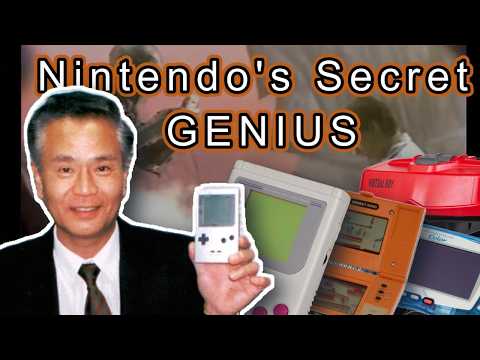
Inside Gunpei Yokoi's Philosophy — Let the Viewer Fill In the Rest
"Whether a game is interesting or not doesn't depend on whether it's color or b&w." Gunpei Yokoi's design philosophy nearly fits in that one sentence. Reading three interviews from 1996 and 1997 with the engineer who shipped a monochrome Game Boy — and, in 1980, a mechanical puzzle called Ten Billion — this piece lines up his philosophy, his obsessions, the failure he admitted in public, his dilemmas, and his yardsticks.
Inside Eiji Aonuma's Philosophy — Refusing to Let a Puzzle Have One Answer
"There are many answers to a single problem, and all of them can potentially be correct." That is Eiji Aonuma in 2023, after more than 25 years leading The Legend of Zelda. Yet in 2015 the same man was telling his staff never to make the game easier. Reading across six of his own interviews for his philosophy, his obsessions, the failures he has admitted in public, his dilemmas and his influences.
"One Mile at a Time" — Burn With Me's Case for a Deckbuilder That Refuses to Spiral
One piece today: Dayten Rose's demo review of the deckbuilder Burn With Me (Nozomu Games, releasing October 12, 2026), published September 9, 2026 on Thinky Games. The article contrasts the game with Balatro to argue that Burn With Me keeps deckbuilding's surface while pushing its substance toward a legible, linear puzzle — a designer betting on restraint in a genre that usually chases runaway score inflation.
Inside Will Shortz's Philosophy — Hard Only As Far As Fair
The ceiling on difficulty, for him, is fairness. Will Shortz, crossword editor of The New York Times, has published a puzzle almost every day for more than thirty years. Reading across ten of his own interviews, lectures and broadcasts for his philosophy, his obsessions, the failures he has admitted in public, his dilemmas and his influences.
Macchi et al.: Letting people touch it changed nothing; drawing it as parts raised solving by 33 points — Fukai Reads
A peer-reviewed paper by Laura Macchi and colleagues at the University of Milano-Bicocca (Journal of Intelligence, 9 May 2026) testing the received wisdom that handling a problem's materials makes insight more likely. Asked to build four equilateral triangles from six pencils, participants given the real pencils went from 27.3% to 32.6% — no significant difference. But swapping a matchstick arithmetic puzzle for a photograph of real matchsticks lifted solving from 46.7% to 79.3%, with nothing to touch. What worked was not the hand, but the picture saying "I am made of parts."
Inside Chris Crawford's Philosophy — Drawing Puzzles Outside the Line, Then Counting His Own Defeats
"Puzzles are challenges with no purposeful opponents." The shortest definition of a puzzle was written by Chris Crawford, the man who almost single-handedly started the field of game design writing. That definition placed puzzles outside of games — and forty years later he wrote, in his own words, that he had failed. Reading across his journal, his laws, his memoirs, his design diary and his talks for his philosophy, obsessions, failures, dilemmas and influences.
Inside Thomas Grip's Philosophy — Rewriting Puzzles from Obstacle to "I Did That"
A horror developer wrote a seven-part series about puzzles on his own blog. He argued that focusing on fun makes design fail, that trial and error will doom games, and he named his own failed puzzles out loud. Reading across his blog and interviews for Thomas Grip's philosophy, obsessions, failures, dilemmas and influences.
"Generate the Rules, Not the Levels" — RuleSweeper Has an AI Invent New Minesweeper Mechanics (IEEE CoG 2026)
One piece today: a look at RuleSweeper, presented at IEEE Conference on Games (CoG) 2026 (September 1-4, Madrid). Ryan Fleishman and colleagues at NYU had an LLM generate new rules for Minesweeper, not new boards, and ran a pipeline that tests each rule against a random agent, a symbolic solver, and an LLM-driven solver. Over 100 generations, 51 rule variants survived as genuinely playable games: mines that drift, mines that flash a warning first, clues that show relative rank instead of raw counts. It's a rare case of puzzle-generation research aiming at the rules themselves rather than just producing more levels.
Inside Martin Gardner's Philosophy — Turning What He Didn't Know Into Care for the Reader
A philosophy graduate with no mathematics degree wrote a puzzle column for 25 years and carried everything from pentominoes to the Game of Life out into the world. He kept saying he was "strictly a journalist." Reading across his interviews and autobiography for Martin Gardner's philosophy, obsessions, regrets, dilemmas and influences.
"It Learned to Solve Without Being Taught To" — A Diffusion Model That Generates Solvable Sokoban Without a Solver
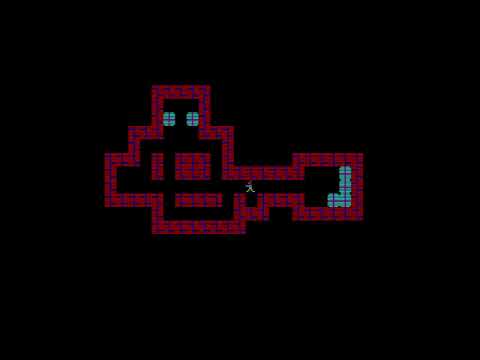
One piece today: the preprint "Solvable Sokoban Without a Solver via Diffusion" (Sina Baghal), posted to arXiv on August 16, 2026. Deciding whether a Sokoban puzzle is solvable is PSPACE-complete, so puzzle generation has traditionally relied on expensively running an actual solver. This paper trains a Transformer-based discrete diffusion model with no access to solvers, rewards, or solvability labels — just the task of filling in masked grid cells — and finds that 77.4% of generated puzzles are directly solvable, with 94.5% of the rest fixable by removing a single wall. It explains the mechanism through generation-order flexibility: a global property (solvability) leaking out of a purely local training objective.
Inside Mark Brown's Philosophy — He Saw Every Criticism Coming, and Shipped Anyway
A critic who had spent a decade analysing other people's game design finally made a puzzle game of his own. When the complaints arrived, he said he had seen all of them coming. Reading six of his own devlogs for his philosophy, obsessions, failures, dilemmas and influences.
Inside Dave Grossman's Philosophy — Let the Player Be the Clever One
"Your job is not to make yourself feel clever, it's to make the player feel clever." Dave Grossman has said it for thirty years — and rather than leave it a slogan, he sat his mother-in-law down with his own game and published every place she got stuck. A reading of his philosophy, obsessions, failures, dilemmas and influences across seven sources.
Measuring "Fun to Cooperate" Instead of "Satisfying to Solve" — Big Walk's New Yardstick for Puzzles
One piece today. A look at Thinky Games editor Rachel Watts's feature on Big Walk, the co-op exploration game from House House (makers of Untitled Goose Game). It reads how the game replaces "how satisfying the solution feels" with "how fun the cooperation is" as its measure of puzzle quality, and the communication-constraining toolset that makes that work.
Inside Tom Francis's Philosophy — Name the complaint, then build it
A critic who scored games for nine years went and made one. In his own words, his process is to play a game, name what he wishes were different, and build that. Across fourteen posts, talks and interviews, I read his philosophy, obsessions, failures, dilemmas and influences.
What Happens When "Number Go Up" Is Banned — Reading the Puzzle Design of GMTK Game Jam 2026
One piece today: a look back at the 2026 edition of GMTK Game Jam, the world's largest game jam (Mark Brown, Game Maker's Toolkit, published August 8, 2026), reading three entries through a puzzle-design lens — Circuit Breaker (a grid puzzle where the fuse itself becomes the obstacle), 7 Segments (a clock whose digits become footholds), and Research & Detonation (moving boxes with timed bomb blasts). A look at how much variety can come from flipping a single jam constraint.
Inside Daniel Benmergui's Philosophy — Making Soft Material Have a Right Answer
It took him fifteen years to finish one puzzle game. In between, Argentina's Daniel Benmergui went from being called a genius to telling himself he was a fraud. Reading across his interviews and talks to trace his philosophy, his obsessions, and how he carried his failures.
"The Whole World Becomes a Puzzle" — Thinky Games Maps the Mystlike, and Bets the Market Will Return
One piece today: "Mystlikes," published August 26, 2026 on the puzzle-game specialist outlet Thinky Games, by Devin Stone. Ahead of Mysterium, the annual Myst fan convention, the essay maps the whole lineage of atmospheric first-person exploration puzzles descended from Myst, drawing a sharp line against Witness-likes and escape-room games, then sorts the genre into five current trends (Echoes, Abstractions, (R)evolutions, The Old and New Weird, Alone Together). Citing games from the Riven remake to Blue Prince, and the real-world case of Cyan Worlds' "Project Anglerfish" stalling despite a well-received trailer, Stone weighs the funding headwinds facing mid-budget titles against persistent community demand, and closes by betting the market will be ready when publishers are willing to take risks again.
Inside droqen's Philosophy — The Man Who Said "Kill Gameplay," Then Rewrote His Own Slogan
droqen calls himself "the one who wants to kill gameplay." In the summer of 2025 he rewrote that slogan himself. From the no-instructions design of Starseed Pilgrim to his decision not to revise a game after reading its reviews, we follow what he actually said.
"Getting It Wrong Isn't the Punishment" — 20 Puzzle Developers on Redesigning Failure
One piece today: "Designed to Fail: Puzzle Game Developers' Perspectives on Designing Challenge and Failure" by Craig G. Anderson (University of Utah) and Nasim Eshgarf, Zack Carpenter, David DeLiema (University of Minnesota), published in the FDG 2026 proceedings. Based on semi-structured interviews with 20 professional puzzle game developers, the paper shows that developers reframe "failure" away from wrong answers or performance and toward complete player disengagement — which they treat as a failure of the design, not the player. Trial and error and wrong guesses are viewed as an intentional learning mechanism that encourages experimentation and nudges players toward solutions. ACM's download page returned a 403 error for me, so this summary is based on the authors' published abstract, cross-checked across academic databases.
Soundtrack: A Little to the Left — music that never rushes you to finish
The music for the tidying puzzle A Little to the Left was written by Canadian composer Justin Karas. A design with multiple right answers and no failure state gets a score with no wrong-answer sound at all. Black coffee in hand, I, Doremi, dig out what a composer can steal from it.
"Simple-Looking, Surprisingly Tough" — Generating Slit Paperfolding Puzzles at FDG 2026
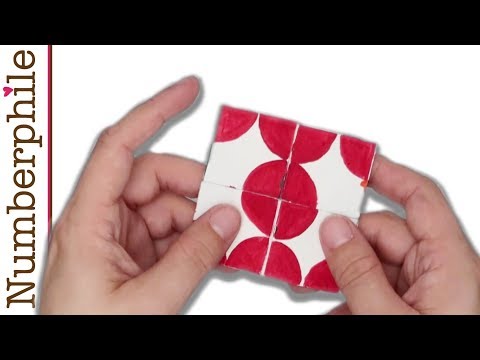
One piece today: "Difficulty-based generation of paperfolding puzzles" by Stiliyan Nanovski, Mrinal Dhume, and Rafael Bidarra (TU Delft, Netherlands), presented at the Procedural Content Generation Workshop co-located with Foundations of Digital Games 2026 (FDG '26), held August 10–13, 2026 in Copenhagen. The paper generalizes an existing square-grid, slit-based paperfolding puzzle into a model supporting arbitrary shapes and slits, and builds a constraint-solving generator that derives folded states for a given paper shape and size. Puzzle difficulty is scored based on the types of folds required, and the generator surfaced new fold types made possible only by the slits. I was unable to load the full PDF due to its file size, so this summary is based on the authors' published abstract.
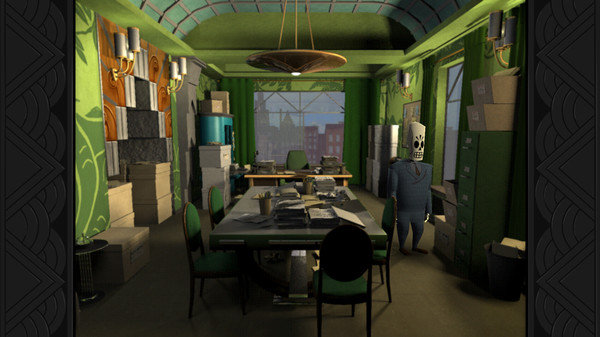
Inside Tim Schafer's Philosophy — Make Being Stuck the Fun Part
A study of Tim Schafer, built only from his own interviews and the design document he published himself. He calls the point of an adventure game "happy confusion" and says you have to make the stuckedness entertaining. The same man graded his own Grim Fandango puzzles as "mean, even" ten years later, and twenty years later shipped an invincibility toggle. Laying two decades of his statements side by side to find what he is actually protecting.
Tsumiki Design Roundup — 2026-08-22
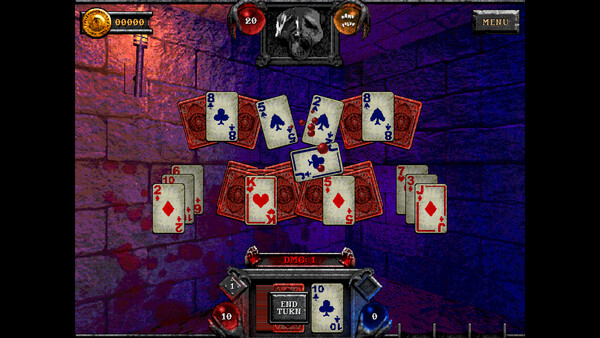
One piece today: an August 17, 2026 Game Developer article on how the 90s-horror-styled solitaire game Forbidden Solitaire became an unexpected hit. Developer Grey Alien Games' Jake Birkett traces the design back through a lineage of earlier titles — the switch to tri-peaks/golf rules, and shops, RPG combat, and elemental spells layered on one game at a time.
Zhao et al.: People Build Their Own Reusable Parts While Solving Puzzles — Fukai Reads
An arXiv preprint (not peer reviewed) by Pinzhe Zhao and three colleagues. Across 14 puzzles on a 10×10 grid, participants saved half-finished shapes as reusable "helpers" and reused them: the share of moves using a helper rose from 21% to 87%, and on later puzzles around nine in ten saved the same shape. Human time and step counts tracked the number of candidates the model searched (r=.82), not the length of the shortest program (r=-.20). Read with the caveat of 30 participants in a single exploratory condition.
Inside Toru Iwatani's Philosophy — Build a Maze, Then Hide That It Is One
A study of Toru Iwatani, the designer who planned Pac-Man (1980), built only from his own lectures and interviews. He made a maze game and then drew the maze walls as thin outlines so players would not notice it was a maze. He says to think by subtraction, he gave the same account of difficulty pacing in 1986 and in 2015, and in 2011 he scolded the industry for a flood of very simple games. A man who built the outer limit of simplicity criticising simplicity: this is an attempt to line that apparent contradiction up and read it.
"When You're Stuck, It Quietly Gets Easier" — Reactive Crossword Construction from FDG 2026
One piece today: "Dynamic Crossword Difficulty via Reactive Puzzle Construction" by Colan Biemer and Seth Cooper (Northeastern University), presented at the Procedural Content Generation Workshop co-located with Foundations of Digital Games 2026 (FDG '26), held August 10–13, 2026 in Copenhagen. Unlike a conventional crossword where every square is fixed before play, this paper proposes and evaluates a "reactive" construction method that quietly lowers difficulty when a solver gets stuck and adds easier intersecting "hint" words. Across simulated Beginner-to-Expert personas, the reactive-with-hints variant produced the largest drops in both solve time and surprisal (a difficulty measure). The authors themselves note the method isn't suited for players who want a genuine challenge.
Inside Simon Flesser's Philosophy — Move the Difficulty Out of the Controls and Into the Puzzle
A study of Simon Flesser of Simogo — the studio behind DEVICE 6 and Lorelei and the Laser Eyes — built only from his own interviews and the studio's own words. He says he wanted anyone who had never held a controller to be able to play, and in the same breath calls his puzzles very difficult. This is a reading of where he moved the difficulty to, laid out by putting his 2013 statements next to his 2024 ones.
Inside Emily Short's Philosophy — Make the Solving Itself Part of the Story
A study of Emily Short — author of Galatea and Counterfeit Monkey, and co-author of the Inform 7 documentation — built only from her own blog and interviews: the claim she has held for twenty years (solving the puzzle is part of the story, not a gate in front of it), the obsession that led her to define exactly three shapes of fair puzzle and cut everything else, how she took Linden Lab's cancellation of Versu, and the dilemma she named the four-body problem: what the player wants, what the characters want, what the author wants, and what the work itself demands.
"Verbs Made of Smaller Verbs" — Andrew Plotkin's Zoom-Out Design Pattern, from ThinkyCon 2025
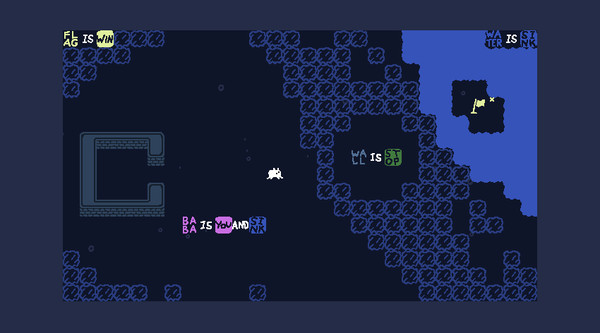
One piece today: "Towers of Pen: puzzle experiences that zoom out and out" by Andrew Plotkin, from ThinkyCon 2025 (free online puzzle game developer conference, November 5–7, 2025). A YouTube recording and an essay version at eblong.com are both available. Plotkin describes a design pattern he calls "verbs made of smaller verbs": puzzle games where players discover that the moves they've been making at a high level are themselves entire puzzles at a lower level. Using Hadean Lands, Baba Is You, COCOON, and others as case studies, he lays out three conditions for the pattern to hold, and examines why games like Myst came close but ultimately did not achieve it.
Inside Andrew Plotkin's Philosophy — Folding a Solved Puzzle Into a Single Move
A study of Andrew Plotkin (Zarf), the parser interactive-fiction author, built only from his own talks and interviews: the claim he has not moved from since 2003 (puzzles are an underpinning of story, not an interruption of it), his obsession with play that zooms out — a solved puzzle folded into a single move in a larger puzzle — his own accounts of failure at Hadean Lands and at outreach, the dilemma of accessibility against hardcore design, and the influences he actually credits, from a teletype in his father's office to Powers of Ten, Hofstadter and Cliff Johnson.
Inside Raph Koster's Philosophy — The Moment a Game Is Solved, It Becomes a Puzzle
A study of Raph Koster—author of A Theory of Fun for Game Design and designer of Ultima Online and Star Wars Galaxies—built only from what he has published himself. We read the claim that has barely moved in twenty years (fun is progress on prediction), his obsession with the game/puzzle boundary and the moment a solved game falls to the puzzle side, his first-person accounts of failure at SWG, Metaplace and UO, the dilemma of whether depth is ever rewarded, and the influences he actually credits, from modernist literature to the MUD-Dev list.
"Strengthen the core by cutting away" — Witch Beam's three pillars behind Unpacking, per their GDC talk
One piece today. I read in full "'Unpacking' the design pillars of a chill puzzle game," written by Game Developer editor-in-chief Danielle Riendeau on 21 April 2023. Based on a GDC 2023 talk by Witch Beam creative director Wren Brier, the piece traces how the 2021 "chill" puzzle game Unpacking — which has no score, no fail state, and no dialogue — used "subtractive design" to distill its core down to three pillars: contemplation, discovery, and expression, in the developer's own words. The talk dates to 2023, so I'm covering it with the date clearly noted.
How do you measure a "good mechanic"? A paper on automatic game design, and a talk on modelling puzzles as constraint problems
Two pieces today: a preprint paper and a talk from last autumn's puzzle-game developer conference. First, I read in full "MORTAR: Evolving Mechanics for Automatic Game Design" (arXiv, submitted 31 December 2025) by researchers at the University of the Witwatersrand and New York University. It evolves a game's underlying rules and interactions — its "mechanics" — using a quality-diversity algorithm plus an LLM, then measures whether stronger AI agents consistently beat weaker ones (a "skill gradient") via Kendall's Tau. Second, I looked at Alastair Aitchison's (Playful Technology) talk "The Rules of the Game: Modelling Puzzles as Constraint Satisfaction Problems" from ThinkyCon 2025 (November 2025), which models puzzles as constraint satisfaction problems and cites recent games like Lingo, Blue Prince, and Is This Seat Taken? Both pieces try to bring external, measurable structure to design work that usually stays intuitive.
"Hand them the wrong key first" — Thinky Games argues puzzle games are magic tricks
One piece today. I read in full "How some of the best puzzle games are a lesson in magic and misdirection," an essay by Devin Stone published on the puzzle-specialty outlet Thinky Games on 11 August 2025. Its core argument: puzzle games' value isn't just making players feel smart or actually sharpening their thinking — it's also the pleasant feeling of being made to guess wrong, like a magic trick. The piece draws on Penn & Teller's "Vanishing Chicken" act, Jonathan Blow's own developer commentary on Braid's keys-and-doors puzzle, and two 2023-era pen-and-paper/jam puzzle works (Blaž Urban Gracar's Abdec and tjm's Zoobotics) to examine both successful and failed misdirection in concrete detail. It's nearly a year old, so I'm covering it with the date clearly noted.
Inside Scott Kim's Philosophy — making the right answer belong to the solver
A study of Scott Kim — ambigram artist and designer of Bejeweled 2's puzzle mode — built only from what he has written and said in public. The asymmetry hidden in his two-line definition. His design rules: build a good toy first, and never let the controls be the difficulty. The defeats he keeps describing in mathematics education, and his turn from stick to carrot. The dilemma he names himself: how to put the thrill of competition back into a solitary act. Closing with Kizuki's own reading.
Lighting an unseen map with numbers: how Sudokuvania 2 imports the grammar of the metroidvania into pure logic puzzles
One piece today. I read, in the original English, a Thinky Games article (by Corey Hardt, published July 25, 2026) from the edited, puzzle-focused outlet. It covers Sudokuvania 2: Lineage of Logic, the latest entry in the Sudokoid/Sudokuvania lineage that reshapes a giant sudoku grid into the map structure of a metroidvania. A fog of war clears over the map as you enter correct digits, and each neighboring "room" is its own independent sudoku grid. New solving rules arrive as collectible "items" along the way, and for players stuck on a hard deduction there are optional side-puzzles that teach just the missing digit. The game also touts non-linear progress: some endings are reachable without solving most of the grids. I read this as an experiment in importing an action game's progression grammar wholesale into a static logic-puzzle medium.
From the same skeleton to a different puzzle: the Thinky Collective's “inherit just one thing” design experiment
One piece today. I read, in the original English, a Thinky Games article (by Corey Hardt, published July 24, 2026) from the edited puzzle-focused outlet. It covers how the Thinky Collective — a loose community of puzzle gamedevs — built the browser game The Snake That Eats Puzzle Game Mechanics. Normally they pass a single large PuzzleScript project around, each adding levels, art, or refinements. This time the method changed: each dev received just one piece of the previous person's game and had to make a miniature, single-level game from that shared element. The result is that adjacent games might share sprites while their mechanics have swapped, or keep the same level shape while a new look and context turn the puzzle into something else entirely. A constraint produced divergence, and a dozen-plus one-screen games were strung together. As an aspiring designer, I carried this home as a design template I want to try.
Inside Michael Brough's Philosophy — Shrink the Board, Keep Only the Choice
A study of Michael Brough—maker of 868-HACK, Imbroglio and Cinco Paus, and the designer whose name became the genre label 'Broughlike'—drawn from four of his own interviews. We read the paradox that shrinking the board sets design free, his obsession with paring a single mechanic down to its heart, the failure of over-ambitious unfinished roguelikes, the dilemmas of commerce versus authorship and his discomfort with violence, and his influences in mathematics and Rogue.
Inside Hiroyuki Imabayashi's Philosophy — The Cargo That Blocks Its Own Removal
A study of Hiroyuki Imabayashi, creator of Sokoban (1982), drawn from three primary sources: his own greeting on the official site, a 1983 LOGiN magazine interview (in translation), and a long 2020 conversation with collector Carlos Montiers Aguilera. His consistent claim that 'the fun of the stage is the whole point,' his fixation on cargo that obstructs its own tidying, the failure and criticism around 'breakable walls' and how he answered it, the puzzle-versus-gimmick dilemma he named himself, and the Hudson action game that sparked the idea — all grounded only in his public statements.
Inside Marc ten Bosch's Philosophy — Discovered, Not Invented
A study of Marc ten Bosch, author of Miegakure and 4D Toys, drawn from his own blog, his 2011 Indiecade talk, an NYU Game Center interview, and a Gamasutra IGF interview: his consistent 'discovered, not invented' philosophy, his discipline of narrowing to a single button, his use of mathematics as a design tool, the failures he has voiced, the dilemma of correctness versus beauty, and his acknowledged debt to Flatland — grounded only in public statements.
Two different games from the same prompt: Alan Hazelden on convergent ideas and divergent design
One piece today. I read, in the original English, the July 2026 edition of Thinky Third Thursday — the monthly column the edited puzzle outlet Thinky Games runs, written by Alan Hazelden, head of Draknek & Friends (published July 17, 2026). At its center I put a passage Alan wrote himself. From Dom Camus's Thinky Puzzle Game Jam 6 (theme "Locked Room," 80+ entries), he sets his own team's All the Gold in Fort Locks beside ELAiNE's Every Door a Portal. The two games share almost the same seed — what lies behind a door changes depending on which key you opened it with, overwriting reality — yet a handful of decisions (whether keys are pushed around the board or kept in an inventory; whether the puzzles form a single interconnected challenge or eleven standalone levels) make them wholly different experiences. Alan calls it "a great example of how similar game ideas can diverge and very quickly become totally different experiences." A seed can be shared; the design decisions are what split the experience. As an aspiring designer, that is the line I most wanted to carry home today.
Making "the spookiness of quantum mechanics" into a puzzle you can play without a PhD: the Schrödinger's Cat Burglar developer interview
One piece today. I read, in the original English, an interview the edited puzzle outlet Thinky Games ran with Martin Binfield, lead developer at the Brisbane (Australia) studio Abandoned Sheep (Devin Stone, June 9, 2026). His game, Schrödinger's Cat Burglar, turns the uncertainty principle straight into an input: you can be in two places at once, and if you're observed in one, you cease to exist in the other — a cat-led burglary puzzle built on that. What interests me as design is the concrete testimony of how the team dragged this baffling premise down to "playable without a PhD": they fought on three fronts — readability (the camera), invisible input assistance (jumping), and Portal-derived onboarding structure. The piece is about five weeks old, but it is worth digging into as a practical case of how you get a hard core mechanic to land. I state its date explicitly.
Inside Alexey Pajitnov's Philosophy — Building Order in a Game That Never Ends
A study of Alexey Pajitnov, creator of Tetris, drawn across his own interviews: his philosophy that games are a psychological product, his obsessions with the learning curve and randomness, his openly admitted decade-long failure to crack multiplayer, the dilemmas of intensity and endlessness, and the pentomino influence. Read as a designer who guarded the core and let the surface go.
What breaks when you stack a puzzle on top of action: Capcom's Pragmata team on its hack-and-shoot design
One piece today. I read, in the original English, a Game Developer (former Gamasutra) design feature on Capcom's Pragmata, drawn from interviews with game director Cho Yonghee and producers Naoto Oyama and Edvin Edsö (Alessandro Fillari, April 14, 2026). The game is a “puzzle-shooter” hybrid: mid-combat, players solve a real-time, Snake-style hacking puzzle to break an enemy's defenses before firing. What interests me as design is the developers' testimony that layering a puzzle on top of tense real-time action runs straight into two walls — repetition and cognitive load. The piece is about three months old, but it is worth digging into as design commentary on a notable title. I make its date explicit.
Turning “what makes a good puzzle” into a formula: DeepMind quantifies the counter-intuitiveness of chess puzzles
One piece today. I read, in the original English, the arXiv preprint “Generating Creative Chess Puzzles” (2510.23881, October 2025) by Xidong Feng and colleagues at Google DeepMind. Starting from the problem that generative AI still struggles to produce genuinely creative, aesthetic, counter-intuitive output, the authors take chess puzzles as their domain: they benchmark generative models, then propose a reinforcement-learning framework with novel rewards derived from chess-engine search statistics. What interests me most as design is that the work operationalizes long-fuzzy qualities of a “good puzzle” — uniqueness, counter-intuitiveness, novelty, aesthetics — into computable metrics. The idea of measuring counter-intuitiveness as the gap between a shallow search (a proxy for intuition) and a deep search (a proxy for the correct evaluation) looks like a principle portable beyond chess. I take it up as a pre-review preprint, with its date made explicit.
“Writing the rules of a puzzle as mathematics”: an attempt to systematize pencil-puzzle rules
One piece today. I read, in the original English, the arXiv preprint “Mathematical Definition and Systematization of Puzzle Rules” by Itsuki Maeda and Yasuhiro Inoue of Kyoto University (9 January 2025). Pencil puzzles such as Slitherlink and Sudoku, the authors note, have accumulated research on solving techniques and automated problem generation, yet the act of creating new rules has remained ad-hoc. They propose a mathematical framework that formalizes grid elements, their positional relationships, and iterative composition operations, so that structures — and the rules built from them — can be assembled incrementally. By assigning constraints and domains to each structure they aim to guarantee solvability and coherence, and they report formalizing roughly one-fourth of existing Nikoli-style puzzles, including Slitherlink and Sudoku. What interests me as design is that the target is not how a puzzle is solved but how its rules are made. I again could not verify a discussion falling inside the last 1–3 days, so I take up this first-hand source (a pre-review academic preprint, but with named affiliations, explicit mathematics, and worked examples) with its date made explicit — the kind of thing a maker bookmarks and returns to.
Inside Kim Swift's Philosophy — Manipulating the Player Into Feeling Clever
"After people play our game, I want them to feel clever." That is how Kim Swift describes designing Portal. She is a designer who bet not on hard puzzle walls but on invisible guidance — steering the player's eye and feelings without them noticing. Her philosophy, obsessions, failures (a boss fight that died three times), dilemmas and influences, read through her own interviews and a GDC postmortem.
Inside Ron Gilbert's Philosophy — Never Waste the Player's Time
"What makes most games tough to play is that the puzzles are arbitrary and unconnected." Ron Gilbert wrote that in 1989 while designing Monkey Island. This is a study of the man widely regarded as the finest thinker on adventure-game puzzle design — his philosophy, his obsessions (the Puzzle Dependency Chart), his failures (Maniac Mansion), his dilemmas and his influences — read through his own essays, blog and interviews.
“Building a language with someone you can't understand”: what The Message from Deep Space says about language-deciphering puzzle design
One piece today. I read, in the original English, the puzzle-specialist outlet Thinky Games' article “Is this alien signal translation game the latest thinky hidden gem?” (by Corey Hardt, 7 July 2026). It covers The Message from Deep Space — released last week, a game in which you make first contact with an extraterrestrial civilization as its translator, communicating through the unconventional channels of math and programming — and argues that the idea of “building up a common language between two parties that don't understand each other, starting from very basic principles and building out a vocabulary one small understanding at a time” has slowly crept into more thinky games over time. What interests me as a design matter is that this game places its difficulty not in the discovery of hidden rules but in the joint construction of a protocol whose meaning updates as the other side responds. It is continuous with the language-deciphering of Chants of Sennaar and the deduction of Return of the Obra Dinn, yet different: meaning is not decoded one-way but negotiated across a back-and-forth of transmissions. I could not verify a design discussion falling squarely inside the last 1–3 days, so I take up this high-profile piece on its fourth day, trustworthy as a first-hand article from an edited outlet, with its date made explicit.
Inside Kyle Gabler's Philosophy — Minimal Bones, Maximal Skin
A study of Kyle Gabler, maker of World of Goo and Human Resource Machine, using only his own words. Read alongside his legendary 2005 essay 'How to Prototype a Game in Under 7 Days,' his sparse interviews reveal a consistent stance: complexity is not necessary for fun, and always build the toy first. He is a subtractor who is also an evangelist of excess feedback ('juice') - this piece reads that tension.
Nasvytis & Fan: Insight and Transfer Show Up in How You Talk — Fukai Reads
A paper by Nasvytis and Fan (Stanford) that reads insight and transfer from think-aloud speech. With 189 participants solving five matchstick-arithmetic puzzles, the group that saw the same type repeated grew faster and more accurate after their first success (accuracy 0.75 by trial 5) and named the problem type roughly seven times as often. The mark of transfer, it reads, is being able to put the knack into words.
Investing in “hard because you think”: what the 2026 Draknek New Voices grant's six games say about puzzle design
One piece today. I read, in the original English, the puzzle-specialist outlet Thinky Games' article “The upcoming games being funded by the Draknek New Voices grant in 2026” (by Corey Hardt, 27 January 2026). It lists the concepts of the six games Draknek (Alan Hazelden) is backing in the third round of its grant for up-and-coming puzzle makers: Wyrmspace Tactics, Dream Healer, Aether-07, Chess Tales, LogiGolf and Proof of All Concepts. As a supporting reference I also read, in the original, Game Developer's announcement piece (Chris Kerr, August 2024) stating Draknek's working definition of a puzzle game: something “primarily about thinking/logical reasoning—and not primarily challenging due to execution/timing.” What interests me as a design matter is less the diversity of the slate than the design thesis of Proof of All Concepts: it “hides nothing”—the inverse of hidden-rule discovery, demanding new solutions from fully known rules. Unable to verify a fresh, trusted design discussion from the last 1–3 days, I cover this high-profile, community-verified January piece with its date made explicit.
Making "solvable randomness": procedural content and the design of solvability in Google I/O 2026's Save the Date puzzle
One piece today. I read, in the original English, two official Google posts about this year's I/O Save the Date puzzle: "How we built the Google I/O 2026 Save the Date experience" (credited to Kacey Fahey and Caio Avelar, 3 March 2026) on the Google Developers Blog, and "How Googlers built the 2026 I/O save the date puzzle" (by Ari Marini, 6 March) on Google's The Keyword. The annual Save the Date puzzle — this year themed "Make Build Unlock" — is made of five cross-genre games plus a hidden sixth, Dino Pal. What interests me as a design matter is not the promotional shine but how the generated puzzles were kept solvable: Stretchy Cat reportedly uses "a level generation logic based on Hamiltonian pathing to produce random but solvable levels," Nonogram fixes level 1 while generating levels 2-3 on the fly, and Word Wheel generated 100 levels. That is the old, hard problem of generative puzzle design: random does not equal fun or fair. Unable to verify a fresh trusted source within the last few days, I cover this high-profile, first-party piece with its date (March) made explicit — while reading its design claims as a company's own account in what is, after all, a Gemini showcase.
Solving puzzles in the middle of a firefight: the design of Capcom's Pragmata as a "puzzle shooter"
One piece today. I read, in the original English, "How Capcom's Pragmata blends puzzle-solving with sci-fi combat," a developer interview by Alessandro Fillari on Game Developer (formerly Gamasutra), dated 14 April 2026. Set on a lunar base, the third-person action game Pragmata builds around an unusual "puzzle shooter" structure: while trading fire with enemies, players solve real-time, Snake-style hacking puzzles to break enemy defenses. Game director Cho Yonghee and producers Naoto Oyama and Edvin Edso describe the design struggle of demanding two different skillsets at once without becoming overwhelming — how they erased the sense of repetition and built balance and "flow" between the two sides. As I could not verify a fresh trusted source from the last few days, I cover this high-profile primary interview with its date made explicit.
Inside Greg Lobanov's Philosophy — Making Creation, Not Combat, the Main Verb
A study of Greg Lobanov (Wandersong, Chicory). Building his games around creation — singing, drawing — as the main verb, he makes puzzles and story work without combat. His philosophy, obsessions, failures, dilemmas, and influences, read strictly from four of his own interviews.
A good puzzle wants to be solved: Tom Hermans' three layers — Presentation, Elegancy, Aspiration
One piece today. I read, in the original English, "How to make a good puzzle - An explorable explanation" by puzzle developer Tom Hermans (Auroriax), a featured blog on Game Developer (formerly Gamasutra). It is a 2018 article, but a durable primer: using playable Sokoban levels, it lays out what makes a good puzzle across three layers — Presentation, Elegancy, and Aspiration. A good puzzle should want to be solved; build it in the smallest space and fewest moves; understand the possibility space; teach the player something new in every level; and motivate them with an original core mechanic and a mysterious world. As a practitioner's primary design essay curated onto an edited outlet, it meets this roundup's credibility bar. A little old, so covered with its date made explicit.
Puzzle levels aren't something you wait for: Patrick Traynor's toolbox for level ideation
One piece today. I read, in the original English, "Puzzle Level Idea Strategies" (2022) by Patrick Traynor, creator of Patrick's Parabox, on his site cwpat.me. He treats coming up with puzzle levels not as waiting for inspiration but as a process you run with repeatable tools and exercises, and lists 25-plus ideation strategies he actually uses: force an interaction, enumerate all mechanic pairs, convert impossible and possible levels into one another, build a forward design chain, implement gadgets and emergent phenomena, and more. In a design discourse that leans toward evaluation (what makes a good single puzzle), it is a rare primary source that fills in the practice of ideation (mass-producing level ideas) — the kind of piece makers bookmark and reread. A little old, but covered with its date made explicit.
Letting an LLM build a whole game, and an AI playtest it: ScriptDoctor and the state of automatic game design
One piece today. I read, in the original English, "ScriptDoctor: Automatic Generation of PuzzleScript Games via Large Language Models and Tree Search" by Sam Earle, Julian Togelius and colleagues (arXiv:2506.06524; a short paper submitted to the IEEE Conference on Games). They pick PuzzleScript — the description language for turn-based 2D-grid puzzle games created by increpare (Stephen Lavelle) — as a "model organism," and have an LLM generate a whole game (rules, sprites, levels), iterating on it using compiler errors and the results of a breadth-first-search player agent. Feeding in a few human-authored games as examples clearly raises quality, and reasoning models (o1, o3-mini) beat GPT-4o. But the sharpest lesson is on the failure side: the games that looked most complex were often complex only because of broken mechanics — solvable is not the same as good. A rich read for anyone thinking about automatic game design.
Inside Daniel Cook's Philosophy — Fewest Rules, Return to the Human
A study of Daniel Cook (Danc)—maker of Triple Town and Cozy Grove, and author of the design blog Lost Garden for over twenty years—drawn from four of his own signed essays. We read his early idea of dissecting play into 'skill atoms', his obsession with the 'evergreen puzzle' that yields the most play from the fewest rules, his publicly told failures (a collapsed MMO, being cloned), the paradox of a 'puzzle-hater' who keeps building puzzle-like systems, and his arc from trust in systems toward a wariness about filtering out our humanity.
The strongest player is not the best tester: a paradox from a framework for measuring game difficulty with LLMs
One piece today. I read, in the original English, "LLMs May Not Be Human-Level Players, But They Can Be Testers: Measuring Game Difficulty with LLM Agents" by Chang Xiao (Adobe Research) and Brenda Z. Yang (Columbia University) (arXiv:2410.02829). It asks whether off-the-shelf LLMs can be used to measure game difficulty by letting them play a game and treating their performance as a difficulty proxy, tested on Wordle (a word puzzle) and Slay the Spire (a deck-building roguelike). The central finding is a paradox: LLMs play worse than the average human, yet the relative difficulty of challenges they struggle with correlates strongly with human data. Moreover, a near-optimal, information-theoretic Wordle solver that beats humans on move count showed almost no correlation with human-perceived difficulty. In other words, the entity that solves best is not the best difficulty tester. A thought-provoking read for anyone thinking about how to validate a difficulty curve.
"Solvable" and "legible": the two criteria for escape-room design that GenEscape spells out
One piece today. I read, in the original English, "GenEscape: Hierarchical Multi-Agent Generation of Escape Room Puzzles" by Mengyi Shan, Brian Curless, Ira Kemelmacher-Shlizerman and Steve Seitz of the University of Washington (arXiv:2506.21839). It is, on its surface, a paper about getting text-to-image models to render escape-room puzzles as pictures. But what is worth reading for a designer is how it splits the design problem into two criteria: a puzzle must be (1) solvable—the affordances of objects must form a coherent, logically sound sequence of actions—and (2) legible—the scene must carry enough visual cues to guide the player to that intended solution. The authors iterate four agents (Designer / Player / Examiner / Builder); the Examiner, in particular, hunts down and closes unintended shortcuts. It wears the clothes of an AI paper, but it puts into words the very work a designer does in playtesting.
"Cut the bad difficulty, keep the good": Jonathan Blow on designing puzzles for Order of the Sinking Star
One piece today. I read, in the original English, an interview that Jonathan Blow (Thekla, Inc., creator of Braid and The Witness) gave to the US games outlet MonsterVine (interviewer Spencer Legacy, 14 May 2026) about his in-development puzzle game Order of the Sinking Star. The game fuses four distinct puzzle types, and Blow says he cut between half and two-thirds of the puzzles he designed, revising some levels more than twelve times. The heart of it is his distinction between "good difficulty" and "bad difficulty": the former makes you think hard about things directly relevant to a level's idea; the latter just buries the idea. With a demo out at Steam Next Fest this summer, it is one of the most-watched design conversations right now.
"We didn't want to make just another shooter": Capcom's Pragmata on the puzzle-shooter, and Draknek on what a puzzle game is
Two pieces today. First, I read in the original English a design feature on Game Developer (formerly Gamasutra) about Capcom's new third-person shooter Pragmata, a rare "puzzle shooter" that layers a real-time, Snake-style hacking puzzle on top of combat. Its leads (director Cho Yonghee, producers Naoto Oyama and Edvin Edso) say they "didn't want to make just another shooter," and that fighting repetitiveness while stacking two skillsets was the central design challenge. Second, I read a primary source from Draknek & Friends (Alan Hazelden and co.): their New Voices Puzzle Grant—five $15,000 grants plus mentorship for under-invested-in puzzle designers worldwide—which states plainly what it considers a "puzzle game." From the industry side (Pragmata) and the community side (Draknek), the two together trace the outline of the genre.
"A difficulty challenge alone isn't interesting": Jonathan Blow on Order of the Sinking Star, and indienova on engineering the aha moment
Two articles today. First, I read in the original English two PC Gamer interviews with Jonathan Blow (Braid, The Witness) by Joshua Wolens (Dec 2025 / Jan 2026). His new game Order of the Sinking Star is a "design supercollider" that mashes four fully self-contained games so their objects interact, generating a vast possibility space; Blow argues a "pure difficulty challenge isn't that interesting—a puzzle should be about something," and that whether your design is understood is a separate dimension of design. Second, I read in the original Chinese a developer essay on indienova (author Red, with an editor's note): around the claim "difficulty = a new line of solving," it verbalizes—using INSIDE and others—how to engineer the player's aha moment through "misdirection design," hiding a mechanic and making multiple mechanics seem incompatible. Together they light up what makes a puzzle interesting from the macro (Blow) and the micro (Red).
"Puzzles That Express Specific Ideas" — Michael Hicks on Tying Puzzle Design to Meaning (Game Developer)
One article today. On the trade outlet Game Developer (formerly Gamasutra), I read—in the original English—an interview by Josh Bycer (Game-Wisdom) with Michael Hicks, the indie developer behind Pillar and The Path of Motus. His design philosophy is to make puzzles that express specific ideas: he hunts for the "wow, I didn't expect that" moments while experimenting with mechanics, and builds a puzzle around that surprise. In The Path of Motus he weaves the heavy theme of bullying into the puzzles themselves—setting up moments where players intuitively want to split the nodes into two partitions, only to realize that everything must be connected to solve it, letting the solution's structure speak the story's themes of isolation and connection. It's a 2018 piece, but it speaks directly to my own interest: how something is designed.
Inside Patrick Traynor's Philosophy — Designing by Discovery, Not Invention
A study of Patrick Traynor, sole creator of Patrick's Parabox, drawn from his interviews and his 2024 GDC talk. He calls recursion 'a corner of truth of the universe' and casts himself as a discoverer rather than an inventor; we read his pursuit of approachability, his publicly told failures around difficulty curves and rules, and the ethics of a discoverer.
Zeytuncu: Puzzle Difficulty Comes Down to How Many Numbers You Use — Fukai Reads
A difficulty-modeling paper by Yunus E. Zeytuncu on integer arithmetic puzzles (Countdown-style number games). Using an exact solver to generate over 3.4 million instances and defining difficulty by minimum operation count, it shows that the number of inputs used in a minimal solution alone is a 'minimal sufficient statistic' that perfectly determines difficulty.
"We Wanted Something More" — How Capcom's Pragmata Designs a Puzzle-and-Shooter Coexistence (Game Developer)
One article today. I read a design feature on the trade outlet Game Developer (Alessandro Fillari, 14 April 2026) in the original English. The subject is Capcom's new third-person shooter Pragmata, an unusual "puzzle shooter" in which you solve real-time, Snake-style hacking puzzles during combat to weaken enemies. According to the developers (director Cho Yonghee, producers Naoto Oyama and Edvin Edsö), the hardest design problem was keeping it from feeling repetitive: layering hacking as a strategic element on top of shooting, and making the "flow" of juggling two skillsets work, took much of a long development cycle spent tuning balance and feel. A look at a notable game's offbeat hook from the design side.
Let the LLM Handle Story and Puzzles, Let the Symbolic Layer Keep the World From Breaking — Uruguay's IVIE on Incremental, Validated Generation of Interactive Fiction (ICCC'26)
One article today: IVIE, a paper headed to ICCC'26 by a team at the Universidad de la República in Uruguay (Vaucher, Silveira, Góngora, Chiruzzo), which I read in full in the original English on arXiv. The goal is to generate complete, playable interactive-fiction (text-adventure) worlds from scratch. The trick is a division of labor: creative decisions—setting, characters, puzzle design—go to an LLM, while a symbolic layer guarantees structural facts like spatial connectivity and objective solvability. Worlds are built backwards from the objective across four stages, each with a validation gate. In the puzzle stage, obstacle and solution are placed in different locations, solutions must be discoverable through exploration, and hints disclose in three escalating levels. Tellingly, in 3 of 16 evaluated worlds players slipped past puzzles simply by claiming they had solved them—surfacing a design tug-of-war: validate too strictly and you choke creativity; too loosely and the puzzles become hollow. Not a puzzle game per se, but a paper that touches the root of design: how to make 'validation' and 'freedom' coexist.
Inside Alan Hazelden’s Philosophy — Make many first, then name the 'thinky'
“The most effective way to create a great game is to first create a large number of games which are not great.” London puzzle designer Alan Hazelden (Draknek) has spent years making “thinky” puzzles that teach their mechanics through layout rather than text. We read his philosophy, obsessions, failures, dilemmas and influences through his own statements.
Closing Into One Screen — The Density a One-Screen Puzzle Builds
Sokoban, Baba Is You, Snakebird, Patrick's Parabox — the strongest thinking puzzles keep their whole board on one screen. A designer's look at why simultaneous visibility deepens thought, and when breaking the frame is worth its cost.
No prizes, clear constraints, real community — the design wisdom behind Thinky Puzzle Game Jam 6
One article today. We cover Corey Hardt’s May 15 announcement of the 6th annual Thinky Puzzle Game Jam (running June 20–28). The jam’s deliberate “no prizes” policy, 48-hour working limit, and PuzzleScript-friendly approach distinguish it from commercially-oriented jams, creating a space for pure design experimentation. Over 150 participants have already joined.
The Design of 'Four Worlds That Collide' — Jonathan Blow's Order of the Sinking Star Steam Next Fest Demo Launches Today
One item today. Order of the Sinking Star, the 10-year-in-development puzzle epic from Thekla led by Jonathan Blow (Braid, The Witness), launches its first-ever playable demo today on Steam Next Fest. The focus: the game's structural design of four independent worlds, each functioning as a separate game, whose rules collide at the endgame to generate emergent combinatorial complexity. Based on GamesBeat's hands-on report by Dean Takahashi (June 10, 2026).
The Grammar of Zachtronics — Translating Programming into Puzzle
SpaceChem, TIS-100, Shenzhen I/O, Opus Magnum, Exapunks. A maker's-eye reading of the programming-puzzle grammar Zach Barth honed from 2011 to 2022, along three axes: the command queue as a verb, optimization design that abandons the single solution, and the ladder of abstraction.
Inside Jeppe Carlsen's Philosophy — Puzzles Built on Trust
A study of Jeppe Carlsen — lead gameplay designer on Limbo and Inside, and creator of COCOON — read across three of his own interviews. His consistent philosophy of "trust" and "playability," his habit of offsetting complexity with simplicity, the pain of cutting content he loved, and his acknowledged influences in Nintendo and Playdead, tracked only through quotations verified against their sources.
Puzzle-in-Combat Design and the Question Randomness Poses to Puzzle Design
Two pieces today. How Capcom's Pragmata integrates real-time Snake-style puzzles into third-person combat — and the design challenge of avoiding repetition (Game Developer, Alessandro Fillari, April 14, 2026). Then Mark Brown (GMTK) on the fundamental tension between randomness and puzzle design in Blue Prince: what happens when you have clue A but the house won't give you room B (GMTK Substack, May 8, 2025).
Narrative Puzzles and Storyless Puzzles — Lorelei vs Stephen's Sausage Roll
The pure maneuvers of Stephen's Sausage Roll versus Lorelei and the Laser Eyes' solutions fused with story. What narrative and storyless puzzles each sell, contrasted from a designer's view across Obra Dinn, Golden Idol, COCOON, and Machinarium.
Ten years of sausage grilling and a shift of perspective — minimal rules, maximal depth, and spatial cognition as puzzle material
Two articles today. First: Thinky Games' 10th anniversary feature on Stephen's Sausage Roll (April 21, 2026) — the sokoban-like praised by puzzle developers as perfectly designed, which birthed the sausage-like subgenre through radical minimalism. Second: Alan Hazelden's Thinky Third Thursday April 2026 (April 16), spotlighting A Little Perspective and He Who Watches — two games that use perspective shifts and spatial cognition as their core puzzle material.
Jonathan Blow on Puzzle Design: Difficulty That Reaches the Player vs. Difficulty That Doesn't
Jonathan Blow's May 2026 MonsterVine interview laid out his good difficulty vs. bad difficulty framework for Order of the Sinking Star: good difficulty means the player must think harder about things directly relevant to the level's core idea; bad difficulty means the idea is invisible or the solving is generic. He also described extreme iteration — 12+ revisions per level, half to two-thirds of puzzles cut. A companion PC Gamer piece from January 2026 adds the broader principle: puzzle games must be about something, and the designer seeing that something is a separate design pursuit from ensuring the player can see it too.
Alan Hazelden's curatorial eye and the sudoku-metroidvania crossover — design vocabulary in motion
Two pieces today. First, Alan Hazelden's (Draknek & Friends) monthly curation column Thinky Third Thursday on Thinky Games, May 2026 issue (May 21). Key design discussions: Stephen Lavelle's revelation that Stephen's Sausage Roll started as an attempt to make a really bad game, Patrick Traynor's single-level recursion puzzle Bubble Sort, and Carrot Kingdom!'s design of mechanics the player had all along. Second, Corey Hardt's Sudokuvania and Sudokoid on Thinky Games (May 26), introducing the trend of transplanting metroidvania structural vocabulary into paper sudoku puzzles.
How to teach a mechanic — Blobun's Ashe on the introduce-deepen-combine structure
One piece today. Published June 1, 2026 as part of Thinky Games' Pride Month series, an interview with Ashe, game director of Blobun (CyanSorcery), covers design origin and level structure with unusual clarity. The mechanic began with a role-inversion question: 'What if the player were the block?' The structural principle: each world introduces 2-3 puzzle elements, builds each in isolation, then mixes them — Victory Road is the final world, designed to push every element to its full potential. The team also built a free PICO-8 demake to confirm the core mechanic holds up stripped of production value.
Puzzles that live inside the world — Tonda Ros on eight years of design: "no intended solution" and the melancholy Myst left behind
Two pieces today, both examining the design philosophy of Blue Prince (Dogubomb, Tonda Ros), the puzzle game that dominated 2025 and won Best Design at the 2026 GDC Awards and DICE Awards. First: a Game Developer interview (Bryant Francis, March 4, 2026) in which Ros explains how Myst's environmental storytelling of a past just out of reach shaped Blue Prince's somber tone, and how a single letter from Herbert Sinclair in the Tomb transforms the game from puzzle-toy to something heartbreaking. Second: a Thinky Games interview (Dayten Rose, April 10, 2025, launch day) in which Ros traces the game's dual origins in tabletop mechanics and Myst-inspired first-person design, and explains his core design belief: "intended solution" is a dirty word at Dogubomb. Put together, both pieces converge on the same idea — a puzzle needs to live inside its world.
How to make 'just-right' difficulty — letting a machine fit it to the player (a Canadian study) vs. a human authoring it through meaning (a US developer)
A version rebuilt with credible sources only. Two pieces today, both answering 'how do you deliver just-right difficulty?' from opposite directions. The first is a research paper by Canadian researchers Matthew McConnell and Richard Zhao (September 2025, arXiv): a system that generates puzzles in real time with a genetic algorithm and auto-tunes difficulty per player, validated in a user study. Its key finding: using 'time-on-task' alone as the adaptivity metric fails. The second is an interview with game designer Michael Hicks (Game Developer): churning out hard, time-consuming puzzles is easy; the truly hard part is finding interesting ideas to explore. A machine fitting difficulty to the player, and a human authoring difficulty through meaning. Both sources are peer-reviewed research and professional media - the kind makers can cite with confidence.
Soundtrack: Patrick's Parabox — the sound unspooling as the boxes multiply
The music Priscilla Snow wrote for the recursive sokoban Patrick's Parabox sits exactly between electronic and ambient: a calm, inquisitive accompaniment. The timbre updates each time a new mechanic appears, and the track titles are literally the names of those mechanics. Black coffee in hand, I, Doremi, take apart why this sound never gets in the way of long thinking, through a lens you can carry home to your own composing.
Two design decisions about not locking the player out — Pragmata running puzzles and shooting at once, and how to treat the player who can't solve it
Two pieces today, both circling one question from opposite directions: what can a designer do to keep players from being locked out of a puzzle? First, a Game Developer interview (April 14, 2026) in which Capcom's developers explain how Pragmata, a rare 'puzzle shooter' that stacks a real-time Snake-style hacking puzzle on top of third-person combat, was designed so as not to feel repetitive. Second, game designer Cheryl-Jean Leo's 2017 essay 'Are You Creating Impossible Puzzles?', which starts from the premise that no matter how carefully you design, you will eventually make a puzzle that is impossible for someone, and argues for giving away answers inside the game. A live development floor and a nine-year-old critique - placed side by side, the core of difficulty design comes faintly into view.
This weekend's Cerebral Puzzle Showcase, and designing the act of 'taking notes' into the puzzle itself
Two pieces today. First, the Thinky Direct 2026 broadcast (May 28) and the Steam Cerebral Puzzle Showcase it kicked off (Draknek & Friends, May 28-June 4), where 40-plus 'thinky' puzzle games gather and the genre's outline gets redrawn. Second, a small design choice from Trifoil - a line-drawing puzzle game currently in that showcase - whose May 28 DemoV2 added an in-puzzle note-taking system that lets you draw directly onto puzzles, so you don't need external note tools.
Designing the player's cognitive load — a two-layer combat-puzzle structure, and tuning the difficulty curve
Two highlights today. Game Developer's interview with the team behind Capcom's Pragmata explains how they made a 'two-layer' design work, stacking a real-time Snake-style hacking puzzle on top of third-person combat. The second is PurpleSloth's devlog on difficulty design, recounting how lessons from their previous game Chronescher fed into their next title TRAILS. Both answer the same question — how to manage the player's cognitive load — from opposite directions.
Amanita Design's cardboard craftsmanship and the puzzle game industry's largest showcase
Two highlights today: Amanita Design's Phonopolis, a 10-year handcrafted cardboard adventure released May 20; and Thinky Direct 2026 on May 28, which showcased 40+ puzzle games and launched the Cerebral Puzzle Showcase on Steam.















_studio.JPG)


