TAG
#philosophy
0 篇评论 · 13 篇随笔
相关随笔
Inside Brian Moriarty's Philosophy — A Game Author Who Says Games Aren't Art
"Art seeks to lead you to an inevitable conclusion, not a smorgasbord of choices." Brian Moriarty, author of Loom and Trinity, wrote that in his 2011 GDC lecture and concluded that his own medium cannot be art. Reading three of his lectures and three interviews: his philosophy, his obsessions, the failures he admits, his dilemmas and his models.
Inside Jakub Dvorský's Philosophy — Dropping Words, Building a World You Can Touch
A study of Amanita Design founder Jakub Dvorský, read across primary interviews in Adventure Classic Gaming (2009), MCV/DEVELOP (2011), bounthavy (2020) and TouchArcade (2024). It traces the origin of his wordless design, his obsession with atmosphere and hand-drawn worlds, his aim to build 'an interactive toy' you keep playing rather than a puzzle you defeat, his dilemmas of kindness versus difficulty and commerce versus authorship, and the Czech animation and science-fiction he himself names as influences — grounded only in what he has said in public.
Inside Frank Lantz's Philosophy — giving weight to the abstract
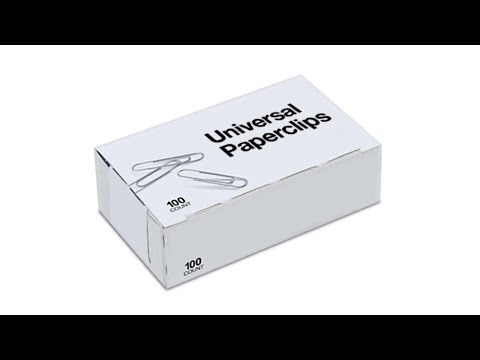
A study of Frank Lantz, founding chair of the NYU Game Center and maker of Universal Paperclips and Drop7, drawn from his own essay The Truth in Game Design (2010), a long Thought Economics interview (2024), PC Games Insider (2017), and his own notes on his work. Grounded only in his public statements, it reads his philosophy of games as an art of systems and as psychology experiments we run on ourselves, his obsession with embodying abstract ideas, the failure of Bite Me answered by "solving it all too well" in Leviathan, the dilemma of comfort versus truth, and the influences he acknowledges himself — Bostrom, Stapledon, Wittgenstein and von Neumann.
Inside Jason Rohrer's Philosophy — playing life and death through constraint
A study of Jason Rohrer, who with the five-minute Passage told a whole life and death through rules, drawn from three interviews: Critical Inquiry (2011), Handmade Pixels (2017) and Gamasutra (2011). Grounded only in his public statements, it reads his philosophy of speaking through interaction rather than narrative, his obsession with turning constraint into an expressive tool, the failure of trying to eliminate tedium and his change of heart toward "punishment," the dilemma of highbrow versus accessible, and the influences he acknowledges himself — Rod Humble, Raph Koster and Scott McCloud.
Inside Kim Swift's Philosophy — Manipulating the Player Into Feeling Clever
"After people play our game, I want them to feel clever." That is how Kim Swift describes designing Portal. She is a designer who bet not on hard puzzle walls but on invisible guidance — steering the player's eye and feelings without them noticing. Her philosophy, obsessions, failures (a boss fight that died three times), dilemmas and influences, read through her own interviews and a GDC postmortem.
Inside Ron Gilbert's Philosophy — Never Waste the Player's Time
"What makes most games tough to play is that the puzzles are arbitrary and unconnected." Ron Gilbert wrote that in 1989 while designing Monkey Island. This is a study of the man widely regarded as the finest thinker on adventure-game puzzle design — his philosophy, his obsessions (the Puzzle Dependency Chart), his failures (Maniac Mansion), his dilemmas and his influences — read through his own essays, blog and interviews.
Stephen Lavelle 的哲学 — 以「不解释」为作品
「Nah I don't feel like it(不,我不想说)」——面对玩家希望他解说自己作品设计的请求,Stephen Lavelle(increpare)只给出了这样简短的回答。这位为独立游戏开发者做了免费拼图引擎 PuzzleScript、并凭一己之力制作了被誉为《史上最难的索科班》的《Stephen's Sausage Roll》的开发者,500多部作品中的大多数都以免费形式公开发布。本文通过分析本人的博客与采访,考察其工作方式与哲学。
Alan Hazelden 的哲学 — 先大量制作,为「思考」命名
「制作优秀游戏最有效的方法,是先大量制作并不优秀的游戏」——伦敦谜题作家 Alan Hazelden(Draknek)持续创作着不依靠文字、仅靠关卡配置来传授机制的「thinky」谜题。从本人的发言解读其哲学、执着、失败、两难困境与影响源。
杰佩·卡尔森的哲学 — 谜题建于「信任」之上
横读杰佩·卡尔森(《Limbo》《Inside》首席玩法设计师、《COCOON》之父)三篇本人访谈的考察。他以「信任」与「可玩性」为一贯哲学、以简单抵消复杂的手法、忍痛删减心爱内容之苦,以及他承认的任天堂与 Playdead 影响,皆仅以核对过原文的发言加以追溯。
水口哲也的哲学 — 设计的是感官,而非类型
横读水口哲也(Rez、Lumines、Tetris Effect 之父)四篇本人访谈的考察。他设计感官而非类型、以「让人落泪」为终点的一致哲学,给经典加什么的两难,以及从康定斯基到一夜音乐节的影响来源,仅以核对过原文的发言加以追溯。
Arvi Teikari 的哲学 — 因为想惊吓玩家,所以让规则本身来玩
「对我来说最大的动机,就是单纯想做自我表达」——芬兰个人开发者 Arvi Teikari(Hempuli)以《Baba Is You》——把规则当作单词方块摆在盘上、再让玩家自己改写——让世界吃了一惊。本文从他本人的发言里读他的哲学、坚持、失败、两难与影响来源。
Lucas Pope 的哲学 — 没有问题,就没有兴趣
「没有问题,我就没什么兴趣。可一旦有约束、有限制,兴趣就突然来了」——Lucas Pope 始终把自己称为「工程师」。把平凡的工作反转、削掉、把剩下的交给玩家的想象力。本文从他的访谈与讲座中读他的哲学、坚持、失败、两难与影响来源。
Jonathan Blow — 揭示真相的装置,与不肯让步的意义
说着「游戏是揭示真相的装置」,却对自己的作品断言「连一个词都已经定好意义」。本文从本人访谈与讲座里,读 Jonathan Blow 的哲学、坚持、两难、代价与影响来源。