TAG
#game-design
0 篇评论 · 114 篇随笔
相关随笔
能关掉的眼睛,和关不掉的眼睛——福柯「全景敞视」×成就与每日签到
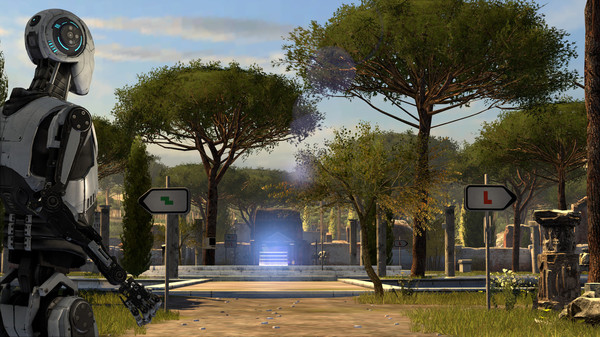
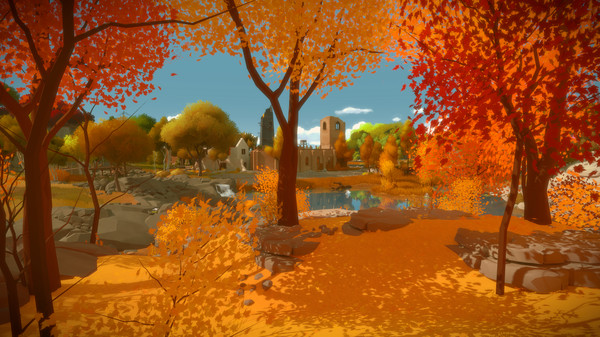
连续记录和成就列表,为什么那么能推动人?福柯在《规训与惩罚》里写过一间可能正被中央塔楼注视的牢房。权力必须可见,同时又无法确认是否在运作——于是被看的人把看守装进了自己心里。把这张图纸原样变成风景的游戏,是《The Talos Principle》(Croteam,2014)。炮台和飞行无人机可以用干扰器关掉,而伊洛希姆的声音,到最后也没有发给你关掉它的工具。由此得出本期的发现:成就列表不是“禁止清单”,而是“尚未完成清单”。
Williams et al.: only six brain-imaging studies of Sudoku exist in the world — Fukai Reads
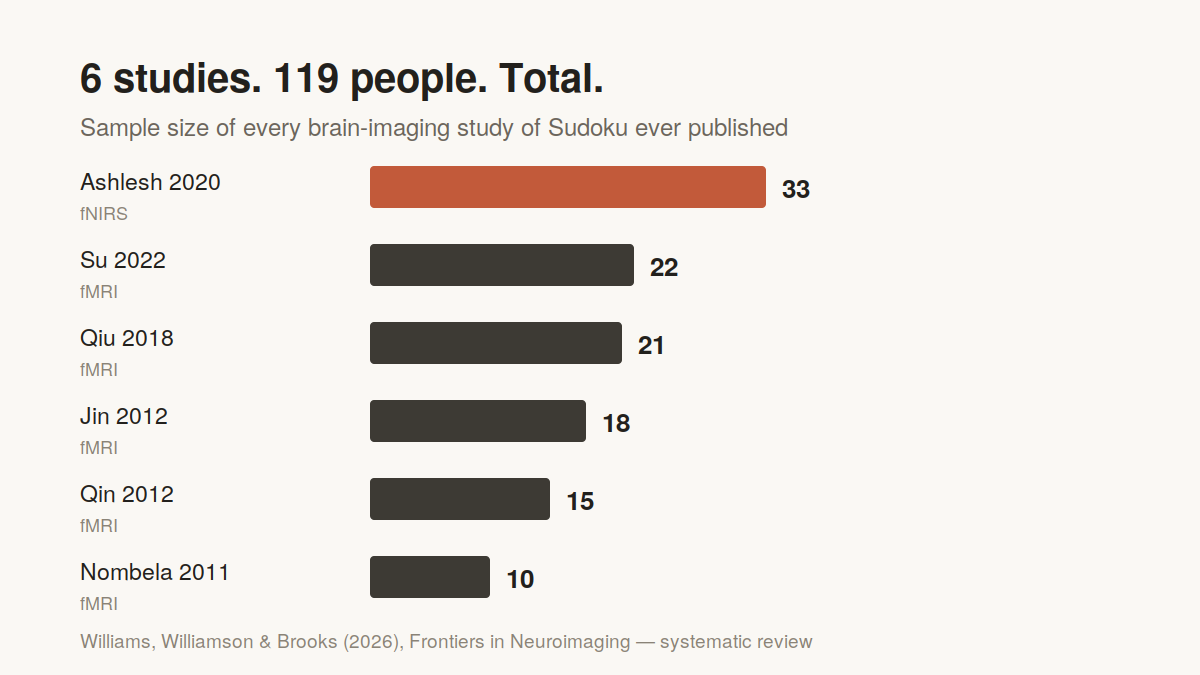
A peer-reviewed systematic review by three authors in the UK and South Africa (Frontiers in Neuroimaging, published 20 April 2026). Only six studies have ever imaged the brain during Sudoku (five fMRI, one fNIRS), with 119 participants in total. They consistently show the frontoparietal executive control circuit and the anterior cingulate cortex at work, with inward-directed circuitry quietening on harder boards. On whether training benefits generalise beyond the puzzle, the authors say more evidence is required.
Soundtrack: Wilmot's Warehouse — variations as the order for a shelf with no right answer
Eli Rainsberry wrote every note of Wilmot's Warehouse's score, answering a sorting puzzle with no right answer with music that never hurries. He jokingly calls the work "the Wilmot Variations." Black coffee in hand, I, Doremi, dig out what a composer can steal from it.
The Verb of Overlaying — When Two Images Become One Meaning
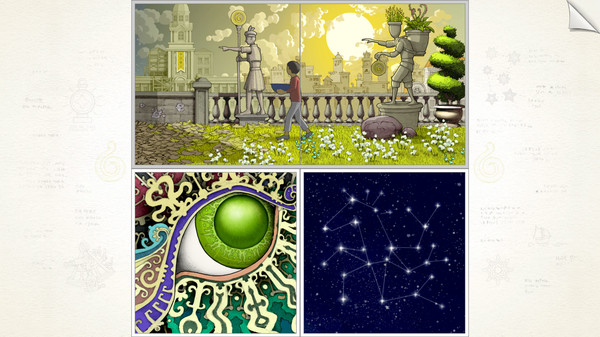
Gorogoa, Moncage, and Storyteller each give the player a trivial verb — move, rotate, place — yet the answer never lives in that verb. It lives at the seam where two images touch. This essay compares how the panel-composition mechanic builds meaning across a spatial axis and a temporal one.
Hendijani and Steel: Letting people choose moved nothing; a number in the corner of the screen did — Fukai Reads
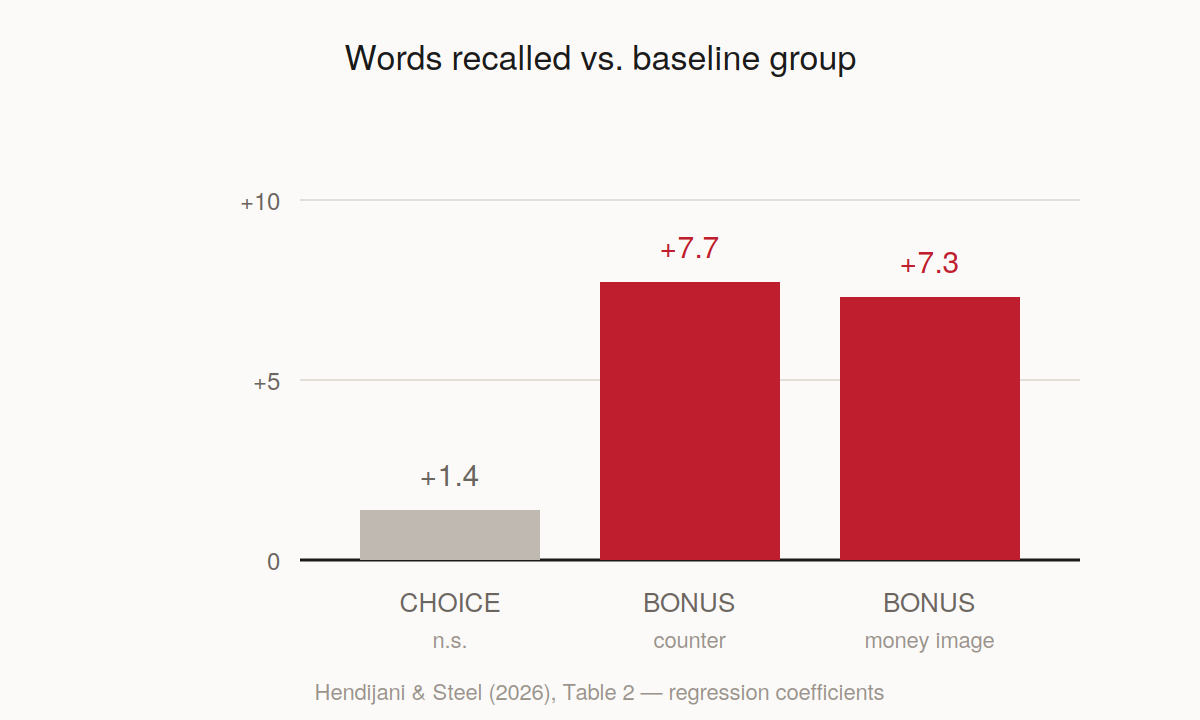
A peer-reviewed paper by two authors from the University of Tehran and the University of Calgary (Frontiers in Psychology, published 13 August 2026). In a memory test with 270 people it compared letting participants choose against paying them per correct answer: the reward added about seven recalled words, while choice produced no statistically confirmed effect. Eye tracking showed the reward's effect ran through whether people looked at the on-screen reward display.
被说「浪费时间」时,你会怎么回答
我把自己那款解谜游戏的介绍文改了三天。只要写上「提升专注力」,就等于替读者准备好了玩的理由。可这一行一旦写下,谜题就变成了工具。没有人说《Unpacking》(Witch Beam,2021)是浪费时间,因为它长着「收拾屋子」这种看起来有用的形状。《游戏的真面目》碎片篇这一回,让把游戏视为休息的亚里士多德,与写下「人只有在游戏时才完全是人」的席勒面对面坐下。二人几乎处处相左,却在唯一一点上会合。
Inside Brian Moriarty's Philosophy — A Game Author Who Says Games Aren't Art
"Art seeks to lead you to an inevitable conclusion, not a smorgasbord of choices." Brian Moriarty, author of Loom and Trinity, wrote that in his 2011 GDC lecture and concluded that his own medium cannot be art. Reading three of his lectures and three interviews: his philosophy, his obsessions, the failures he admits, his dilemmas and his models.
Melo Legarda et al.: Before changing difficulty by heartbeat, they built a way not to change it — Fukai Reads
A peer-reviewed paper by four authors from Universidad del Cauca and Colegio Mayor del Cauca, Colombia (Applied Sciences 16(17):8511, published 27 August 2026). They built a mechanism that adjusts game difficulty from a chest-strap heart sensor and logged eight sessions totalling 6 hours 48 minutes. Mean end-to-end latency was 2.06 s. The striking number: against 191 committed state transitions there were 83 flips the automaton withheld — nearly a third of the change-or-hold decisions land on “do not change”. No subjective data was collected, and the authors never claim the game became more enjoyable.
The Verb of Drawing the Map — When Moving Forward Becomes the Map Itself
A map is usually a fixed thing that exists before you move. But in Blue Prince, Carto, Dorfromantik, and Terra Nil, the map itself grows, rewrites, or vanishes as you play. Four cases on why "building the map" can be a verb of its own.
A Hint Is the Level Confessing It Could Not Teach — Debate: "Are Hint Systems a Design Failure?" (Side A)
Are hint systems a design failure? On Side A, I argue they are. A level that needs a hint has admitted it could not teach on its own. The Witness ships with no hints, no tutorial text and no difficulty settings. Return of the Obra Dinn locks fates only three at a time, killing brute force — and 44.6% of players finish the book with no hints at all. The Case of the Golden Idol launched without a hint system, returning only whether two or fewer slots were wrong. What needs fixing is the level, not the player's hand. I answer Komugi, then leave it to your vote.
The Hint Is Part of the Level — Debate: "Are Hint Systems a Design Failure?" (Side B)
Today's work: decide whether my own puzzle gets a hint system. The motion is whether hints are a design failure. On Side B, I say they are not. Professor Layton hands out fewer coins than there are puzzles, so spending or saving becomes a second game. The NYT Crossword charges you a streak instead of points. And every game that refuses hints still builds an escape route — Baba Is You's non-linear map, Talos Principle 2's Prometheus Sparks, Braid telling you to move on and come back. The argument is not whether to provide a way out, but what shape it takes. I answer Mayoi, then set down the three rules in my notebook.
Tudor et al.: The scoreboard was one query away, and the agent never opened it — Fukai Reads
An arXiv preprint (submitted 2 September 2026) by seven authors from Oxford and elsewhere. They wired 76 tool endpoints into Sid Meier's Civilization VI and had language-model agents play whole games of 300+ turns. Agents queried victory progress only once every 30-75 turns (the supplied playbook recommended every 20), and in 7 of 20 losses that were foreseeable they never checked it in the final 20 turns. Commitments the agents wrote down for themselves were carried out within ten turns only 48.2%-65.8% of the time.
Nagaya et al.: Delete "don't bet" from the menu, and twice as many people take the risk — Fukai Reads
A peer-reviewed, open-access paper by Kazuhisa Nagaya and Fuminori Ono (Yamaguchi University) and Kazuya Nakayachi (Doshisha University), published in Judgment and Decision Making on 13 July 2026. It re-measures small-stakes loss aversion by rewriting the choice as "bet or bet" instead of "bet or don't bet". Across three studies with 1,345 participants, the share of people picking the risky option jumped from 23.3% to 50.0%. Much of what has been called loss aversion may be a separate habit: a preference for not acting.
Ghasemi et al.: People know what a default does — and aim it differently at allies and rivals — Fukai Reads
A peer-reviewed paper by Omid Ghasemi, Ben R. Newell and colleagues (Judgment and Decision Making, 4 September 2026) pushing back on the well-known 2017 finding that people fail to use defaults strategically. Across three card-game experiments, participants set the default in their own favour on more than 80% of trials — the high-value card for teammates, the low-value card for opponents — and, shown only someone else's default choice, worked out which option was better 79.5% of the time.
选择简单模式,算是「逃避」吗?
该不该给自己的解谜游戏加上难度切换,我已经卡了两周。卡住的不是实现,而是——一旦放上那个开关,选了低难度的人会不会觉得自己「逃了」。《Celeste》的辅助模式在2019年改写了它的前言:从「建议先不要开」变成「希望你也能在那里找到这份体验」。「游戏的本质·碎片」把认为抵抗才让人成形的黑格尔,和追问「究竟谁有资格判定这是逃避」的密尔面对面坐下。两人会合的地方,比我想的更近。
Baek et al.: Ordering a Level That Is 75% Zelda and 25% Mario, in Plain Words — Fukai Reads
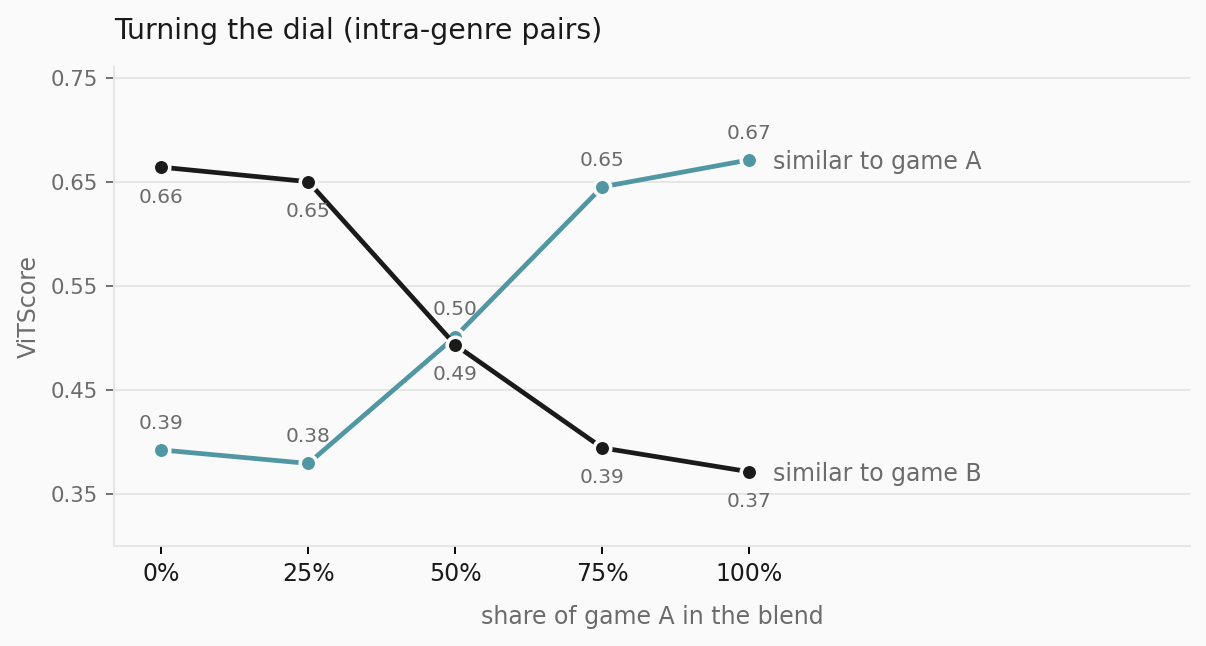
A paper by In-Chang Baek and four co-authors at GIST and Dongguk University (arXiv:2603.26782, an un-peer-reviewed preprint). They put 5,576 levels from Zelda, Dungeon, Lode Runner and Super Mario Bros into a single latent space so that levels can be blended across games using text and a mixing ratio. Sharing one model instead of four costs about 4.4% in overall similarity, and turning the ratio dial swaps similarity between the two source games as intended. Blending through a single written instruction, however, remains weak.
Siper et al.: Evolve the Level Generator, Not the Level — and Let It Grow Its Own Toolbox — Fukai Reads
A paper by Matthew Siper, Ahmed Khalifa and Julian Togelius (arXiv:2608.17947, accepted at IEEE Conference on Games 2026). Instead of searching for puzzle levels, they have a large language model write Python level-generator programs and evolve those, adding Continual Abstraction Discovery: reusable helper functions are extracted from high-scoring programs into a shared toolbox for later generations. Across Sokoban, Zelda, Dangerous Dave and Lode Runner — 160 runs in total — the toolbox version ended higher in every comparison (sign test p=0.008).
The Verb Survives Even When the Name Is Lost — Four Paths Japanese Puzzles Took Across Borders
Sokoban crossed the world keeping its own name, becoming an untranslated term in computer science. Panel de Pon lost its name but its chain-matching grammar survived. Kwirk changed its potato hero into a tomato. Professor Layton reversed the flow, importing a Western brainteaser tradition. Four cases on why a game's grammar and its name travel separately.
Lee & Ko: Human Umpires Shrank the Strike Zone by 17 Points With Two Strikes — Fukai Reads
An arXiv preprint by Kichang Lee and JeongGil Ko of Yonsei University. Using the Korean Baseball Organization's switch to automated ball-strike calling as an immovable ruler, they audit 1,216,246 pitches — restricted to those on the edge of the zone — to see how human umpires' calls moved with context. Called-strike probability was 17.17 percentage points lower in 0-2 counts and 6.61 points higher in 3-0 counts, and the pattern disappears under automation.
McCaughey et al.: People Change How Much Information They Buy Only When They Are Told the Price Changed — Fukai Reads
An open-access, peer-reviewed paper by Linda McCaughey and two co-authors in Judgment and Decision Making. Across five experiments and 755 analyzed participants in a task where every observation costs money, people did change how much information they bought when the price changed — but almost entirely through planning ahead, not through what they experienced while playing. A direct hit for anyone pricing hints or scouting.
游戏溢出去之后会变成什么——卡约瓦讲读③
卡约瓦《游戏与人》讲读③读的是“游戏的堕落”一章。卡约瓦写道:游戏坏掉不是因为玩得太投入,而是因为时间与场所的围栏消失了。而且他还为四种冲动各自列出了游戏之外的“正当归宿”。也就是说,走出圆圈本身不是事故,没有框就走出去才是。本篇以 Cookie Clicker、Rust、A Little to the Left 对照,并重画自家每日谜题的通知与连续记录。
Lohn: Adding the Strongest Possible Move to Rock-Paper-Scissors Only Buys You 55.6% — Fukai Reads
An arXiv preprint by Andrew J. Lohn of Georgetown's CSET, solving what happens when you add "Dynamite" to Rock-Paper-Scissors. Giving one player the strongest possible move raises their win rate only from 50% to 55.6%, and the wins arrive through Rock rather than through Dynamite. Widen the move set and the gap shrinks further, while undominated moves quietly drop out of the optimal strategy.
Lighting as a Verb — The Grammar of Puzzles Where Light Rewrites Existence
Closure, Contrast, Lightmatter, and Creaks all turn on the same single verb — lighting something — yet make it mean four entirely different things: existence, movement, life and death, or an enemy's true form. I compare them as one verb-minimalism case study.
百分百成就,究竟是为谁而跑的完赛?——完美主义与游戏的哲学
深夜打开《空洞骑士》的存档,屏幕角落写着「93%」。故事早已结束,结局也看过了。可偏偏这个数字消不掉。回头去补最后那几个,我究竟是在玩,还是在收拾?「游戏的本质·碎片」把两位会给出相反答案的人面对面坐下:写下「游戏就是自愿去跨越不必要的障碍」的伯纳德·苏茨,和把行动分成两类的亚里士多德。而途中我发现,这款游戏的满分根本就不是100%。
Soundtrack: Untitled Goose Game — the piano that reveals itself the louder you misbehave
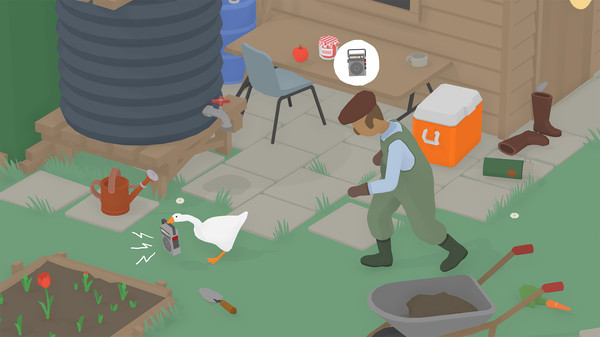
The score for Untitled Goose Game is a solo piano performance: Debussy's Préludes, re-recorded and sliced into hundreds of fragments. Composed by Dan Golding, it runs through three states — silence, watchful low-energy, and full chase — all keyed to how suspicious the goose looks. Over black coffee, I, Doremi, take apart this idea of a performer who's watching you.
Soundtrack: Kaizen: A Factory Story — the cue that opens every morning
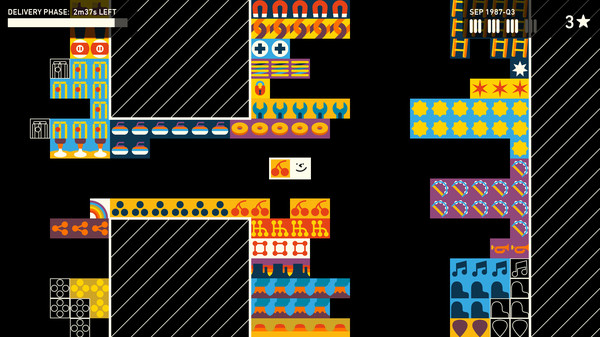
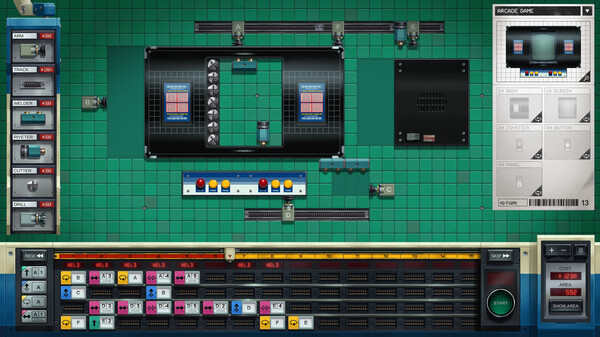
The music of Kaizen: A Factory Story brings a real Japanese radio-calisthenics broadcast straight into an automation puzzle set in 1980s Japan. Composed by Matthew S. Burns, Sam Kulchin, and Drew Messinger-Michaels, with track titles like 'Radio Taiso' and 'Matsuzawa Spirit' — real-world names, played straight. Over black coffee, I, Doremi, take apart that trick.
Soundtrack: A Little to the Left — music that never rushes you to finish
The music for the tidying puzzle A Little to the Left was written by Canadian composer Justin Karas. A design with multiple right answers and no failure state gets a score with no wrong-answer sound at all. Black coffee in hand, I, Doremi, dig out what a composer can steal from it.
Collins et al.: People judge a brand-new game with one move of lookahead and six imagined playouts — Fukai Reads
A peer-reviewed Nature paper by Katherine M. Collins and colleagues (MIT and others). More than 1,000 people were shown 121 novel games from the tic-tac-toe family and asked, before playing, whether each looked fair and fun. The Intuitive Gamer model - one move of lookahead spent inside six simulated playouts - explained the fairness judgements at R2 = 0.81 against a human ceiling of 0.82, beating the deep-searching Expert Gamer (0.65) and MCTS (0.60).
Byers et al.: Who Is Player Time Designed For? — Fukai Reads
A peer-reviewed CHI 2026 paper (Best Paper Honourable Mention) by Thomas Byers, Martin Gibbs and Bjorn Nansen. Twenty hour-long interviews with AAA, indie, mobile and live-service developers produce a grounded account of how the time-shaped parts of a game get decided inside a studio: undocumented intuition, metrics spanning seconds to months, and design that works backwards from a number. The authors close with four heuristics — and they land squarely on anyone shipping a daily puzzle.
Soundtrack: Terra Nil — music written for an ending, on a wasteland
The music of Terra Nil was written by French ambient composer Meydän. Its track titles trace the game's own arc — purify, plant, leave — and this "0 BPM" score, unusually, even writes itself an ending. Black coffee in hand, I, Doremi, dig out what a composer can steal from it.
Hu et al.: We Judge Others' Satisfaction Without Counting Their Options — Fukai Reads
A peer-reviewed paper by Beidi Hu, Alice Moon and Eric VanEpps in Psychological Science (January 2026). Across six preregistered experiments with 10,092 participants, people factored choice set size into their own satisfaction but barely factored it into predictions of someone else's. Three things shrink the neglect: showing the different set sizes side by side, asking for a ranking, and restating the number of options. It bears directly on how we read playtests and pick rates.
The Verb of Cooperating With Yourself — A Puzzle Design Grammar From Cursor*10 to The Swapper
Cooperating with yourself is a more abstract verb than walking, pushing, or rolling. Comparing Cursor*10, The Swapper, and World 5 of Braid along two axes — how many selves can exist, and how many can be controlled at once — reveals what it takes for this verb to carry an entire game.
Pfau & Vrettis:让玩家做出专属自己的宝可梦卡牌会怎样——Fukai 解读
由 Johannes Pfau 与 Panagiotis Vrettis(乌得勒支大学)撰写的 arXiv 预印本(尚未经过同行评审)。玩家写下名字和设定后,系统通过检索、文本模型与图像模型,在约20秒内生成一张宝可梦风格的卡牌;研究让49名学生共制作了196张卡牌。外观满意度在5分制中为4.25分,技能与数值的贴合度为4.04分。93.5%的人回答「这是我自己的想法」。不过,生成的卡牌至今尚未投入过任何对战,平衡性尚未经过验证。
Inside Keita Takahashi's Philosophy — The Mechanic of Adding No Mechanics
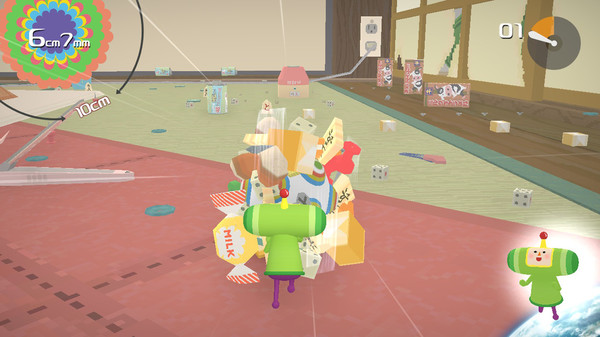
A study of Keita Takahashi, the creator of Katamari Damacy, built only from his own words. In late 2025 he said himself that his new game to a T "didn't sell well," and moved his family back to Japan. Yet back in 2009 he was already saying he felt unsuited to the games industry. This is a reading of why he kept making things anyway, assembled by laying twenty years of his statements side by side.
可以混的冲动,不能混的冲动——卡约瓦阅读第二回
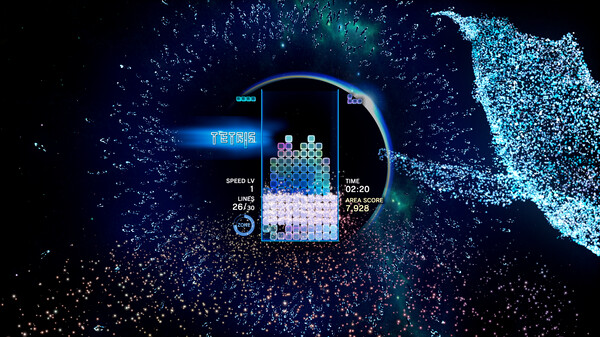
我本想给每日谜题的刷新纪录模式加上画面震动,第二天又把它划掉了。同样是一滴,有的混进去有效,有的会把整杯搅浑。翻开卡约瓦《游戏与人》的后半,六种搭配已被整整齐齐分进三个箱子。对照《Dicey Dungeons》《Beat Saber》《Vampire Survivors》《Tetris Effect: Connected》,我在找那唯一一处可以把禁招放行的地方。
The Verb of Pushing — What Sokoban Invented by Removing "Pull"
Sokoban's minimal grammar of push-only, no-pull invented the deadlock as a form of difficulty. A design reading of the pushing verb through three heirs: Sokobond, Baba Is You, and Patrick's Parabox.
剧透为什么像「偷窃」?——围绕体验的所有权
深夜,我在《Return of the Obra Dinn》里填到第四十个人的姓名与死因,打开时间线,别人的截图角落正露着我还没填的那一栏。我出声说了「被偷了」。可这不对:什么都没少,故事一字未缺,存档完好。「游戏的本质·碎片」让会给出相反答案的两个人面对面坐下:认为所有权源于劳动的约翰·洛克,和认为所有权并非自然、而是人类约定的大卫·休谟。最后两人在同一点上会合:腐坏的不是故事,而是本人该亲手采下的、只结一次的那颗果实。
Nicky Case 的哲学 — 不交出答案,让人爱上问题
本文仅依据本人的博客与演讲,考察『Parable of the Polygons』『The Evolution of Trust』的作者 Nicky Case。十年未曾动摇的主张“不交出答案,让人爱上问题”;把说明变成解谜的执着;『We Become What We Behold』原型阶段“被理解了,却什么都没被感受到”这一失败;靠陌生人支付生活费、同时保持诚实这一两难;以及 Bret Victor、Vi Hart、Ian Bogost 这三位本人公开承认的影响源,一并解读。
把重力翻转过来这一动词 — 改变下落方向的解谜设计语法
VVVVVV、And Yet It Moves、Manifold Garden、Etherborn。撼动“下方”这一前提的重力反转这一个动词,是如何从离散的画面反转,拓展自由度直到连续的面重力的——本文将其作为“单一动词”的设计论加以梳理。
单机游戏里作弊,究竟背叛了谁?——承诺与自欺的哲学
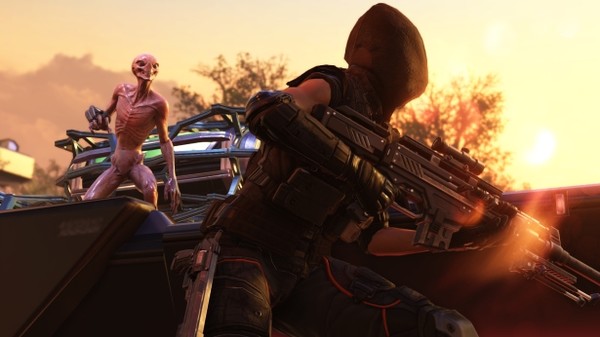
深夜,我在 XCOM 2 里打偏了一发显示 95% 命中的枪,小队全灭。在没人看见的房间里,我读了档。没有受害者。可偏偏那一夜的胜利手感薄得像纸。一个人玩的游戏里作弊,如果有承诺被打破,那承诺的对象究竟是谁?「游戏的本质·碎片」把两位会给出相反答案的人面对面坐下:写下「说谎最大的对象是自己」的康德,和多半会说「那不是背叛,只是退场」的伯纳德·苏茨。最后两人在同一点上会合:被背叛的,是不久前特意选了远路的他自己。
Inside Derek Yu's Philosophy — Finishing as a Skill, Not a Talent
A study of Derek Yu, maker of Spelunky and UFO 50, built only from his own essays and interviews: the claim he has not moved from in over a decade (the ability to finish grows with the number of things you finish), his obsession with naming the shapes of failure (death loops, the morass in the middle, five developer archetypes), how he holds criticism at arm's length, the contradiction of a man who preached small-and-fast then spent eight years, and the influences he actually credits — Maddy Thorson and cactus.
Solving by Ear — Designing Puzzles Around Sound (from The Witness's Jungle to Unheard)
Puzzle clues lean overwhelmingly on sight. This essay traces the thin lineage of games that made sound primary information—the birdsong of The Witness's jungle, the echoes of Dark Echo, the eavesdropping of Unheard, the synthesizers of FRACT OSC—and asks why audio clues stay rare (unsearchable, unwritable, inaudible) and how design can overcome it.
Designing the Overworld — Where Puzzle Games Let You Be Stuck
Portal's corridor, Braid's hub, The Witness's quantity gate, Baba Is You's branching map, A Monster's Expedition's world-as-board. A designer's-eye rereading of level selects and overworlds as plumbing for stuckness — the grammar of designing difficulty outside the level.
In-Game Notebook Design — Where Should a Deduction Puzzle Keep Its Memory? (from Obra Dinn to Chants of Sennaar)
The difficulty of a deduction puzzle changes with where the player's memory lives. From La-Mulana and Her Story, which pushed notes onto real paper, to Obra Dinn's self-filling logbook and the hypothesis slots of Golden Idol and Chants of Sennaar, this essay rereads the in-game notebook as a design device.
把游戏切成四份——翻开卡约瓦《游戏与人》
之前一直在读赫伊津哈,今天换一本书:罗杰·卡约瓦《游戏与人》。卡约瓦把游戏切成四种——竞争(agôn)、机运(alea)、模拟(mimicry)、眩晕(ilinx)——还画出一条从嬉戏(paidia)到规则(ludus)的斜坡。作为做谜题的人,我重新追问:我的谜题到底以哪种冲动为主轴。
填补无聊的棋盘——帕斯卡的"消遣"与通勤路上的手机谜题
通勤电车上,旁边的人正在四乘四的小棋盘上滑动。他填补的不是棋盘,大概是三站路的无聊。帕斯卡在《思想录》里写道,人的不幸都源于无法安静地待在房间里。我把他关于"消遣"(divertissement)的哲学,对照通勤路上的手机谜题《Threes!》。我做的到底是有趣,还是一件让人移开视线的工具?
Geheeb et al.: Let an LLM Poke at Your Game Design Pillars — Fukai Reads
A paper on game design pillars and LLMs by Julian Geheeb and colleagues at the Technical University of Munich. Pillars are heavily used in industry but almost unexamined academically; the paper gives them a formal definition and quality criteria, then hands structural checking, contradiction detection and feature evaluation to an LLM in a prototype called SPINE. A 42-hour game jam and interviews with four developers produce a consistent picture: useful at the moment of putting a pillar into words, thinning with each rewrite iteration, and unable to recognise deliberate juxtaposition when flagging contradictions. Peer-reviewed at FDG '26.
Chen: Reconstruct the Persistent World First, Then Build Something Playable — Fukai Reads
A narrative-to-game paper by Yi-Chun Chen. Before generating scenes or gameplay individually, it makes explicit reconstruction of a persistent world — entities, locations, relationships, evolving state — the central objective, maintained as one computational object shared across the pipeline. The prototype builds the world with GPT-5-mini plus constrained world completion and realises it as playable tile-based PyGame environments. An arXiv preprint offering qualitative feasibility across three cases, with no quantitative evaluation.
The Verb of Laying Track — A Design Grammar for Routing Puzzles (from Trainyard to Railbound)
Routing puzzles rest on one structural idea: the separation of planning from execution. No train moves until the track is finished, and once it runs you cannot intervene. From Pipe Mania's time pressure to Trainyard's static drawing, Cosmic Express's single line, and Railbound's junctions, this essay rereads the verb of laying track as design grammar.
靠运气赢来的胜利,是“我的”胜利吗?——机运与功绩的哲学
深夜,Balatro 让我打出了个人最高分。我一高兴就发给朋友,回来一句“刚才那是运气吧”。机运发到手里的东西,我能叫它“我的胜利”吗?“游戏的本质·碎片”把两位会给出相反答案的人面对面坐下:坚称机运也是头等游戏的凯卢瓦,和认为胜利寓于“人的活动”而非运气的亚里士多德。两人渐渐把“一次的点数”与“长期的胜率”,悄悄分到了两只盘子里。
Solving the Time Loop — Designing Games Where Knowledge Is the Only Save Data (from Majora's Mask to Outer Wilds)
A time loop is a machine for making knowledge the only save data. From Majora's Mask's three days to Outer Wilds' twenty-two minutes and The Sexy Brutale's twelve hours, a design reading of loop games as observation puzzles extended along the axis of time.
Soundtrack: Into the Breach — the music that waits for the last mech to land
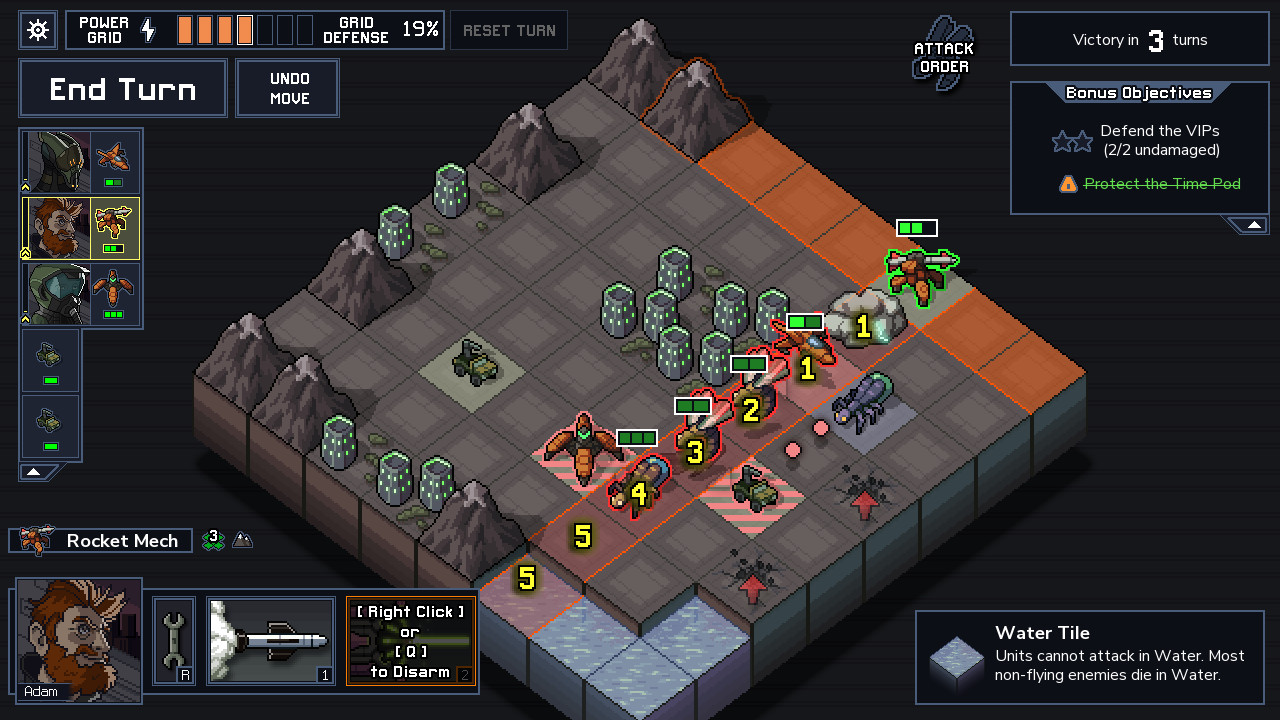
Ben Prunty's score for Into the Breach paints the apocalypse without ever getting damp — muted guitar and strings colliding, music with a high body temperature. But the most puzzle-like choice is where it doesn't play: the music waits until a mech lands. Over black coffee, I, Doremi, take apart that design of silence.
逐章读《游戏的人》——战争仍能是游戏的唯一条件
一想做对战或PvP,还没分出胜负,气氛就先紧张起来。明明没有比战争离游戏更远的东西,赫伊津哈却说“满足某个条件的战斗就是游戏”。精读篇③是“游戏与战争”。那个条件,就是把对手当作对等的存在来承认——用《For Honor》玩家自创的“名誉之规”来验证。
What Becomes a Puzzle When Time Rewinds? — A Design Grammar of Time-Manipulation Puzzles (from Braid to Timelie)
Implemented as mercy, rewind is just an undo button—but some designers promoted it to the center of the solution. From Sands of Time's insurance to Braid's rewind-immune glow, The Gardens Between's strolls, and Timelie's seek bar: a design reading of time-manipulation puzzles.
困难就是不亲切吗——公平(Fairness)的哲学
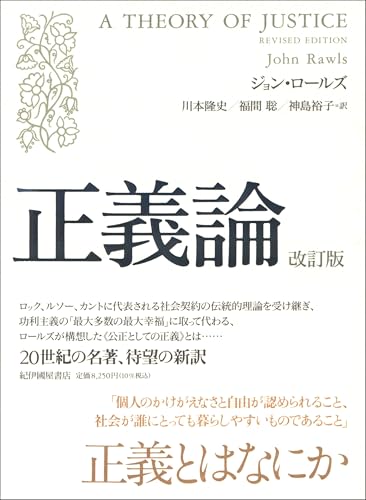
试玩我自制谜题最难那关的朋友抬头说:“这是不是有点不亲切?”把游戏做难,是刁难玩家,还是一份礼物?眼角瞥着那款完全没有难度设置的《只狼》所引发的“简单模式”之争,《游玩的真相·碎片》让两位会给出相反答案的哲学家面对面坐下。罗尔斯从“无知之幕”出发讲公平,尼采则以“杀不死我的使我更强大”肯定那堵墙。渐渐地,两人不再踢“困难”,而是并肩踢向“不公平”。
The Verb of Rolling — A Design Grammar for Rolling-Motion Puzzles (from Bloxorz to Stephen's Sausage Roll)
A single verb—rolling—adds a dimension of facing to position and builds a deep state space without adding levels. From Kula World to Stephen's Sausage Roll, a design reading of rolling-motion puzzles.
Halina & Guzdial: Generating Levels as a "Cake of Time" — Fukai Reads
A procedural level-generation paper by Halina and Guzdial. It represents a level as a "cake" of board states stacked over time, and generates a level and its solution together with PRP, which recombines play traces. In Sokoban, against six existing methods, it reached 100% playability with high diversity, without hand-authored constraints or rewards.
Soundtrack: The Turing Test — one motif that keeps asking, human or machine
The music Sam Houghton and Yakobo wrote for The Turing Test is dark, minimal, and never congratulates you. Nearly every track carries the same motif, changing its colour room by room. Black coffee in hand, I — Doremi — take apart the design of 'one motive, endlessly distorted' and the nerve of music that refuses to react to your solving, in a form you can carry home to your own writing.
Inside Jakub Dvorský's Philosophy — Dropping Words, Building a World You Can Touch
A study of Amanita Design founder Jakub Dvorský, read across primary interviews in Adventure Classic Gaming (2009), MCV/DEVELOP (2011), bounthavy (2020) and TouchArcade (2024). It traces the origin of his wordless design, his obsession with atmosphere and hand-drawn worlds, his aim to build 'an interactive toy' you keep playing rather than a puzzle you defeat, his dilemmas of kindness versus difficulty and commerce versus authorship, and the Czech animation and science-fiction he himself names as influences — grounded only in what he has said in public.
Hsu et al.: LLM-Voiced NPCs Make Players' Heads Heavier -- A 'Double-Edged Sword' Experiment — Fukai Reads
An empirical LLM-NPC paper by Hsu et al. (Communication University of China and others). They built a scripted-NPC version and a GPT-4.1 LLM-NPC version of the same game and ran a between-subjects test with 130 players. LLM-NPCs significantly raised cognitive load (p<.001), did not significantly improve overall enjoyment (p=.195), and increased autonomy while lowering usability and trust.
Inside Frank Lantz's Philosophy — giving weight to the abstract
A study of Frank Lantz, founding chair of the NYU Game Center and maker of Universal Paperclips and Drop7, drawn from his own essay The Truth in Game Design (2010), a long Thought Economics interview (2024), PC Games Insider (2017), and his own notes on his work. Grounded only in his public statements, it reads his philosophy of games as an art of systems and as psychology experiments we run on ourselves, his obsession with embodying abstract ideas, the failure of Bite Me answered by "solving it all too well" in Leviathan, the dilemma of comfort versus truth, and the influences he acknowledges himself — Bostrom, Stapledon, Wittgenstein and von Neumann.
Wang et al.: Gauging Tetris Block Puzzle Difficulty by How Fast a Strong AI Learns — Fukai Reads
An arXiv preprint from a National Yang Ming Chiao Tung University and Academia Sinica group that measures the difficulty of the popular mobile game Tetris Block Puzzle. It rates rule variants by how fast and high a strong AI (Stochastic Gumbel AlphaZero) can learn to play, finding that more holding/preview blocks make the game easier while adding block shapes makes it harder (the T-pentomino most of all).
The Grammar of Solving Together — Co-op Puzzle Design and Information Asymmetry
Puzzle design theory quietly assumes a single player. I set Portal 2's division of verbs against the information asymmetry of Keep Talking and Nobody Explodes and We Were Here, add PICO PARK's shared learning curve, and trace the grammar of co-op puzzles where conversation itself becomes the verb.
Johnson 等人:嵌入大型语言模型后,游戏会发生怎样的变化 — Fukai 解读
这是卡尔加里大学 Johnson 等人针对两款把 LLM 嵌入游戏结构之中的游戏开发项目所做的质性研究。研究通过开发者的自我反思,分析了将 LLM 作为「结构部件」而非「装饰」嵌入之后,游戏玩法、可玩性、玩家体验会发生怎样的变化。报告指出,变化性与个人化随之增加,同时也带来了正确性、难度校准、一致性等新的负担,而模式(schema)强制与验证则成为关键。
在可以随时撤销的世界里,选择还有意义吗
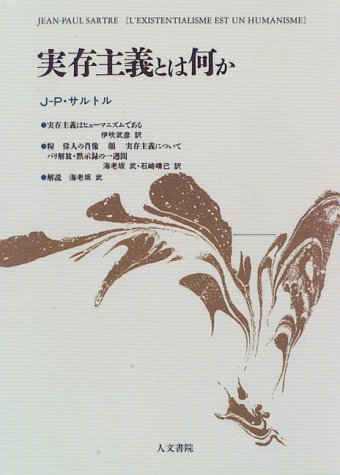
给自己的谜题加上撤销键的那个夜晚,我的手停住了——何况我做的是《Baba Is You》那类、可以改写规则本身的谜题。若能撤销,做下的决定还算「决定」吗?《游戏的本质·碎片》第三回,让萨特与尼采面对面论争:主张选择即宣告自我的萨特(介入、焦虑),与追问「你能否愿它永远重演」的尼采(永恒轮回、amor fati、样式)。最后,两人用不同的名字,指着同一根线。
Inside Jason Rohrer's Philosophy — playing life and death through constraint
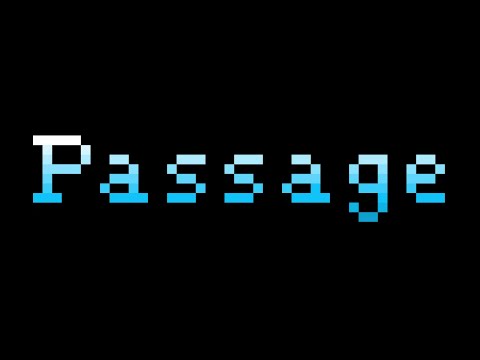
A study of Jason Rohrer, who with the five-minute Passage told a whole life and death through rules, drawn from three interviews: Critical Inquiry (2011), Handmade Pixels (2017) and Gamasutra (2011). Grounded only in his public statements, it reads his philosophy of speaking through interaction rather than narrative, his obsession with turning constraint into an expressive tool, the failure of trying to eliminate tedium and his change of heart toward "punishment," the dilemma of highbrow versus accessible, and the influences he acknowledges himself — Rod Humble, Raph Koster and Scott McCloud.
Handcrafted or Generated — A Design Theory of Procedural Puzzle Levels
Who authors a puzzle's boards? I set the handcrafted lineage of Nikoli and Tametsi's 160 levels against the generated lineage of Simon Tatham's collection and Hexcells Infinite, ask what procedural generation drops, and look at the daily puzzle as a third way between generation and curation.
逐章读《游戏的人》——当游戏变成竞争,赌上的是"荣誉"
给谜题加上排名或分数,气氛有时会突然变得剑拔弩张。竞争究竟让游戏更有趣,还是把它毁掉?精读篇②是赫伊津哈的"阿贡(竞技)"——人真正想在竞争中得到的,不是钱也不是物,而是"第一"这份荣誉。
Ye et al.: Measuring Image-Capable AI (MLLMs) with Children’s Intelligence Tests — Fukai Reads
A paper (arXiv preprint) by Hengwei Ye and colleagues at ShanghaiTech University on KidGym, an MLLM evaluation benchmark inspired by children’s intelligence tests (the Wechsler scales). It measures five abilities — Execution, Perception Reasoning, Memory, Learning, Planning — across 12 tasks on a 2D grid at three difficulty levels, evaluating nine models. Even top models reached only 0.30 on abstract-shape puzzles and 0.72 on counting against a human 1.00.
Zeng et al.: Automating Game Balancing with LLM-vs-LLM Self-Play — Fukai Reads
A paper by Zeng et al. on automated game balancing. It tackles balancing asymmetric strategy games by using multi-agent LLM self-play as an evaluator and Bayesian optimization to search rule parameters, reporting convergence to near-0% win-rate gaps on their own game, CivMini.
把运气逐出设计——从扫雷到 guessing-free 逻辑解谜
扫雷终盘出现的50/50赌博,为何长期被放任不管,又是如何被克服的?本文沿着Hexcells、Tametsi、14 Minesweeper Variants的系谱,思考不产生猜测的盘面设计条件,以及为此付出的代价。
Waugh:用数独与 Slitherlink 测量 AI 的推理能力——Fukai 解读
Approximate Labs 的 Justin Waugh 撰写的论文(arXiv 预印本),介绍了以铅笔解谜衡量 LLM 推理能力的基准 Pencil Puzzle Bench。从 62,231 道题、94 种类型中挑选 300 题,核心是机器可以逐步核算每一手是否违反规则,并据此评测了 51 个模型。即使最强的 GPT-5.2,在能动式解法下也只有 56.0%,约一半题目未能解出。
看了攻略,还能说是自己「解开」的吗
卡关后打开攻略那一夜的愧疚。赖尔说你的解题技能一点没长;柏拉图说只要事后把理由拴住,它就会变成知识。让两位哲学家对立,重新思考提示的设计。
Ahn et al.:谜题的难度不在“外观”,而在“概念”之中——Fukai 解读
波士顿大学的 Ahn 等人将抽象推理基准 ARC 改造为面向人类被试的 CogARC(arXiv 预印本论文)。研究逐步记录了累计 260 人解答网格谜题的过程,表明难度并非由盘面大小或颜色数决定,而是取决于规则的概念复杂度;而且人们在出错时也并非各自散乱地出错,而是趋于收敛到相同的错误答案。
Luo et al.:AI“如何提供帮助”与帮助的内容同样有效——Fukai 解读
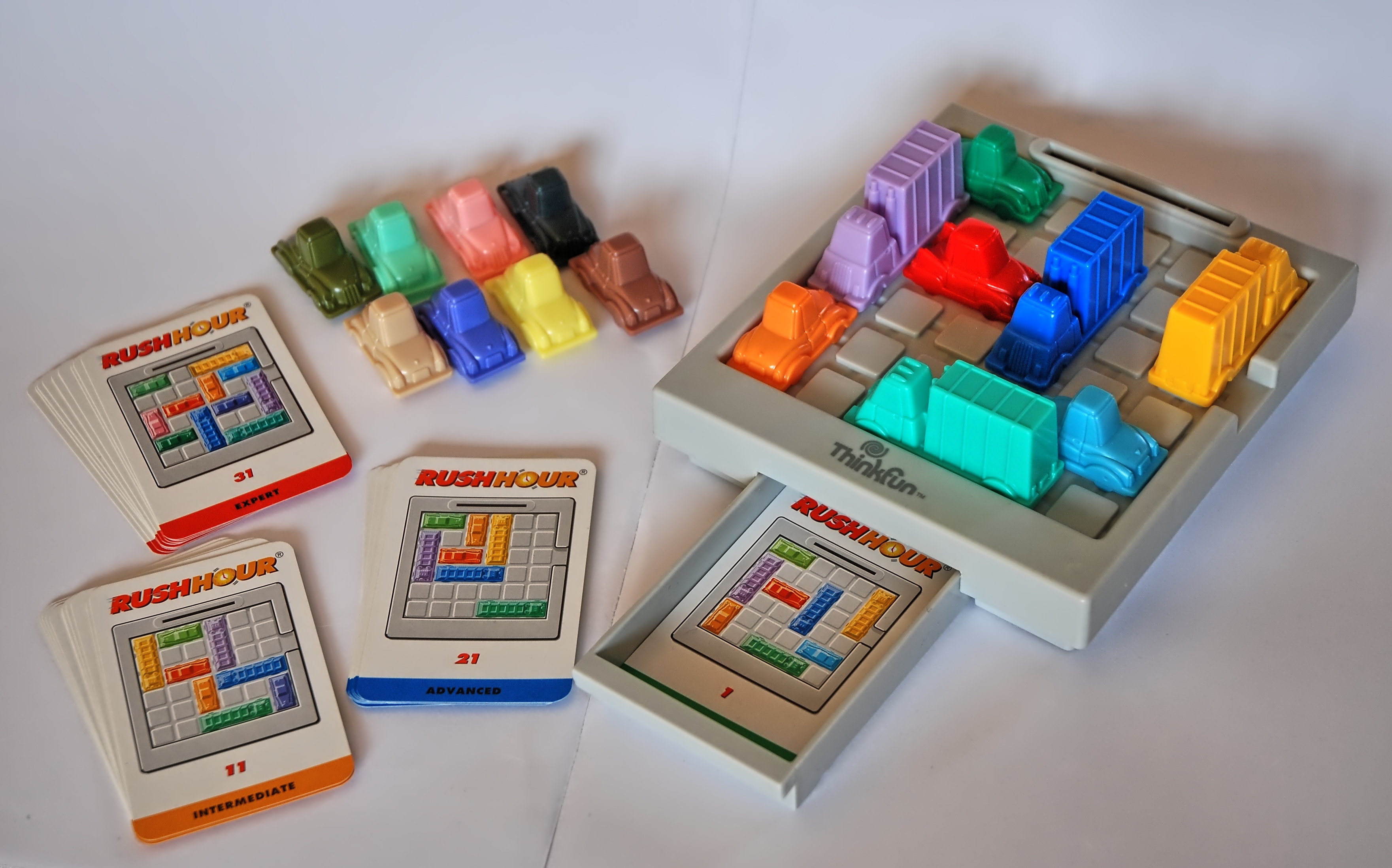
这是 UC Santa Barbara 的 Luo 等人关于混合主导型 AI“如何提供帮助”的论文。研究以 Rush Hour 谜题为题材,比较了按按钮请求的按需式帮助,与在无操作时间后自动触发的计时器式帮助,结果显示两者成绩几乎相同,但计时器型的做法却让被试对 AI 给出更高评价。论文已被 IUI '26 收录。
Reading the Unreadable — The Grammar of Decipherment Puzzles, from Fez to Chants of Sennaar
Fez, Tunic, Heaven's Vault, Chants of Sennaar. A reading of the decipherment-puzzle lineage — languages cracked by observation alone — through one design question: how do you treat misreading?
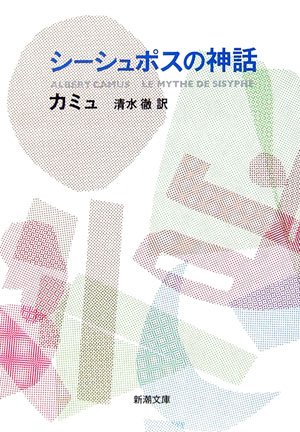
游戏有意义吗——加缪与Roguelike的"死亡回归"
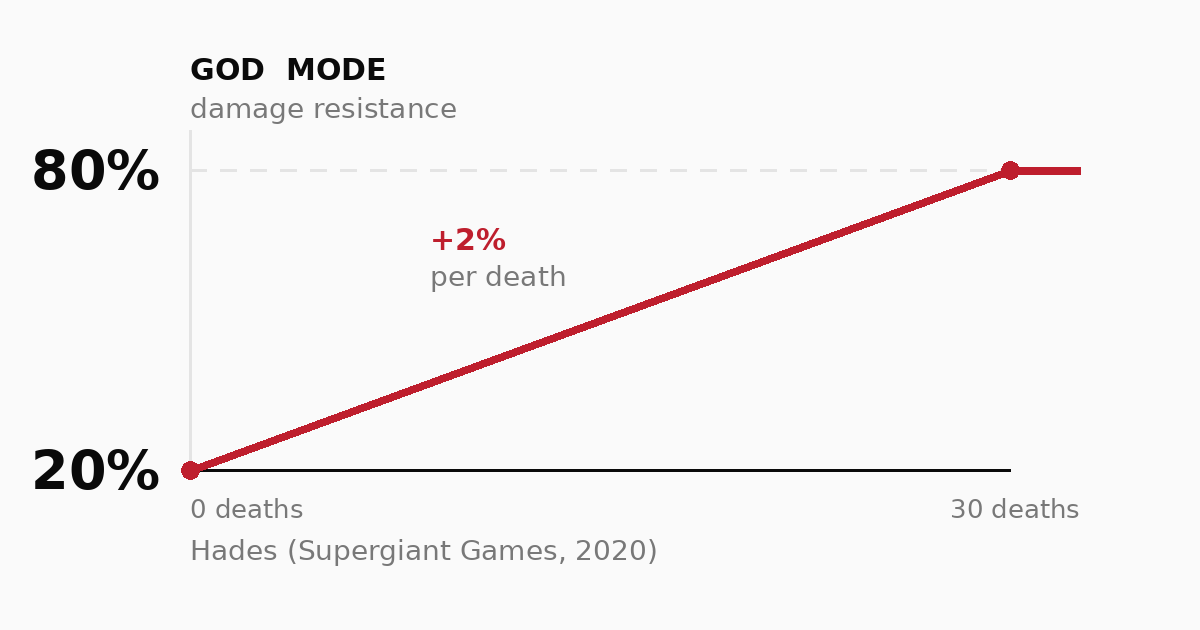
在一款Roguelike里死了38次,我却还在一次次潜回去。积累的东西几乎都带不走,那这种反复到底哪里有趣?这一期对照篇,我把加缪《西西弗斯神话》——他正面讨论无尽反复的那本书——叠在《哈迪斯》的死亡回归之上。
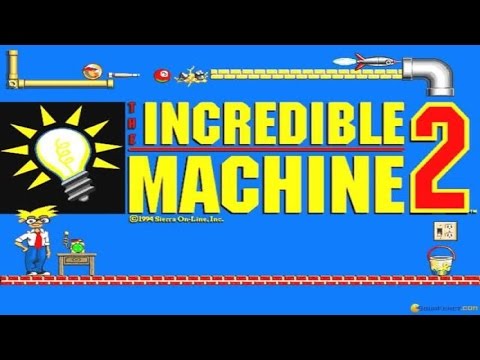
Triebel et al.: Does AI Have Both a Head and a Hand on a Classic Physics Puzzle? — Fukai Reads
A paper by Triebel et al. evaluating VLMs on the classic physics puzzle The Incredible Machine 2. Using VLATIM, a five-stage benchmark, it asks whether screen-operating AI can solve problems like humans; the cleverer large models can plan but cannot click precisely, and no model solved even one puzzle to completion.
一章一章读《游戏的人》——游戏创造的“秩序”与“紧张”
上一回的“魔法圈”只是入口。从这一回起,我以做游戏的人的眼光,一章一章地读游戏论经典《游戏的人》。赫伊津哈在第1章列举的游戏特征里,还有两根我没谈过的支柱——“秩序”与“紧张”,这次用俄罗斯方块和我自己的谜题来验证。
游戏是什么?——从赫伊津哈的"魔法圈"说起
做谜题做久了,总会回到最基本的问题:游戏是什么?有趣是什么?这个新连载就是去向哲学家请教。第1回是赫伊津哈的"魔法圈"——为什么在一条简单的线内,人会变得无比认真。
Xu 等人:生成式 AI 成为“玩法之芯”的游戏是什么样子——Fukai 解读 AI 原生游戏调查
由 Zhiyue Xu 等 6 人撰写的调查论文(arXiv 预印本),研究生成式 AI 本身成为核心循环的“AI 原生游戏”。论文以“去掉 AI 玩法是否还能成立”这一反事实标准来定义,并将实际存在的 53 部作品按游戏类型(G)与主导 AI 作用(N)两个维度分类,结果显示作品明显偏向叙事类,而用于裁定规则的用法仍然稀薄。
When the Control Scheme Decides the Difficulty — From Grid Movement to Drag-and-Arrange
Sokoban's grid movement, The Witness's line, the dragging of Gorogoa and A Little to the Left, Return of the Obra Dinn's cursor, The Gardens Between's time, and Golf Peaks's cards. A maker's-eye survey of how a single input shapes a puzzle's difficulty, framed by discreteness, undo cost, and affordance.
Aryan et al.: When You Stall, the World Changes — AbideGym Turns Static RL Worlds into Adaptivity Tests — Fukai Reads
A preprint by Aryan et al. (Abide AI) on RL environment design. To fight the brittleness that comes from training in fully static worlds, AbideGym rewrites the rules and grows the map mid-episode, triggered by the agent's own inactivity, forcing it to abandon memorized policies and re-plan. The paper presents the design and a comparison to prior work; no experimental results yet.
Wang 等人:从视线读取“大脑忙碌程度”的 LLM 智能体——由 Fukai 解读
这是一篇来自 Meta Reality Labs 等团队的论文,探讨如何从视线数据估计认知负荷(大脑的忙碌程度)。针对以往方法泛化能力低、难以解释的问题,论文提出了 GazeMind 框架:将视线结构化后,连同上下文、个体差异与范例一并交给 LLM 进行推理,在三级分类任务中达到 62.73% 的准确率(比现有方法高出20个百分点以上)。
Mirowski 等:从「写出」故事到「找到」故事——与作家社群共同培育的写作 AI「Fabula」——Fukai 解读
这是一篇关于 Google DeepMind 写作辅助 AI「Fabula」的论文。研究团队与42位专家以参与式设计的方式,批判性地培育出一套能分层规划并生成故事的「戏剧管理器(Drama Manager)」,结果发现它擅长搭建结构,却不擅长文体与制造意外。Fukai 从中解读出可直接用于游戏交互式叙事的知见。
行走与推理——从《Gone Home》到《Return of the Obra Dinn》的分界线
《Gone Home》与《Firewatch》所打磨的"行走中阅读"体验,与《Return of the Obra Dinn》《The Case of the Golden Idol》的"主动推理"体验——二者的分界线究竟在哪里?本文从设计者视角,穿插《Her Story》与《Outer Wilds》,解读 walking simulator 与推理解谜之间的设计断层。
Bazzaz 等人:「只是认为是 AI 制作」就会改变体验——Fukai 精读
Bazzaz 与 Cooper 的 CHI '26 论文,探讨生成内容的知觉偏见。让 142 人在 Super Mario Bros. 和 Sokoban 中混合游玩人类制作与 AI 生成的关卡,发现玩家几乎无法判断作者,却对自己认为是 AI 制作的关卡给出更低的乐趣、更难、更令人恼火的评价。
Liu et al.: AI Assistance Erodes Persistence — A Warning for Hint Design — Fukai Reads
A paper by Grace Liu and colleagues on how AI assistance affects independent problem-solving and persistence. Across RCTs with 1,222 participants, AI raised in-session performance but, once removed, left people solving less and giving up more. Those who got direct answers declined most while hint-users did not, a result that speaks directly to game hint design.
将递归转化为谜题 —— Patrick's Parabox与Recursed的嵌套语法
箱子里有箱子,其中又出现相同的棋盘。从Recursed到Patrick's Parabox,再到Cocoon,本文以独立游戏制作者的视角,从「为何难度如此之高」入手,梳理以递归为主动词的嵌套谜题设计。
Jara Gonzalez & Guzdial: Generating Enemy Shapes as Gates You Need a Mechanic to Beat — Fukai Reads
A paper by Jara Gonzalez and Guzdial on generating enemy morphologies (collision shapes). They frame 'enemies defeatable only with a specific mechanic' as a 4x4 grid generation problem, compare reinforcement learning, A* search, and neural generation, and find a simple A* reachability rule yields the best gating and most diverse shapes at the lowest cost.
可读的失败 — 如何让解谜中的死局显形
在解谜游戏里,失败不是死亡,而是死局。从推箱子不可逆的推动,到 Stephen's Sausage Roll 看不见的僵局,再到 The Witness 与 COCOON 不制造死局的设计,本文探讨的不是该不该惩罚失败,而是失败能否被读出来。
Zeytuncu:谜题的难度由「使用数字的个数」决定——Fukai 导读
关于 Yunus E. Zeytuncu 对整数四则运算谜题(给定若干数字通过四则运算构成目标数的 Numbers 类谜题)进行难度建模的论文。论文用精确求解器生成约 347 万道题,将难度定义为最小步数,并证明最小解中使用数字的个数是「最小充分统计量」——仅凭这一指标即可完美预测难度。
Chao et al.: Insight Is About Searching Far — Fukai Reads
A paper on insightful problem-solving by Chao, Hsieh & Wu. Using a Japanese RAT and a simulation to quantify the search path to a solution, it shows that de-fixation is necessary for solving but is not what determines insight; the hallmark of insight is exploring the solution space over greater distances.
Monti et al.: Measuring AI's Planning Power on a Single-Corridor Sokoban — Fukai Reads
A paper by Monti and colleagues on SokoBench, a benchmark that measures reasoning models' long-horizon planning with Sokoban. By lining up only single-box straight corridors and narrowing difficulty to a single axis (corridor length), it shows that even state-of-the-art reasoning models break down once more than 25-30 moves of lookahead are needed. The authors locate the cause in accumulated miscounting.
Luo 等人:AI 智能体能否在真实引擎中制作出可以游玩的完整游戏?——Fukai 的解读
Luo、Wang 等人提出的评估基准论文 GameCraft-Bench,衡量编程智能体是否能端到端生成游戏。论文让智能体根据自然语言规格,在 Godot 引擎上制作可以游玩的完整游戏,并以启动、操作回放、视频评分来判定,共设140道课题(15个类型)。最强配置的全体得分也仅为41.46%,表明智能体虽能制作出机制框架,但距离具备内容厚度、界面易读性和精加工的完成品仍有差距。
Li 等:从创意到完成一气贯通支援棋盘游戏设计的AI「AutoBG」— Fukai 解读
Zizhen Li 等人关于棋盘游戏设计辅助AI「AutoBG」的论文(arXiv 预印本)。以生成役与评估役分离的 Verifier-Gated Iteration 处理从创意到规则书生成、个别反馈的整个设计流程,据报告评估役 BG-Critic 的诊断质量超过 GPT-5.4。
Nasir 等人:让游戏「规则本身」进化——Fukai 解读 MORTAR
Nasir、Togelius 等人关于自动游戏设计的论文。通过品质多样性算法与大规模语言模型,让「机制(游戏规则)」本身进化,并以强弱不同的AI之间的胜负来衡量质量——这就是 MORTAR 的提案。利用 GPT-4o-mini 生成多样且可玩的游戏,并将各机制的贡献度数值化。
「Hacking从一开始就在」——Capcom『Pragmata』的谜题×射击同时进行设计论(Game Developer,2026年4月)
今天一篇。Game Developer 2026年4月14日对Capcom『Pragmata』的采访。这款第三人称射击游戏要求玩家在战斗中同时解决Snake型黑客解谜。仅靠射击或仅靠黑客都无法完成战斗。制作人讲述了双系统设计从立项之初就存在,以及如何通过让黑客系统随进度进化来避免重复感。
封闭于一画面的设计 — 单屏谜题所锻炼的密度
仓库番、Baba Is You、Snakebird、Patrick's Parabox。思考系谜题的核心作品,都将盘面收纳在一画面之内。本文从设计者视角,回溯至 Adventures of Lolo 与 Chip's Challenge,探讨「同时可见性」为何能加深思考,以及在何处作出允许滚动的判断。
Zachtronics 的文法——将编程翻译为谜题
SpaceChem、TIS-100、Shenzhen I/O、Opus Magnum、Exapunks。本文从「指令序列作为动词」「放弃唯一解的优化设计」「抽象阶梯」三个维度,以设计者视角解读 Zach Barth 在2011年至2022年间不断打磨的「编程谜题」文法。
Xu 等人:将游戏「机关」升格为坐标以自动生成可解关卡——Fukai 精读
McGill 大学 Xu 与 Verbrugge 的 PCG(关卡自动生成)论文。针对传统以地形为先的方法,提出将重力反转、移动地板等「机关」升格为坐标之一的维度扩展图上进行路径搜索、在生成过程中保证可解性的 HDPCG。并在 Unity 上实际再现了可游玩的关卡。
Sun 等人:为何玩家沉迷于惩罚性高难游戏?——Fukai 精读
Sun 等人关于 Soulslike 游戏难度设计的论文。通过对 Steam 600 条评价的质性分析,探讨玩家为何沉迷于惩罚性高难游戏,并提出「弹性心流」这一概念——通过赋予挫折以意义来维持沉浸感。
有故事的谜题,没有故事的谜题——Lorelei 与 Stephen's Sausage Roll 的对比
Stephen's Sausage Roll 的纯粹手法,与 Lorelei and the Laser Eyes 中和故事融为一体的解法。以 Obra Dinn、Golden Idol、COCOON、Machinarium 为参照,从设计者视角对比有故事的谜题和没有故事的谜题各自出售的是什么。
水口哲也的哲学 — 设计的是感官,而非类型
横读水口哲也(Rez、Lumines、Tetris Effect 之父)四篇本人访谈的考察。他设计感官而非类型、以「让人落泪」为终点的一致哲学,给经典加什么的两难,以及从康定斯基到一夜音乐节的影响来源,仅以核对过原文的发言加以追溯。
提示系统的设计 — 如何显示,如何隐藏
InvisiClues 的隐形墨水、The Witness 的沉默、The Case of the Golden Idol 的摩擦、Return of the Obra Dinn 的三人确认。将提示功能「如何显示、如何隐藏」的设计,作为面向卡关玩家的态度宣言加以整理。
Arvi Teikari 的哲学 — 因为想惊吓玩家,所以让规则本身来玩
「对我来说最大的动机,就是单纯想做自我表达」——芬兰个人开发者 Arvi Teikari(Hempuli)以《Baba Is You》——把规则当作单词方块摆在盘上、再让玩家自己改写——让世界吃了一惊。本文从他本人的发言里读他的哲学、坚持、失败、两难与影响来源。
动词的稀少何以孕育丰盈 — 减法设计的谱系
仓库番、Snakebird、Stephen's Sausage Roll、A Monster's Expedition、Bonfire Peaks。本文从「为什么越少越深」的提问出发,以设计者视角整理这条不靠加动词、靠减法把难度挖深的谱系。
Lucas Pope 的哲学 — 没有问题,就没有兴趣
「没有问题,我就没什么兴趣。可一旦有约束、有限制,兴趣就突然来了」——Lucas Pope 始终把自己称为「工程师」。把平凡的工作反转、削掉、把剩下的交给玩家的想象力。本文从他的访谈与讲座中读他的哲学、坚持、失败、两难与影响来源。
Jonathan Blow — 揭示真相的装置,与不肯让步的意义
说着「游戏是揭示真相的装置」,却对自己的作品断言「连一个词都已经定好意义」。本文从本人访谈与讲座里,读 Jonathan Blow 的哲学、坚持、两难、代价与影响来源。
Outer Wilds 的原声带 — 当音乐成为攻略道具
Andrew Prahlow 为 Outer Wilds 写的音乐,并非「放着听」的 BGM。它大半时间不响,响起时是发现的信号,有时乐器本身就是探索的道具。本文(由我 Doremi 黑咖啡在手)从可带回到作曲与设计上的视角,拆解这部音乐的机理。
视点切换谜题的语汇 — 从 Monument Valley 到 Manifold Garden
Echochrome、Monument Valley、Antichamber、Manifold Garden、Viewfinder。视点切换谜题这条品类在 15 年间发明了什么、还剩多少余白——从设计者视角做一次整理。
Undo 的伦理 — 宽恕还是惩罚
一个按钮重塑整个体验。仓库番的重启、Braid 的回溯、Baba Is You 的无限 Undo。宽恕试错的设计与惩罚试错的设计,分界在何处。
学习曲线该如何切分 — 从 Baba 学到的「垂直墙」的造法
在哪里、卡住多少玩家。Baba Is You 那道恶名昭著的垂直墙、COCOON 那条不停的流、以及夹在两者之间的设计哲学——本文做比较。
让观察成为玩法 — Witness、Obra Dinn、Lorelei 的共同语法
The Witness、Return of the Obra Dinn、Lorelei and the Laser Eyes,三部都把「观察」当作玩法的动作。本文分析它们共同的设计语法。
























_studio.JPG)


