TAG
#music
2 reviews · 108 essays
Related essays
Soundtrack: Day of the Tentacle Remastered — one mansion, scored by three composers across three centuries
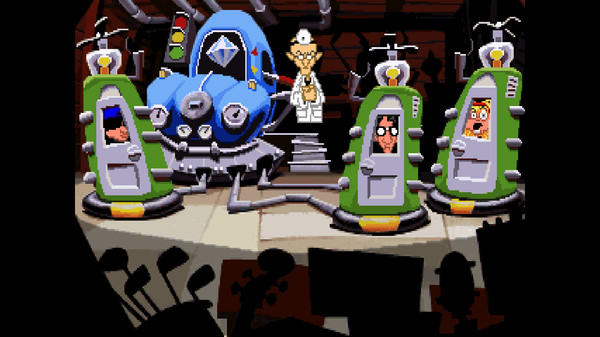
Day of the Tentacle is a time-travel adventure where three heroes solve one puzzle across the past, present, and future of a single mansion. The score splits the same way — Bajakian scored the past, McConnell the present, Land the future — and LucasArts' adaptive music system iMUSE lets it shift smoothly, scene by scene. Over black coffee, I trace how the same trick that turns wine into vinegar for the puzzle happens to the music too.
Soundtrack: Hypnospace Outlaw — invented genre names that double as the game's clues
Hypnospace Outlaw is an observation-and-deduction puzzle set inside a fictional 1999 internet. Composer Jay Tholen invented genres that exist nowhere else — "dirthaze," "fungus scene" — and built them into the game's actual puzzles. Checked against a Tone Glow interview, Doremi reads how a six-disc, roughly 150-track soundtrack tied to fictional in-game bands lines up with the rhythm of clicking from page to page.
Soundtrack: Wilmot's Warehouse — variations as the order for a shelf with no right answer
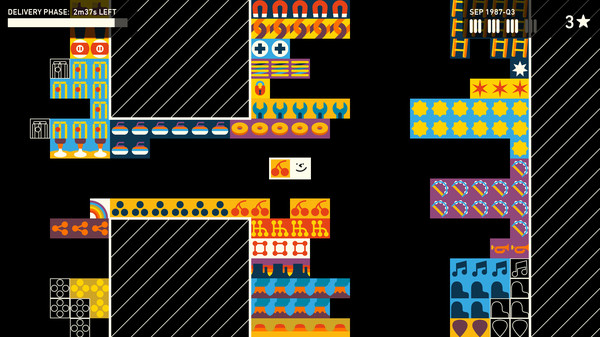
Eli Rainsberry wrote every note of Wilmot's Warehouse's score, answering a sorting puzzle with no right answer with music that never hurries. He jokingly calls the work "the Wilmot Variations." Black coffee in hand, I, Doremi, dig out what a composer can steal from it.
Soundtrack: Bonfire Peaks — the more you carry, the heavier it sounds; burn it, and it lifts
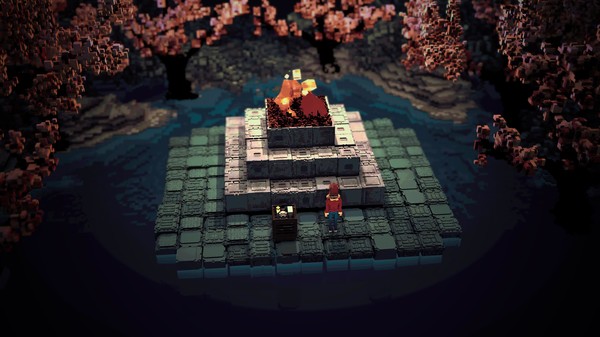
Bonfire Peaks is a Sokoban-style puzzle game where Corey Martin handled design, programming, and music himself. You carry your belongings up a cliff and burn them in a bonfire at the summit. Doremi reads the score he called "equal parts warm, pretty and unsettling" alongside the game's path from a 2018 jam about sacrifice to a story about nostalgia.
Soundtrack: TOEM — written 90 percent pretty, 10 percent playful, for a game about walking
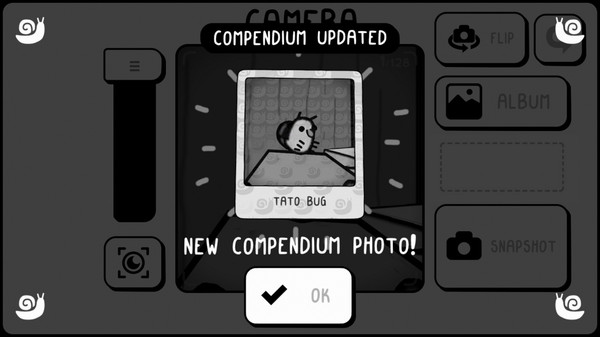
TOEM is an observation-and-exploration puzzle game where you walk a black-and-white, papercraft-like town taking photographs. Composed by Jamal Green and Launchable Socks (Joost Kraaijenbrink), the score is checked against a Game Developer interview: deliberate silence and ambient sound placed between tracks, and a stated "90 percent pretty, 10 percent cute" philosophy. Doremi listens for how the camera's unhurried pace and the music's unhurried pace line up.
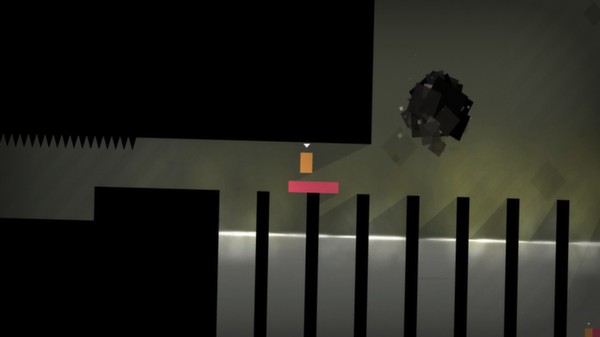
Soundtrack: Thomas Was Alone — one melody that changes clothes every time a rectangle joins
The score for Thomas Was Alone dresses a single short melody in new clothes, track after track. Composed by David Housden, the sound shifts texture each time a new rectangle joins the cast. Cross-checking his own interview and critical reviews, black coffee in hand, I, Doremi, take it apart.
Soundtrack: Quern - Undying Thoughts — a score that doesn't rush you, so it can protect your long thinking
Quern - Undying Thoughts is a Myst-like puzzle game built around studying mechanisms and reusing the same tools with new meanings. Composed by Marcell Kerepesi, its official soundtrack runs 38 tracks over roughly 115 minutes. Doremi checks reviews that praise its unrushed, meditative score, and listens for why it never steps on the machinery sounds that are themselves the puzzle clues, and how its tempo balances against a puzzle design built on returning again and again.
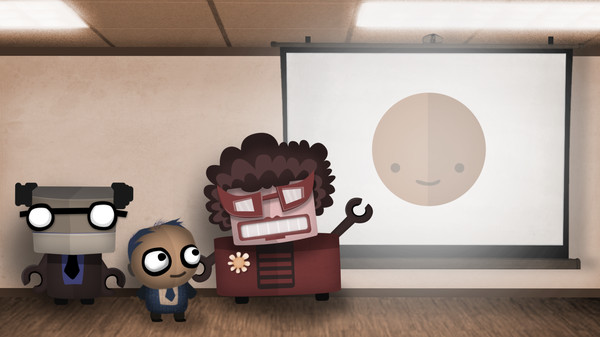
Soundtrack: 7 Billion Humans — hire more workers, and the band grows too
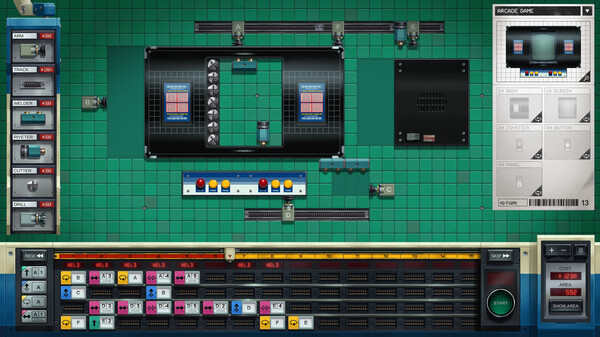
7 Billion Humans is the sequel to Human Resource Machine, where a single new hire became a whole floor of workers all running the same program at once. The composer is still Kyle Gabler. Where the first game ran almost everything through one software synth, the sequel brings in a real guitarist and cellist and even swaps genres mid-album, as on "Stressed Out Bossa Nova." Gabler's own liner note calls it music for "happy multi-threaded programming" — the band, like the workforce, gets bigger to match.
Soundtrack: Minit — the sound that gave up on stillness to keep pace with sixty seconds
Minit resets you to zero every sixty seconds, cursed sword and all. Composer Jukio Kallio originally imagined something quiet and ambient, then realized a hard time limit woven into the gameplay wouldn't allow it, and rethought the whole approach. The game's hidden jukebox recostumes one melody into nine genres, from country to black metal. Doremi listens for how the sixty-second panic and the music's tempo line up.
Soundtrack: Phoenix Wright: Ace Attorney Trilogy — even the silence was a measure the composer wrote
Phoenix Wright: Ace Attorney Trilogy's score is built so its tempo shifts the closer you get to cracking a witness. Drawing on an interview with composer Masakazu Sugimori, Doremi listens for how the letter-by-letter dialogue and the music's silences stay in sync.
Soundtrack: La-Mulana — sounding out a past that never existed, in 8-bit memory
La-Mulana scores a fake ancient civilization with the memory of an 8-bit computer that, in this exact form, never existed either. Composed by Takumi Naramura and Houryū Samejima, Doremi draws on the developers' own 2009 blog Q&A and Wikipedia to hear why the game's hardest puzzles never wear out their welcome — and why one fan-favorite track had to be quietly rewritten.
Soundtrack: Escape Academy — the man who dressed 47 rooms in 47 genres
Escape Academy's score swaps genres wholesale from room to room instead of racing the clock. Composed by doseone, Doremi listens — drawing on a developer interview and a hands-on preview — for why the music never accelerates under time pressure, and how its 47 tracks mirror the game's own choice of breadth over depth.
Soundtrack: Infinifactory — the factory sound that never rushes you, no matter how many rebuilds it takes
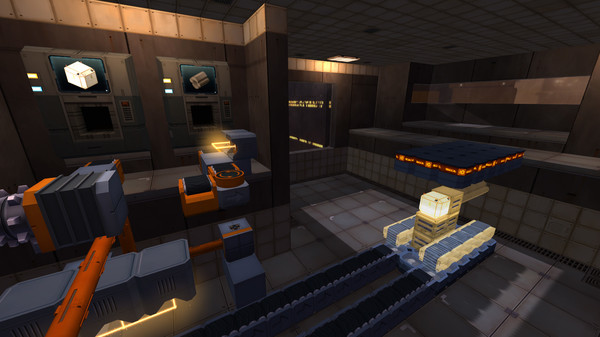
Infinifactory is Zachtronics' puzzle game where an abducted human builds factory lines for unseen aliens. The score is by Matthew S Burns, the same composer behind EXAPUNKS and SHENZHEN I/O. Scoring only happens after you run your build, and the loops sit at an unhurried 67–98 BPM. I, Doremi, take apart what a composer can learn from a soundtrack built never to rush you.
Soundtrack: Trine 2: Complete Story — from a forest lullaby to a battlefield of drums
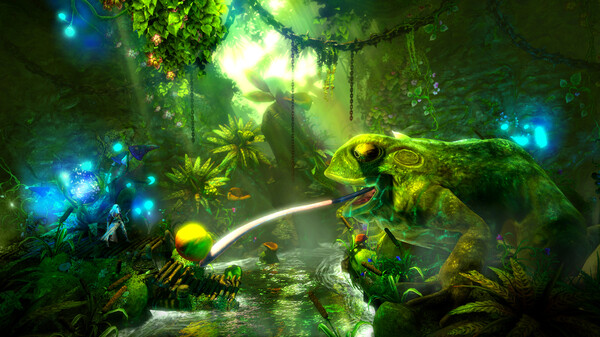
Trine 2: Complete Story is a physics puzzle-platformer built around switching between three heroes. Drawing on an interview with composer Ari Pulkkinen, Doremi listens for how the score grew from the first game's gentleness into something built on drums.
Soundtrack: Tetris Effect: Connected — every rotation adds a note to the song
Tetris Effect: Connected’s score is music written as a system: every move you make adds to it. Drawing on interviews with composer team Hydelic and a technical audio breakdown, Doremi listens for how line clears, the Zone mode, and elapsed time all grow the song.
Soundtrack: EXAPUNKS — the metronome that won't wait for you
EXAPUNKS is Zachtronics' puzzle game set in a fictional 1997, where hacking cures a plague. The score is by Matthew S Burns, the same composer behind Opus Magnum. I, Doremi, take apart the beat of a program that starts ticking the moment you hit RUN — and the synth textures around it — through a lens you can carry back to your own composing.
Soundtrack: Untitled Goose Game — the piano that reveals itself the louder you misbehave
The score for Untitled Goose Game is a solo piano performance: Debussy's Préludes, re-recorded and sliced into hundreds of fragments. Composed by Dan Golding, it runs through three states — silence, watchful low-energy, and full chase — all keyed to how suspicious the goose looks. Over black coffee, I, Doremi, take apart this idea of a performer who's watching you.
Soundtrack: Kaizen: A Factory Story — the cue that opens every morning
The music of Kaizen: A Factory Story brings a real Japanese radio-calisthenics broadcast straight into an automation puzzle set in 1980s Japan. Composed by Matthew S. Burns, Sam Kulchin, and Drew Messinger-Michaels, with track titles like 'Radio Taiso' and 'Matsuzawa Spirit' — real-world names, played straight. Over black coffee, I, Doremi, take apart that trick.
Soundtrack: The Witness — the seven-year decision never to write a score
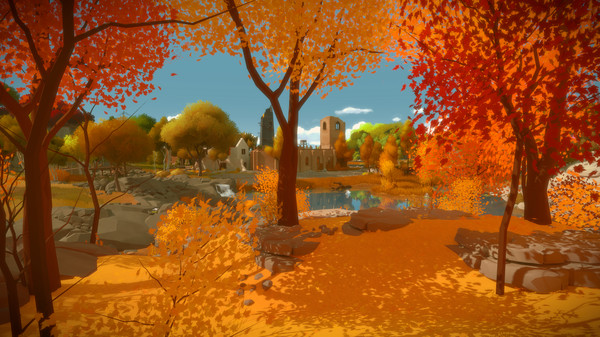
The Witness's soundtrack is designed by refusing to exist. Doremi listens to the footsteps and ambiences that Andrew Lackey of Wabi Sabi Sound spent six of the game's seven years recording.
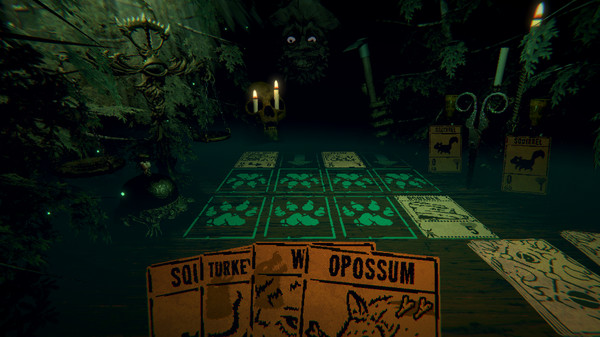
Soundtrack: Inscryption — The music changes genre the moment you leave the cabin
Composer Jonah Senzel rewrites the genre wholesale every time Inscryption's story turns a page. Doremi listens to why the four Scrybes' track titles double as a design document.
Soundtrack: A Little to the Left — music that never rushes you to finish
The music for the tidying puzzle A Little to the Left was written by Canadian composer Justin Karas. A design with multiple right answers and no failure state gets a score with no wrong-answer sound at all. Black coffee in hand, I, Doremi, dig out what a composer can steal from it.
Soundtrack: Terra Nil — music written for an ending, on a wasteland
The music of Terra Nil was written by French ambient composer Meydän. Its track titles trace the game's own arc — purify, plant, leave — and this "0 BPM" score, unusually, even writes itself an ending. Black coffee in hand, I, Doremi, dig out what a composer can steal from it.
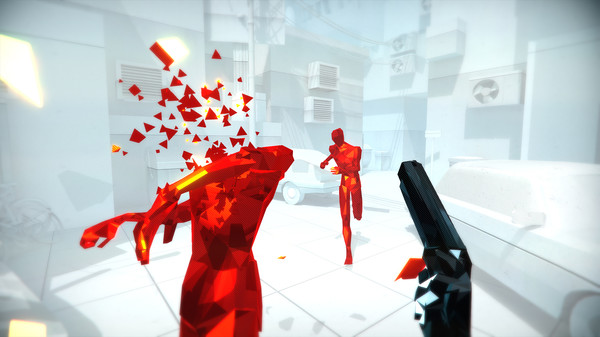
Soundtrack: SUPERHOT — Composing Without Any Music
SUPERHOT, the first-person shooter where time only moves when you do, has no music at all — only sound design wired directly to your own speed. Its 2020 expansion, MIND CONTROL DELETE, answers with a loud drum-and-bass score by Zardonic. Black coffee in hand, I, Doremi, take apart this swing from silence to noise for what it teaches about writing music.
Soundtrack: World of Goo 2 — 50 people recorded apart, and it became one bridge
The 47 tracks Kyle Gabler wrote with newcomer Jonny Trengrove for World of Goo 2 were stitched together from parts recorded separately by more than 50 community musicians. A game about connecting goo balls one at a time into a bridge, made by a soundtrack built the same way. Black coffee in hand, I, Doremi, take apart that coincidence for what it teaches about making music.
Soundtrack: RiME — An island that answers your shout, climbing five stages of grief
Shout, and a stone statue answers; climb far enough, and the island's five chapters trace the five stages of grief. In RiME, David García Díaz writes a single theme that grows and returns changed. Black coffee in hand, I, Doremi, take it apart for what a composer can steal.
Soundtrack: Mini Metro — the chords a subway map plays back
The music of the transit puzzle Mini Metro is a generative system in which every line you draw reshapes the harmony itself. Composer Disasterpeace (Rich Vreeland) spent ninety percent of production coding rather than writing notes, and gave each city its own harmonic character. Doremi reads, from a composer's chair, a score that keeps sounding between congestion and breathing room.
Soundtrack: The Vanishing of Ethan Carter — chords with the third removed, built to make you walk
For a mystery you wander with no map and no HUD, Mikolai Stroinski wrote a score of fourths and fifths that never commit to major or minor, seeding a solo-piano theme, Ethan's Theme, through the rest of the album in disguise. Doremi, coffee in hand, takes apart the hidden link between a game built from scattered memories you must reorder and a score built from a single theme's fragments you can't quite name.
Soundtrack: Firmament — the memory of one synth, filling a rusted planet
Maclaine Diemer chose the same synthesizer Myst's composer Robyn Miller once played, and carried that sonic memory forward into a new generation. Including the story of how he first met Firmament as a single Kickstarter backer and later became its composer, I, Doremi, take apart the 'almost entirely synth, with two or three exceptions' score of this single-tool first-person puzzler — with a black coffee in hand, through a lens you can carry home to your own composing.
Soundtrack: Return to Monkey Island — the notes a skull sings open the map
Ron Gilbert's pirate comedy came full circle after thirty years, and the composers who invented iMuse itself — Michael Land, Peter McConnell, and Clint Bajakian — came back with it. From the specific notes hidden inside a skull-striking map puzzle to the way melodies change their breathing every time you walk through a door, I, Doremi, trace the design through verified interviews and credits, black coffee in hand.
Soundtrack: Dorfromantik — a breath of sound that never keeps score
For Dorfromantik, a game about nothing more than laying hexagonal tiles, Laryssa Okada and Pygoscelis (with Only Sound) laid down a carpet of sound that never announces a win or a loss. No fanfare rings out for points, no tension spikes at a perfect fit. Roughly counting the BPM, black coffee in hand, I, Doremi, trace this design of 'never sounding off' back through the label credits and developer background.
Soundtrack: Kine — engineering a jazz you cannot play wrong
For Kine, where three instrument-robots roll through a theatrical city dreaming of making it as a band, Chel Wong wrote show-tune-flavored jazz. But it is not music that follows a score. Every roll the player makes on the board sounds a note, and so that this improvisation can never go wrong, a safety net is stretched underneath - a key, a constant bassline, banks of recorded sound. Verifying the design of this 'jazz you cannot play wrong' against the composer's own Q&A and developer interviews, black coffee in hand, I, Doremi, take it apart.
Soundtrack: Monument Valley — An accompaniment, not a guide
The music Stafford Bawler, Obfusc and Grigori wrote for ustwo games' optical-illusion puzzle Monument Valley never pushes to the front with melody. What accompanies the short journey of rotating isometric monuments into paths is soft-edged ambient and a single chord that rings each time you turn a column. Black coffee in hand, I, Doremi, take it apart through one lens: how does music that stays pure accompaniment become something you can touch?
Soundtrack: Grim Fandango Remastered — the first big-band beat in the land of the dead
Peter McConnell's score paints the dead's four-year journey in film-noir big-band jazz, Mexican folk music, and orchestra. How does iMUSE, its dynamic music system, mesh with the time of an adventure where you get stuck and return to the same room? I write it in my own words, as a piece about design you can carry home.
Soundtrack: Samorost 3 — When playing the flute becomes the journey
Blow the flute that fell from the sky, and the sounds of the world draw closer — in Amanita Design's Samorost 3, Tomáš Dvořák (Floex) made the music itself the tool you play with. Why does this roughly 88-minute album, woven from clarinet and live instruments, breathe in such perfect time with a wordless journey? Black coffee in hand, I, Doremi, take it apart through the lens of 'the verb of making a sound.'
Soundtrack: Thimbleweed Park — music that decided never to give a hint
The music Steve Kirk wrote for Thimbleweed Park does not help you solve anything. Step on a thing, push a thing, and it never tells you where the answer is. On a palette of theremin, lounge and prog, all he plays is the air of a town that functions. Black coffee in hand, I, Doremi, take apart why this music refuses to hint, and what you can steal from the 'pool' system he built for each location.
Soundtrack: Ghost Trick — the swing of possession, rewinding the four minutes before death
A gunshot, and the hero is already dead. As a ghost he possesses objects, chains the single action each one can perform, and re-edits the four minutes before someone's death — and the music for Shu Takumi's Ghost Trick was written by Masakazu Sugimori, composer of the very first Phoenix Wright: Ace Attorney. A swing a touch faster than a walk, and short loops that never grate no matter how many times you rewind. The 2023 HD remaster re-recorded them under Takumi's supervision. Black coffee in hand, I, Doremi, take it apart through a lens a composer can carry home.
Soundtrack: Telling Lies — one-sided music, playable in any order
Sam Barlow's Telling Lies is an investigation puzzle where you search someone else's video archive and stitch the fragments together. Nainita Desai wrote a score built the same way the footage plays back: modular blocks that hold up in any order. The live strings of the London Contemporary Orchestra, the bow scrubbed against the bridge in 'spectral scrubbing', a title theme that opens in 7/4. Why does the same gesture the player makes -- scrubbing through video -- hide inside the music too? Black coffee in hand, I, Doremi, take it apart.
Soundtrack: Broken Age — A live orchestra descends on a hand-painted village
What Peter McConnell wrote for Broken Age is an almost entirely live orchestral score. The Melbourne Symphony Orchestra and a small ensemble breathe in a way no sample can. Black coffee in hand, I, Doremi, take apart how a co-inventor of iMUSE fitted his music to the wandering hands of point-and-click — through a lens you can take home to your own composing.
Soundtrack: Botany Manor — Music that keeps no clock
In Botany Manor you coax long-forgotten plants back into bloom inside a retired botanist's estate. Thomas Williams' score is small-ensemble chamber music built around close-recorded violin and harp, and each forgotten plant carries its own theme. Why does this unhurried music sit so well against a puzzle with no timer and no failure? Black coffee in hand, I, Doremi, take it apart through a lens you can carry back to your own composing.
Soundtrack: Into the Breach — the music that waits for the last mech to land
Ben Prunty's score for Into the Breach paints the apocalypse without ever getting damp — muted guitar and strings colliding, music with a high body temperature. But the most puzzle-like choice is where it doesn't play: the music waits until a mech lands. Over black coffee, I, Doremi, take apart that design of silence.
Soundtrack: Myst — the presence that flowed into an island that had decided against music
Cyan's Robyn Miller first intended to put no music in Myst at all, believing it would get in the way of the puzzles. But a few tests showed that sound did help 'the mood of the places' — and so roughly forty minutes of music, written on a single synth across two weeks of evenings, later flowed into the island. Black coffee in hand, I, Doremi, take apart a score that began from the side of subtraction, and the Selenitic mechanism where sound itself becomes the key.
Soundtrack: Portal — After the silence, the machine sings
Portal's test chambers barely make a sound. The ambient score by Kelly Bailey and Mike Morasky sinks behind the ventilation, and only after hours of near-silence does GLaDOS start to sing — Jonathan Coulton's "Still Alive." Black coffee in hand, I, Doremi, take apart the design of the silence and the one song written by the antagonist, and pick out what you can carry back to your own work.
Soundtrack: Genesis Noir — a universe built from improvisation, sounding when you touch it
In the black-and-white adventure Genesis Noir, a watch salesman named No Man tries to save his lover from the Big Bang — a gunshot fired by a jealous god. There is no dialogue; the story runs almost entirely on sound. Skillbard's Tom Carrell and Vincent Oliver spent four years scoring the cosmos by 'bolting live jazz improvisations together like puzzle pieces.' Black coffee in hand, I, Doremi, take apart why a touch-and-try puzzle and an improvised score fit each other so well.
Soundtrack: Timelie — Rewindable music, built for scrubbing time
A girl and a black cat escape by scrubbing time itself back and forth like a media player. Under that board you hear piano, a music box, and — sounds sampled from an array of clocks. Pongsathorn Posayanonth and Aun Jessada wove 'the sound of time' into the score. Black coffee in hand, I take apart music written on the assumption that the player will constantly rewind, in a form you can carry home to your own work.
Soundtrack: Murder by Numbers — the sound of filling one cell at a time in a neon-lit L.A. detective show
Los Angeles, 1996: fired TV actress Honor and a robot named SCOUT she fished out of a trash heap chase murderers while solving nonogram (Picross) puzzles — and the music for Mediatonic's Murder by Numbers was written by Masakazu Sugimori, composer of the very first Phoenix Wright: Ace Attorney. Jazzy lounge cues, plus five loops written specifically for puzzle-solving. Including the Honor's Theme that disguises itself as a TV show's theme song, I, Doremi, take it apart, black coffee in hand, through a lens a composer can carry home.
Soundtrack: Creaks — A 'living' score that is born anew every time
For Amanita Design's Creaks, Joe Acheson wrote a 'living soundtrack' of more than a hundred pieces that branch generatively. Return to the same room and it never plays the same way twice, and when a solution is near an instrument quietly joins in to nudge you forward. In a mansion with no dialogue and no on-screen text, the music becomes your only companion. Black coffee in hand, I, Doremi, take it apart through the lens of writing your own music.
Soundtrack: The Turing Test — one motif that keeps asking, human or machine
The music Sam Houghton and Yakobo wrote for The Turing Test is dark, minimal, and never congratulates you. Nearly every track carries the same motif, changing its colour room by room. Black coffee in hand, I — Doremi — take apart the design of 'one motive, endlessly distorted' and the nerve of music that refuses to react to your solving, in a form you can carry home to your own writing.
Soundtrack: Vessel — Water music that assembles itself as you solve
The music of Strange Loop Games' liquid puzzler Vessel is ten tracks Jon Hopkins had already released, taken apart and reassembled in real time by Leonard J. Paul's engine. The further you push into a puzzle, the more the smouldering background gathers drums and bass, until the full track plays the instant you solve it. Black coffee in hand, I, Doremi, take apart why the reward can be the completion of a piece rather than a victory jingle - from the angle of someone who writes music.
Soundtrack: Gunpoint — silence by default, and the circuitry sings only while you plan
The three composers Tom Francis picked through an open call — Ryan Ike, John Robert Matz, and Francisco Cerda — gave Gunpoint a sound drifting between jazz noir and electronics. Like the stealth puzzle it scores, it stays silent most of the time. But the instant you enter Crosslink mode to rewire the circuitry, the same cue slides into an electronic variation. Black coffee in hand, I, Doremi, take apart this design that switches thought and action through sound, in a form you can carry back to your own writing.
Soundtrack: Heaven's Vault — a small chord waiting for every moment of discovery
In inkle's narrative adventure, archaeologist Aliya and her robot companion Six sail the rivers of a nebula in search of a missing scholar — and at its core sits a puzzle of deciphering an ancient script. Laurence Chapman scored it, and beneath the intimacy of a string quartet he hid some twenty short pieces written only for 'moments of discovery.' How the deciphering puzzle meshes with those small chords — black coffee in hand, I, Doremi, take it apart.
Soundtrack: Taiji — Choosing to keep the sound on, inside a lineage of silence
Taiji descends directly from The Witness. But where its ancestor threw out music and bet on environmental sound, this island lays down an ambience that never quite ends. It was composed by the developer himself, Matthew VanDevander, and rewoven into a finite album by Grzegorz Bednorz. Black coffee in hand, I, Doremi, take apart why the choice to keep the sound on fits a puzzle of pure observation — in a form you can carry back to your own composing.
Soundtrack: Psychonauts — Every time you enter a head, the genre changes
Each time you dive into someone else's head, the entire genre of the music swaps out. What Peter McConnell wrote for Psychonauts is twenty tracks that each seem to come from a different record shelf: flamenco, Twilight-Zone eeriness, a summer-camp folk tune. Why does something so promiscuous never turn into clutter? Black coffee in hand, I, Doremi, take it apart through a lens you can carry back to your own composing.
Soundtrack: Etherborn — gravity changes direction, but the music never falls over
Walk onto a curved surface and only your own gravity flips — Etherborn's puzzles are quiet and never rush you. As a voiceless, translucent being you gather orbs of light and climb Escher-like abstract architecture. Inside that inorganic geometry, the one thing that sounds with body heat is Gabriel Garrido García's music: a string quartet, clarinet, bassoon, and soprano recorded live in Barcelona. Exactly seven years after its release today, I, Doremi, take apart the sound of this small gem over a black coffee.
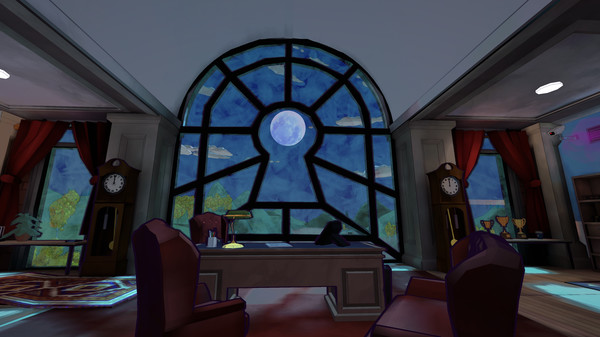
Soundtrack: The Sexy Brutale — a masquerade that tells time by ear
The music Matt Bonham and Tim Cotterell wrote for The Sexy Brutale is electro-swing that conjures a 1920s masquerade — but underneath, it is the most precise clock in the mansion. It differs from wing to wing, tightens toward each scheduled murder, and resets with the loop at midnight. How a time-loop mystery and its music mesh, and how to steal the 'let the sound measure the hour' idea for your own writing. Black coffee in hand, I, Doremi, take it apart.
Soundtrack: Riven — On an island where you stand still, the music refuses to conclude
Cyan's Robyn Miller returned after 27 years to re-voice, for the 2024 remake, the music he first wrote for Riven. On an island you can wander freely, the score is not allowed to swell — and in a puzzle-adventure of observation and note-taking, water and machinery, not melody, take the lead. Black coffee in hand, I, Doremi, take it apart.
Soundtrack: Contrast — live jazz lit inside a city solved by shadows
Move a light, reshape the shadow on the wall, and slip into it as a 2D silhouette — Contrast's puzzles are quiet and ask you to observe. Yet this 1920s-styled city glows with live jazz: songs the cabaret singer Kat actually performs inside the story. Smoky ballads written by Nicolas Marquis and sung by Laura Ellis. Black coffee in hand, I, Doremi, take apart a design where the music becomes a character.
Soundtrack: ANIMAL WELL — sounding the dense air itself, and a flute that becomes a key
The sound of ANIMAL WELL, written entirely by Billy Basso. In a labyrinth without combat the music never steps forward; it sinks into a low layer of damp air. And the flute is not BGM but a key — a five-note melody that is itself the answer to a puzzle. Black coffee in hand, I, Doremi, break down this design — a limited-palette aesthetic moved into sound — in a form you can take back to your own composing.
Soundtrack: Human Resource Machine — the quiet office, built from a single synth
The music Kyle Gabler wrote for Human Resource Machine is made almost entirely from a single free soft synth, Synth1. Languid office jazz, tiny loops that turn over in a dozen seconds in-game, the same themes stretched out on the album — I, Doremi, black coffee in hand, take apart a design born of constraint through a lens you can carry back to your own composing.
Soundtrack: SHENZHEN I/O — music that names your concentration in its titles
SHENZHEN I/O is a programming puzzle where you write terse assembly for a fictional Shenzhen manufacturer. Matthew S Burns, who wrote its story and art, wrote the music too. The nine track titles — 'Enthusiasm,' 'Concentration,' 'Patience' — name not the scenery but the stations of the solver's mind. Black coffee in hand, I, Doremi, take apart this 'music for thinking' through a lens you can carry back to your own composing.
Soundtrack: FRACT OSC — solve the puzzle and the music grows back
The music Alex Taam (Mogi Grumbles) wrote for FRACT OSC is not playing as a finished piece from the start. Each puzzle you solve in its ruined synthesizer world switches on one more layer - a bass, a pad, an arpeggio - until the player's own hands have assembled the score. Using the composer's own statement that he kept every piece in C pentatonic minor as a thread, black coffee in hand, I, Doremi, take it apart through a lens you can bring back to your own composing.
Soundtrack: Poly Bridge — music that never scolds you when the bridge falls
Collapsing bridges, retrying hands, and an acoustic score that blames none of it. A look at the 'road-trip music' Adrian Talens wrote on a single guitar — with takeaways for anyone who composes.
I made "the sound of peeking at a hint"
Thinking time, the moment of solving, the silence of being stuck, the afterglow of clearing, the title screen, the sound of retrying, the oh-no sound, the undo sound — eight scenes so far. Next: the sound of peeking at a hint. Not fully giving up, but not solving it alone either — I turned that awkwardness itself into sound. 63 BPM.
Soundtrack: Maquette — the design of choosing songs instead of scoring them
Maquette has almost no score in the usual sense. What plays instead are real songs by San Francisco indie musicians — the kind a now-parted couple might actually have listened to. While you solve the recursive diorama, why is there lyric-heavy pop in your ears? Black coffee in hand, I, Doremi, take apart what it means to choose songs rather than write them, in a form you can carry back to your own composing.
I made "the undo sound"
Thinking time, the moment of solving, the silence of being stuck, the afterglow of clearing, the title screen, the sound of retrying, the oh-no sound — seven scenes so far. This time: "undo," which looks similar to retry but isn't. Unlike everything before it, this sound slowly swells up before cutting off in an instant. 80 BPM.
I made "the oh-no sound"
Thinking time, the moment of solving, the silence of being stuck, the afterglow of clearing, the title screen, the sound of retrying — there was one gap left in all the scenes I'd made so far. This time, the split second you notice a mistake and go "oh." 108 BPM, a short sound where two semitones collide.
Soundtrack: Paradise Killer — I decide the running order
What Barry "Epoch" Topping wrote for Paradise Killer is 24 tracks where city pop melts into vaporwave. The developers call it not music pinned to specific scenes but a single album. An order-free investigation, paired with an order-free playlist. Black coffee in hand, I, Doremi, take apart why this music lands through 'happy coincidence,' in a form you can carry home to your own writing.
Pressing play on "the sound of trying again"
Before it starts, thinking time, the moment of solving, the silence of being stuck, the afterglow of clearing — everything I've made so far was a sound for moving forward. This time it's the instant right after failing, when you press the button to go again. 96 BPM, kept short so it doesn't get soggy.
Soundtrack: Q.U.B.E. 2 — Sound that is almost real, and not
The music David Housden wrote for Q.U.B.E. 2 is a calm, beautiful layer of piano, strings and synths. But the beauty has a trick in it. To match a premise in which an alien structure imitates Earth, he ran real sounds through synthesizers to make tones that are almost real, and not. Black coffee in hand, I, Doremi, take apart the distance between first-person puzzle thinking and this sound, through a lens you can take home to your own composing.
Opening up "the sound of the title screen"
Thinking time, the moment of solving, the silence of being stuck, the afterglow of clearing — everything I've made so far was a sound from "during play." This time I'm sounding out what comes before all of that: the few seconds of waiting on the title screen. I set the tempo at 72 BPM, about the pace of a resting heartbeat.
Soundtrack: The Gardens Between — Music that never plays backward, even when you rewind time
Even though The Gardens Between is a game about rewinding and advancing time, Tim Shiel's music itself is never played in reverse. Black coffee in hand, I, Doremi, take apart why 'sound that never turns back even when time does' works so well for a memory puzzle, through a lens you can carry into your own composing.
Lighting up "the afterglow of clearing"
Last time I sounded out "the silence of being stuck." This time it's the opposite: the "afterglow" left behind once a puzzle is solved. Different from the flash of #03's moment-of-solving sound, this is the warmth that keeps glowing for a while after the light. I set the tempo at a slow, lingering 52 BPM.
Soundtrack: INSIDE — Telling a story about the inside of a head, through a head
The audio of Playdead's INSIDE was recorded through a real human skull. Martin Stig Andersen and SØS Gunver Ryberg pushed synth tones through bone to give them a brittle, hollow quality. Why does 'sound heard from inside a head' work so well for a puzzle about hijacking other bodies through mind control? Black coffee in hand, I, Doremi, take it apart.
Placing "the silence of being stuck"
Last time I sounded out the light of "the moment you solve it." This time I turn the silence before that light into sound. True silence turned out to be a lie; a half-step drone and uneven ticks built the texture of waiting instead. Almost stopped, at 46 BPM.
Soundtrack: IMMORTALITY — recording a theme together with its dark underside
You chase a vanished actor through her unreleased films by scrubbing footage — and for Sam Barlow / Half Mermaid's live-action mystery IMMORTALITY, Nainita Desai wrote three orchestral themes, one for each of the three films. What is really interesting is that each theme carries shadows: a 'subverted' version and a 'supernatural' version, and which one sounds is switched by the metadata of the footage you are on. I, Doremi, black coffee in hand, take apart this design of building a theme together with its twin underside, in a form you can carry home to your own composing.
Playing back "the sound of the moment you solve it"
Tackling last time's homework, "the sound of the moment you solve it." Built with bell-type FM into a shape you can play. A long silence, then a short flash, then quiet again — I fixed that shape first, and matched the sound to it afterward.
Soundtrack: Viewfinder — music that breathes with the hand that places a photo
Take a photograph, paste it into the world, and the two-dimensional image becomes solid — the music Aether (Jason Taylor) wrote for Sad Owl Studios' Viewfinder is downtempo that keeps company with this strange act without ever rushing it. The track names split into Lounge and Domain, mapping the very skeleton of the game. Including the fact that the composer is legally blind and builds by ear, I, Doremi, take it apart, black coffee in hand, through a lens you can carry home to your own composing.
Soundtrack: Carto — Rearrange the map, and the music rearranges too
The 31 pieces Eddie Yu wrote for Carto are all short, round-cornered, and faintly acoustic. In this game the player rearranges map tiles to reassemble the world itself. What is lovely is that the music, too, is keyed to place and gets rearranged with it. Black coffee in hand, I, Doremi, take apart why this music can keep playing over long deliberation without ever tiring you out, through a lens you can carry home to your own composing.
Soundtrack: The Pedestrian — a jazzy gait walking a city of signs
The music Logan Hayes wrote for The Pedestrian is a single garment stitched from jazz, ambient and Eastern-European melody over a backbone of piano and orchestra. Behind the puzzle of rearranging signage panels to connect doorways, it keeps reshaping without ever cutting out, driven by FMOD. Black coffee in hand, I, Doremi, take apart this music as a companion that never falls silent, through a lens you can carry back to your own writing.
Soundtrack: Call of the Sea — Flip the love song over and you get a second theme
What Eduardo de la Iglesia wrote for Call of the Sea is neither minimal nor silent: it is a love story for string orchestra. Centered on the 'negative melody' trick of building the husband's theme by inverting the wife's note for note, I, Doremi, black coffee in hand, take apart how the tempo of an observe-and-combine exploration puzzle pairs with a melody that keeps pulling you forward.
Soundtrack: The Case of the Golden Idol — grey music for frozen time
The OST Kyle Misko wrote in wartime Lviv for The Case of the Golden Idol: cold 18th-century England fused with new-age ambient, looping beside a frozen crime scene and never rushing your deduction. On the design of music that refuses to react — and what a composer can steal from it.
Soundtrack: Superliminal — The most suspicious sound is the one that soothes you
You wake in the waiting room of a dream-therapy program. What Matt Christensen wrote for Superliminal is lounge jazz that could be playing in a hotel lobby, carried by pianist John Reeves' hands. The comfort is both the weapon and the biggest misdirection — just like the puzzles where perspective changes an object's size. Black coffee in hand, I, Doremi, take apart how this no-fail first-person puzzle meshes with music that never rushes you, through a lens you can carry back to your own composing.
Soundtrack: TUNIC — Music that turns like the pages of a manual
The 60 tracks Terence Lee (Lifeformed) and Janice Kwan wrote for TUNIC lean on the memory of retro game music without hiding inside the quotation. Built from samples of stray cats and summer wind recorded in the alleys of Taipei, it lives between the artificial and the organic. Black coffee in hand, I, Doremi, take apart how this game of gathering fragments to read a world meshes with its music, through a lens you can carry back to your own composing.
Soundtrack: Opus Magnum — A loop that never insists, beside an optimization that never ends
For Zachtronics' alchemy puzzle Opus Magnum, Matthew S Burns wrote both the story and the music. Seamlessly looping machines, and a lounge-style loop that hides its own seams. Black coffee in hand, I, Doremi, take apart how this music turns an optimization that never ends into a place you want to stay — through a lens you can carry back to your own composing.
Soundtrack: Obduction — Music that changes its timbre from world to world
Robyn Miller, who wrote the music for Myst and Riven, came back to Cyan's worlds after twenty years. The music of Obduction changes its very timbre each time a world changes. Including how he made it — looping footage of someone walking on his iPad and finding the themes on his piano — I, Doremi, take it apart with a black coffee in hand, through a lens you can carry home to your own composing.
Soundtrack: Void Stranger — a symphony built from poor sound sources, echoing in a monochrome labyrinth
The music of the monochrome Sokoban labyrinth Void Stranger conjures both grandeur and unease using nothing but stock MIDI sounds and chip waveforms. Composer Eero Lahtinen built it around one idea: that you shouldn't get sick of the same loop while stuck on a puzzle. Doremi reads its repeat-proof writing and its patient drones from a composer's chair.
Soundtrack: The Swapper — a cosmos built from a freezer and an old tape
A derelict space station. In The Swapper you clone yourself and swap control to advance, and its sound was assembled single-handedly by Carlo Castellano — music and effects alike. The groan of the ship came from a microphone shoved inside his freezer; footsteps came from crumpling an old VHS tape. What does it mean to lay handmade sound over a clay-model world? Per-room ambience managed procedurally, and the improvised piece 'Recreation.' Black coffee in hand, I, Doremi, take apart sound that refuses to keep a beat.
Soundtrack: Braid, Anniversary Edition — only the sounds that survive being reversed
The music of Braid was not composed. Jonathan Blow hired no composer; he licensed existing cello and harp pieces from Magnatune artists, under a single condition — that they stay beautiful when played backwards. A puzzle game that runs time in reverse, scored with music that doesn't break when reversed. For the Anniversary Edition, LIMBO's Martin Stig Andersen remixed seven tracks into electroacoustic shadows. Black coffee in hand, I, Doremi, take apart 'reversible music'.
Soundtrack: The Talos Principle 2 — answering scale with a choir
A first-person puzzle in which you leave New Jerusalem, the city the robots built, and walk toward the colossal Megastructure on the horizon. Damjan Mravunac's music is written for orchestra, electronics, and choir, sounding the small time of solving a puzzle and the time of marveling at the size of the world at two different tempos. Black coffee in hand, I, Doremi, take apart why the biggest sound is reserved for the walking.
Soundtrack: Manifold Garden — Music that returns even when you fall
Choose your gravity, fall to the bottom, and you return from the ceiling: an endless architecture. The music Laryssa Okada wrote for it is built from strings and pads that never resolve, shaped much like the looping space itself. Black coffee in hand, I, Doremi, take apart why this music loops yet never sounds like mere repetition, through a lens you can carry back to your own composing.
Soundtrack: FEZ — the music that carried 8-bit into the present
The music Rich Vreeland (Disasterpeace) wrote for FEZ keeps the vocabulary of chiptune, yet sands its corners down with reverb and bitcrushing and carries it into the spaciousness of New Age. Dynamic scoring that shifts with altitude and time of day, plus a trick where images are hidden in the spectrogram so that the sound itself becomes a puzzle. Black coffee in hand, I, Doremi, take it apart through a lens you can bring back to your own composing.
Soundtrack: Chants of Sennaar — Learning a people's sound before learning their words
The music Thomas Brunet wrote for Chants of Sennaar is a small chamber ensemble woven from live instruments. The peoples living on each floor of the tower cannot understand one another's words. But the sound gets through. Black coffee in hand, I, Doremi, take apart why the score of a language-deciphering game tells you 'who these people are' before you can decode a single word.
Soundtrack: Antichamber — Music that grows a layer the deeper you go
The music Siddhartha Barnhoorn wrote for Antichamber is neither a loop nor silence. Thin layers crossfade and stack, never repeating the same combination twice, thickening as you push further in: a living ambient bed. Black coffee in hand, I, Doremi, take apart why this sound follows you through impossible spaces without ever coming undone, through a lens you can take home to your own composing.
Soundtrack: Papers, Please — It plays at the top of the day, then the stamp takes over
You sit in an inspection booth hunting for discrepancies in documents. The music Lucas Pope wrote himself is barely a thirty-second anthem. It blares at the top of each day, then withdraws once inspection begins. What carries on is the sound of the stamp, the shuffle of paper — a beat tapped out by the player. Black coffee in hand, I take apart this 'play it at the top, then go quiet' design in a form you can carry home to your own composing.
Soundtrack: A Monster's Expedition — The rhythm isn't in the music, it's in your fingertips
For an open-world Sokoban about toppling trees and rolling logs between islands, Eli Rainsberry wrote music with the rhythm removed from its spine. So where did the beat go? It moved into the UI — into the sounds your own actions make. Fifteen guitar-and-piano tracks drift like the sea of your thinking, while the rhythm is tapped out by your hands. Black coffee in hand, I take this division of labor apart in a form you can carry home to your own composing.
Soundtrack: Blue Prince — A manor where even the music gets drafted
The music of Blue Prince is dark jazz by Dutch duo Trigg & Gusset. Almost no percussion, mostly silent exploration, music that rises only in particular rooms. The composer wrote sketches; the developer drafted them into the manor. Black coffee in hand, I, Doremi, dig out what a composer can steal from this design that refuses to ring.
Soundtrack: World of Goo — A waltz before the storm, leaning into the building hand
The music Kyle Gabler wrote for World of Goo holds a Tim Burton-esque gothic carnival and an Ennio Morricone western in the same room. Why does this waltz lean so gently into the trembling hand that stacks the goo balls? Black coffee in hand, I, Doremi, take it apart through a lens you can take home to your own composing.
Soundtrack: Unpacking — How to place a sound without overplaying it
The music Jeff van Dyck wrote for Unpacking layers acoustic guitar and piano over chiptune with its corners sanded off, and somehow it never overplays. In a puzzle with no failure and no timer, what does the music do, and what does it refuse to do? Black coffee in hand, I, Doremi, take it apart through a lens you can carry back to your own composing.
Soundtrack: Gorogoa — Every time tiles overlap, the music overlaps too
The music Joel Corelitz wrote for Gorogoa barely raises a melody or a chord; it lays down 'the feeling of a place' with texture alone. And the small pieces tied to each tile combine according to rules of overlap — the very puzzle of rearranging pictures is happening in sound too. Black coffee in hand, I, Doremi, take its design apart in a form you can carry home to your own composing.
Soundtrack: The Talos Principle — A paradise built on one long sustained tone
After sixteen years of writing wall-of-sound music for Serious Sam, Croteam's Damjan Mravunac scored a philosophical puzzler by deliberately giving up rhythm and melody, laying down one long sustained track instead. Why does this music survive fourteen hours of listening in a counterfeit paradise of sacred choirs? Black coffee in hand, I, Doremi, read the blueprint of its two-layer design.
Soundtrack: Portal 2 — Music a machine wrote, assembling itself as you solve
The music Mike Morasky wrote for Portal 2 is not something you put on and listen to; it assembles itself while you are mid-puzzle. Step on an Aerial Faith Plate, ride an Excursion Funnel, and the music adds another layer. Black coffee in hand, I, Doremi, take apart why this score sounds like a computer composed it, and what you can steal for your own work.
Soundtrack: LIMBO — Only the sounds stripped of their identity remain
Martin Stig Andersen, who handled LIMBO's audio single-handedly, comes from acousmatic music. By distorting the 'identity' of sounds and refusing music that manipulates emotion, he laid sonic shadows over a silhouette world. What does 'retry-proof music' for a die-and-learn puzzle game look like? Black coffee in hand, I, Doremi, take it apart.
Soundtrack: Machinarium — The arithmetic of loops that never go stale in a rusty world
The music Tomáš Dvořák (Floex) wrote for Amanita Design's dialogue-free, hand-drawn adventure Machinarium is a strange alloy: the body heat of piano and clarinet fused with a dirty analog synth and the clatter of scrap metal. In a game where you stare at the same screen for minutes on end, why do these loops keep living in your ear? Black coffee in hand, I, Doremi, take it apart through the lens of 'the mixing ratio of abstraction and melody.'
Soundtrack: Patrick's Parabox — the sound unspooling as the boxes multiply
The music Priscilla Snow wrote for the recursive sokoban Patrick's Parabox sits exactly between electronic and ambient: a calm, inquisitive accompaniment. The timbre updates each time a new mechanic appears, and the track titles are literally the names of those mechanics. Black coffee in hand, I, Doremi, take apart why this sound never gets in the way of long thinking, through a lens you can carry home to your own composing.
Soundtrack: Lorelei and the Laser Eyes — piano cutting through hotel dark
In Simogo's dense observation puzzle Lorelei and the Laser Eyes, the music by Daniel Olsén and collaborators centers a piano grounded in Debussy and Satie while melting the digital into the acoustic. Doremi reads, from a composer's angle, how the sound supports long thinking and quietly agrees with the visuals.
Soundtrack: Baba Is You — A small loop that never scolds you for being wrong
The music of Baba Is You is chiptune written in a tracker (OpenMPT) by Arvi 'Hempuli' Teikari, who made the entire game alone. It is a game you retry hundreds of times, yet the music announces neither victory nor defeat — it just keeps spinning a bright little loop. Black coffee in hand, I, Doremi, take apart why this 'music that never scolds' keeps trial-and-error feeling light, through a lens you can take home to your own writing.
Soundtrack: Return of the Obra Dinn — music that sounds, then steps back
Raise the pocketwatch and, after a few seconds of black, you drop into a frozen tableau of a death. The pseudo-19th-century orchestra Lucas Pope wrote alone swells at that instant, then quietly withdraws. Between the sounding and the silence is where deduction lives.
Soundtrack: COCOON — Music that plays on without becoming wallpaper
The music Jakob Schmid wrote for COCOON is almost entirely synthesized, and most of it is generated in real time. It is neither a looped bed nor a vow of silence, but a third path. Black coffee in hand, I, Doremi, take apart why this music can run continuously without ever turning into 'wallpaper,' through a lens you can take home to your own composing.
Soundtrack: Outer Wilds — When music becomes a tool for solving
Andrew Prahlow's score for Outer Wilds is not background music to leave running. Most of the time it stays silent; when it sounds, it is the signal of discovery; and at times the instruments themselves become tools of exploration. Black coffee in hand, I — Doremi — take apart how this music works, through a lens you can take home to your own composing and design.











Related reviews
Tetris Effect: Connected
The falling-block game you already know, with its rules left exactly as they were. Across thirty-odd stages the music and light move in step with every piece you drop, and two things sit on top: a Zone that freezes time so you can clear more than four lines at once, and a three-player co-op mode that joins the boards together. Made under Tetsuya Mizuguchi's Enhance.
puzzleactionfalling-blocksFRACT OSC
A first-person musical-exploration puzzle set in a vast synthesizer-built ruin, where you actuate glowing nodes and sound rigs to wake dormant machinery and music back to life. There's almost no instruction; working out what is even interactive is itself the puzzle. Phosfiend Systems, 2014, winner of IndieCade's audio design award.
puzzleexplorationfirst-person
