DESIGNER-STUDY · 2026-08-07
William Chyr の哲学 — 無限を、迷わせない場所にする
Manifold Garden、7年の開発、そして建築でナビゲートするという発想
はじめに — 無限を作った人は、迷子の心配をしていた
William Chyr(ウィリアム・チャー)は、シカゴを拠点にするインスタレーション作家出身のゲームデザイナーで、上下左右どの方向にも世界が無限に反復する一人称パズル『Manifold Garden』(2019年)を作った人物である。本サイトでは作品としての Manifold Garden に何度か触れてきたが、作者本人を読んだことはまだなかった。
この人を今取り上げたいのは、彼の発言の重心が、多くの読者の予想とずれているからだ。エッシャー的な無限空間を作った作家なら、驚きや崇高さについて語りそうなものである。ところが本人の言葉を並べていくと、繰り返し出てくるのは「プレイヤーが迷わないようにする」「プレイヤーが自分で決められるようにする」という、きわめて地味で実務的な主題だった。
本記事は作品解説ではなく人物への考察である。引用はすべて私が原典に当たって本文を確認したものだけを使う。私自身の読みは最後の一節に隔離した。番茶を淹れ直しながら、2015年の記事と2016年の GDC スライドと2021年のインタビューを並べて読んだ結果を書く。
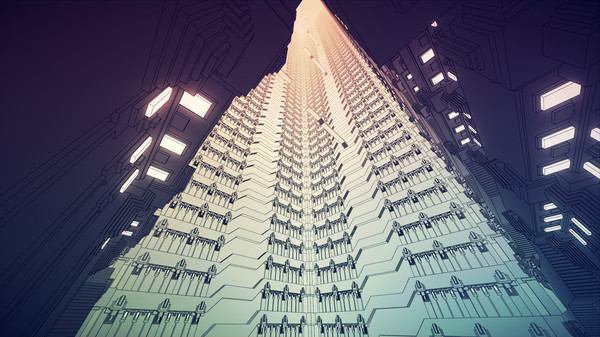 『Manifold Garden』(Steam公式スクリーンショットより)
経歴 — 風船に対するアレルギーから、無限の建築へ
日本語圏での知名度は高くないので、簡単に。Chyr は大学で物理学を学び、広告代理店や科学館の展示制作を経て、風船を素材にした巨大インスタレーションで知られる作家になった。「The wonderful thing with balloons is that it's a non-prohibitive medium」——数千個の風船をスーツケース一つ持って現場に行くだけで、70フィートの空間を埋められる。ところが本人はラテックスアレルギーを発症する。「My throat was starting to constrict, so I decided to stop」と語っている(Gamasutra 2015年10月16日 ↗)。
ガラスや布に移ろうとしたが、構造エンジニアと輸送費が要る。「I still wanted scale」——スケールを諦めたくない、しかし物理素材ではスケールを保てない。そこで彼が選んだのがゲームという媒体だった。転向のきっかけは『Indie Game: The Movie』を友人と観たことで、そこから Braid、FEZ、Journey を知る。「I had no experience making a game before, but I thought a game is just some art and design and programming. How hard can it be? Maybe I'll spend a few months」(AUTOMATON WEST 2021年 ↗)。
その「数か月」の練習プロジェクトが Manifold Garden になった。2012年開始、2019年リリース。「I was 25 when I started and I was 32 years old when I finally shipped it」と本人は言う。最初の3年は完全に一人、その後は人が出入りする回転扉のような2年があり、チームらしいチームができたのは2017年以降である。
哲学 — 「見えるものには、全部行ける」
複数の資料を横断して最も一貫しているのは、世界に嘘をつかせないという規範である。GDC 2016 のスライドで彼は、無限ワールドラッピングを導入した経緯を説明する際、自分に課した設計上の制約を二つだけ明示している。「1. everything the player can see, the player should be able to get to 2. no invisible colliders」(GDC 2016 スライド『Level Design with Impossible Geometry』 ↗)。屋外の遠景が空白だったこと、そしてプレイヤーが世界から落ちてしまうこと。この二つの別々の問題を、彼は見えない壁でふさぐのではなく、世界を無限に折り返すことで同時に解いた。
この規範は、プレイヤーへの態度としても現れる。Manifold Garden の序盤には、対岸のスイッチへ向かうために深淵へ飛び降りるしかない場面がある。ここでゲームは何も説明しない。「It was an intentional design decision to not give players any instructions for this part, and to let them make the decision to take the leap」と述べ、続けてこう言い切る。「It needs to be the player's agency that gets them to take the leap, and not an instruction from the designer」(Game Developer 2020年1月13日 ↗)。
同じ発想は、パズルの合否判定にも及ぶ。「A large part of designing puzzles is eliminating the 'bad solutions', especially if they're teaching the player the wrong thing」。彼にとって「悪い解法」とは難易度を下げる抜け道のことではなく、プレイヤーに誤った規則を教えてしまう経路のことだ。序盤のパズルは解が一つに絞られ、後半になるほど開かれていく——順序が明示されているのは、世界の規則を正しく教える段取りが優先されているからである。
こだわり — ナビゲーションを、建築で解く
作品を横断して繰り返し出てくる手法は、UI ではなく建築でプレイヤーを導くことだ。GDC 2016 で彼は、3-トーラス空間では「Height and Directions are meaningless」——高さも東西南北も参照点として機能しなくなると指摘し、それでも通用する手法として「Iconic parti(象徴的な全体構成)」「Logic to level」「Intentional architecture」「Patterns in architectural elements」の四つを挙げている。パルティは建築設計用語で、平面の骨格を指す言葉である。
この執着は具体的なルールに落ちている。「We had a rule that if you looked at the thumbnail of a level's layout, you need to be able to immediately recognize which level it was(eg "the diamond level" or "staircase level"). Otherwise, it was too complicated」。さらに屋内では、窓の配置で方向を示す。「Windows are placed along one side of each corner, and point in the correct direction」——正しい方向を向けば光が見え、間違った方向なら壁しか見えない。「It's a subtle element, and players might not even consciously register what's happening」(Game Developer 2020年 ↗)。
興味深いのは、彼が自分の作業の退屈さにも同じ執着を向けていることだ。窓を一枚作るのに1時間かかっていた頃を振り返り、「The thing with tedious processes is also not just the time it takes up. ... It also makes you mentally dread working on it, because it's just not fun」「Also, it meant I was reluctant to iterate. If a window was good enough, but not great, I would just leave it at good enough」と書いている(本人ブログ『Manifold Garden – State of Development』 ↗)。ツールを作るのは効率のためだけではなく、妥協しない自分を維持するためだったと読める。
失敗と乗り越え方 — 「exampuzzle」を全部捨てた
本人が公に語っている失敗のうち、設計上いちばん鋭いのは自作の造語にまつわるものだ。初期の Manifold Garden には、新しい概念を教えるためだけの練習問題が大量に置かれていた。「At the beginning, there were a lot of what I called 'exampuzzles', and they turned out to not be very fun at all. Even just me calling them that should be a sign」。プレイテスターは全員「やることが分かっているのに手を動かすだけで退屈だ」と言った。彼はそれらを全部捨て、「Now, every single puzzle highlights something interesting, and that's it. It's just focusing on that moment of discovery, and the puzzle isn't any harder than that」という方針に置き換えた(Gamasutra 2015年 ↗)。
二つ目は開発そのものの失敗である。「The hardest part of development for me was probably the middle of the project - around 2015. At the time, I still had a 'sprint' mentality, and was focused on having the game being done. There was no end in sight ... so it was very stressful and disheartening」。乗り越え方は精神論に近いが、本人は明確に言語化している。「It wasn't until I started to think of the project as a marathon that I started to enjoy the process」(Game Developer 2020年 ↗)。
三つ目は、人と働けなかったこと。「When I first started, I felt I needed to prove everything, I needed to do everything myself, but in 2017 especially working with Arthur, I realized that the game was so much better because of his input」。サウンドの Martin Kvale との初期の摩擦についても、彼は自分の側の問題として語っている。「I was so used to working by myself, and I wasn't good at communicating. ... But of course not, he's not a mind-reader」(AUTOMATON WEST 2021年 ↗)。
ジレンマ — 作品と商品、無限と迷子、完成と手放し
彼が最も早い時期から言葉にしている葛藤は、美術とゲームの職能の違いである。「With art, you make your thing, you have your artist statement, and then your job as an artist is done. But with designing a game, it has to be fun and entertaining. You have to make sure that everyone wants to get through it」(Gamasutra 2015年 ↗)。作品として成立させることと、他人に最後まで遊ばせることは別の仕事だ、という認識である。
第二のジレンマは、無限そのものが遊びづらさを生むことだった。「A common feedback we got from playtesters early on was that when the game worked, it worked really well. But in between, there was a lot of tedium. They were constantly lost」。だから「A major focus for us was minimize the time player spent feeling lost or confused」(Game Developer 2020年 ↗)。驚かせたいのに、驚きの合間を退屈にしないという相反する要求が、あの建築的ナビゲーション技法群を生んでいる。
第三に、作家性と事業。Epic Games Store と Apple Arcade の先行独占について、彼は理由を隠していない。「We wanted to have stability for the studio. ... My priority at that point was to ensure that we had stability, that we can continue to work on the game, and that we can pay back investors, and pay back the people who worked on the game」。そして完成そのものへの葛藤。「There are imperfections, there are flaws but I think they ultimately contribute to making the game what it is. It wouldn't quite be the same if every part of the game was exactly perfect like I wanted」(AUTOMATON WEST 2021年 ↗)。
影響源 — 本人が認めているものだけ
美術・映画・文学の側では、彼は列挙を惜しまない。「Works that have influenced Manifold Garden include the architecture of Frank Lloyd Wright and Tadao Ando, books like House of Leaves by Mark Z. Danielewski, Blame! by Tsutomu Nihei, and of course films like Inception, Blade Runner, and 2001: A Space Odyssey」(Game Developer 2020年 ↗)。建築については、安藤忠雄のブルータリズムとスケール、フランク・ロイド・ライトの細部を組み合わせようとしたと具体的に説明している。テクスチャも人工物もない世界でスケール感を出すには、細部が要るからだ。
M.C. エッシャーは中核である。GDC 2016 のスライドには『Relativity』『House of Stairs』『Cubic Space Division』が直接引用されている。本人によれば、初期タイトル Relativity はエッシャーの同名版画をそのままゲーム化する企図だった。「So the initial game was to make the M.C. Escher print called Relativity a game」。改題の理由も語られている。「Relativity was more about the mechanics. It would be like calling the game Gravity Changer」(AUTOMATON WEST 2021年 ↗)。
ゲームからの影響も本人が名指ししている。10年ぶりに遊んだのが Portal で、初期構成はそれを模していた。設計論としては Zach Barth の語を借りる。「I think Zach Barth [creator of Infinifactory] called it 'design based puzzles', and it's actually something that I build towards with my game」(Gamasutra 2015年 ↗)。Droqen の Starseed Pilgrim を「a big inspiration」と呼び、実際に2019年に Droqen を招いて終盤の設計を手伝ってもらっている。FEZ と The Witness も「some of my favorite games」であり、PSX で Jonathan Blow にビルドを送ってフィードバックをもらった経験を「a very formative experience」と述べている。
Kizuki の読み — 彼は「無限」ではなく「信用」を設計した
ここから先は本人の発言ではなく、私の解釈である。私は William Chyr を、無限を作った作家としてではなく、無限という素材が壊してしまう「信用」を、建築の手つきで一つずつ組み直した人物として読む。見えるものには全部行ける、見えない当たり判定は置かない、窓は正しい方向を向く、レベルはサムネイルで見分けがつく——これらはすべて、世界がプレイヤーを騙さないという約束の別名だ。飛び降りろと命じるかわりに黙って崖を置いたのも、同じ約束の一部だと私は読む。命じないことができるのは、世界を信用できるように作ったときだけだからである。
だから風船から無限へという転身も、私には断絶に見えない。スーツケース一つで70フィートを埋める素材と、レンダリングを500倍にしてでも遠景に「行ける場所」を置く設計は、どちらも「見た人が信じられる大きさ」を作る仕事だ。そして exampuzzle を全部捨てた判断も、marathon への切り替えも、他人の耳を信じるようになった2017年も、同じ方向を向いている。彼が七年かけて学んだのはおそらく空間の扱い方ではなく、自分以外——プレイヤーと同僚——を信用する速度の遅さそのものだった。「Too much manifold, not enough garden」と誰かに言われたとき、彼がその言葉を採用したという事実が、私にはいちばん彼らしく思える。
おわりに — どこから触れるか
この人を理解したいなら、まず Manifold Garden ↗ を序盤30分だけでも遊ぶのがいい。屋外に出て最初の崖に立ったときの逡巡そのものが、彼の設計思想の実演になっている。遊べない場合は、GDC 2016 のスライドを眺めるだけでも「不可能な幾何にどう手すりをつけるか」という主題は伝わる。
隣接する設計者としては、同じく「発明ではなく発見」という語彙を使う Marc ten Bosch ↗、空間の読み替えを主動詞にした Alexander Bruce ↗、そして Chyr 本人が影響源に挙げる Jonathan Blow ↗ と Zach Barth ↗ を並べて読むと、2010年代の一人称パズル系の語彙がどこから来たのかが見えてくる。
参考文献
本記事で参照した一次資料:
・Gamasutra / Game Developer「How Manifold Garden makes reality fold back on itself」2015年10月16日 ↗
・GDC 2016 スライド PDF: William Chyr「Level Design with Impossible Geometry」(本人講演) ↗(映像版: GDC Vault ↗)
・本人ブログ「GDC Talk, Portals, and World 002 WIP」2016年 ↗
・本人ブログ「Manifold Garden – State of Development」 ↗
・AUTOMATON WEST「Manifold Garden, the gravity-bending puzzle game, took 7 years to make [Developer interview]」2021年 ↗(日本語原文: AUTOMATON 2021年3月25日 ↗)
リアクション(ログイン不要)
匿名で残せます • 同じリアクションは1日1回まで
学ぶ — カリキュラム
関連シリーズ
デザイナーの哲学第40回 / 全63回