TAG
#designer-study
0 篇评论 · 63 篇随笔
相关随笔
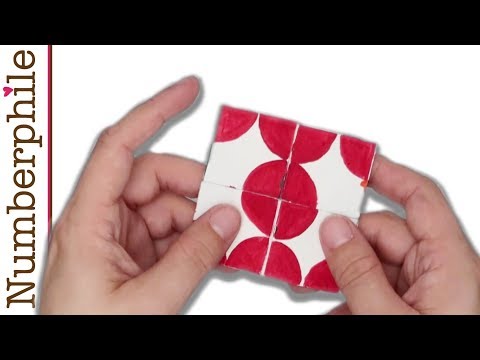
Inside Oskar van Deventer's Philosophy — Looking Nice Can Just Be an Accident
"They require the overcoming of difficulty. And some of them happen to look nice as well." The Dutch engineer behind 800-plus mechanical puzzles refuses to call himself an artist. Including the design he abandoned as impossible to manufacture — and that reached shelves eight years later.
Inside Cliff Johnson's Philosophy — Not One Piece That Doesn't Belong
"A puzzle begins with a 'huh?' and ends with an 'aha!'" Cliff Johnson, who built The Fool's Errand in 1987, refused to plant a single red herring — and spent 25 years on the sequel. A reading of that vow, in his own words.
Inside Brian Moriarty's Philosophy — A Game Author Who Says Games Aren't Art
"Art seeks to lead you to an inevitable conclusion, not a smorgasbord of choices." Brian Moriarty, author of Loom and Trinity, wrote that in his 2011 GDC lecture and concluded that his own medium cannot be art. Reading three of his lectures and three interviews: his philosophy, his obsessions, the failures he admits, his dilemmas and his models.
Inside Gunpei Yokoi's Philosophy — Let the Viewer Fill In the Rest
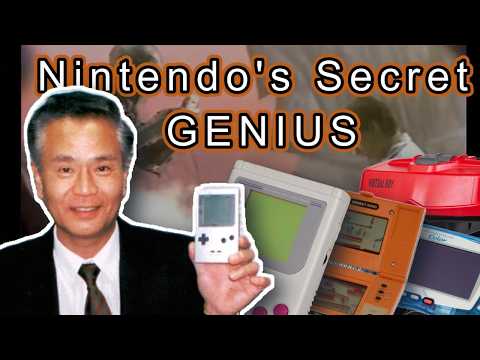
"Whether a game is interesting or not doesn't depend on whether it's color or b&w." Gunpei Yokoi's design philosophy nearly fits in that one sentence. Reading three interviews from 1996 and 1997 with the engineer who shipped a monochrome Game Boy — and, in 1980, a mechanical puzzle called Ten Billion — this piece lines up his philosophy, his obsessions, the failure he admitted in public, his dilemmas, and his yardsticks.
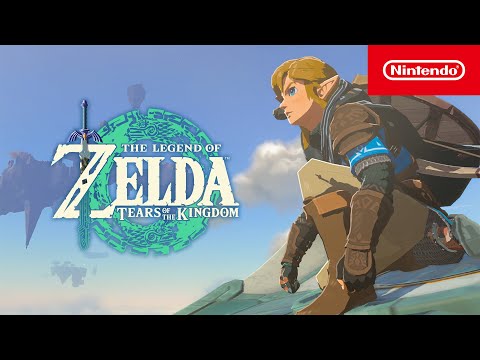
Inside Eiji Aonuma's Philosophy — Refusing to Let a Puzzle Have One Answer
"There are many answers to a single problem, and all of them can potentially be correct." That is Eiji Aonuma in 2023, after more than 25 years leading The Legend of Zelda. Yet in 2015 the same man was telling his staff never to make the game easier. Reading across six of his own interviews for his philosophy, his obsessions, the failures he has admitted in public, his dilemmas and his influences.
Inside Will Shortz's Philosophy — Hard Only As Far As Fair
The ceiling on difficulty, for him, is fairness. Will Shortz, crossword editor of The New York Times, has published a puzzle almost every day for more than thirty years. Reading across ten of his own interviews, lectures and broadcasts for his philosophy, his obsessions, the failures he has admitted in public, his dilemmas and his influences.
Inside Chris Crawford's Philosophy — Drawing Puzzles Outside the Line, Then Counting His Own Defeats
"Puzzles are challenges with no purposeful opponents." The shortest definition of a puzzle was written by Chris Crawford, the man who almost single-handedly started the field of game design writing. That definition placed puzzles outside of games — and forty years later he wrote, in his own words, that he had failed. Reading across his journal, his laws, his memoirs, his design diary and his talks for his philosophy, obsessions, failures, dilemmas and influences.
Inside Thomas Grip's Philosophy — Rewriting Puzzles from Obstacle to "I Did That"
A horror developer wrote a seven-part series about puzzles on his own blog. He argued that focusing on fun makes design fail, that trial and error will doom games, and he named his own failed puzzles out loud. Reading across his blog and interviews for Thomas Grip's philosophy, obsessions, failures, dilemmas and influences.
Inside Martin Gardner's Philosophy — Turning What He Didn't Know Into Care for the Reader
A philosophy graduate with no mathematics degree wrote a puzzle column for 25 years and carried everything from pentominoes to the Game of Life out into the world. He kept saying he was "strictly a journalist." Reading across his interviews and autobiography for Martin Gardner's philosophy, obsessions, regrets, dilemmas and influences.
Inside Mark Brown's Philosophy — He Saw Every Criticism Coming, and Shipped Anyway
A critic who had spent a decade analysing other people's game design finally made a puzzle game of his own. When the complaints arrived, he said he had seen all of them coming. Reading six of his own devlogs for his philosophy, obsessions, failures, dilemmas and influences.
Inside Dave Grossman's Philosophy — Let the Player Be the Clever One
"Your job is not to make yourself feel clever, it's to make the player feel clever." Dave Grossman has said it for thirty years — and rather than leave it a slogan, he sat his mother-in-law down with his own game and published every place she got stuck. A reading of his philosophy, obsessions, failures, dilemmas and influences across seven sources.
Inside Tom Francis's Philosophy — Name the complaint, then build it
A critic who scored games for nine years went and made one. In his own words, his process is to play a game, name what he wishes were different, and build that. Across fourteen posts, talks and interviews, I read his philosophy, obsessions, failures, dilemmas and influences.
Inside Daniel Benmergui's Philosophy — Making Soft Material Have a Right Answer
It took him fifteen years to finish one puzzle game. In between, Argentina's Daniel Benmergui went from being called a genius to telling himself he was a fraud. Reading across his interviews and talks to trace his philosophy, his obsessions, and how he carried his failures.
Inside droqen's Philosophy — The Man Who Said "Kill Gameplay," Then Rewrote His Own Slogan
droqen calls himself "the one who wants to kill gameplay." In the summer of 2025 he rewrote that slogan himself. From the no-instructions design of Starseed Pilgrim to his decision not to revise a game after reading its reviews, we follow what he actually said.
Inside Tim Schafer's Philosophy — Make Being Stuck the Fun Part
A study of Tim Schafer, built only from his own interviews and the design document he published himself. He calls the point of an adventure game "happy confusion" and says you have to make the stuckedness entertaining. The same man graded his own Grim Fandango puzzles as "mean, even" ten years later, and twenty years later shipped an invincibility toggle. Laying two decades of his statements side by side to find what he is actually protecting.
Inside Keita Takahashi's Philosophy — The Mechanic of Adding No Mechanics
A study of Keita Takahashi, the creator of Katamari Damacy, built only from his own words. In late 2025 he said himself that his new game to a T "didn't sell well," and moved his family back to Japan. Yet back in 2009 he was already saying he felt unsuited to the games industry. This is a reading of why he kept making things anyway, assembled by laying twenty years of his statements side by side.
Inside Toru Iwatani's Philosophy — Build a Maze, Then Hide That It Is One
A study of Toru Iwatani, the designer who planned Pac-Man (1980), built only from his own lectures and interviews. He made a maze game and then drew the maze walls as thin outlines so players would not notice it was a maze. He says to think by subtraction, he gave the same account of difficulty pacing in 1986 and in 2015, and in 2011 he scolded the industry for a flood of very simple games. A man who built the outer limit of simplicity criticising simplicity: this is an attempt to line that apparent contradiction up and read it.
Inside Simon Flesser's Philosophy — Move the Difficulty Out of the Controls and Into the Puzzle
A study of Simon Flesser of Simogo — the studio behind DEVICE 6 and Lorelei and the Laser Eyes — built only from his own interviews and the studio's own words. He says he wanted anyone who had never held a controller to be able to play, and in the same breath calls his puzzles very difficult. This is a reading of where he moved the difficulty to, laid out by putting his 2013 statements next to his 2024 ones.
Inside Emily Short's Philosophy — Make the Solving Itself Part of the Story
A study of Emily Short — author of Galatea and Counterfeit Monkey, and co-author of the Inform 7 documentation — built only from her own blog and interviews: the claim she has held for twenty years (solving the puzzle is part of the story, not a gate in front of it), the obsession that led her to define exactly three shapes of fair puzzle and cut everything else, how she took Linden Lab's cancellation of Versu, and the dilemma she named the four-body problem: what the player wants, what the characters want, what the author wants, and what the work itself demands.
Nicky Case 的哲学 — 不交出答案,让人爱上问题
本文仅依据本人的博客与演讲,考察『Parable of the Polygons』『The Evolution of Trust』的作者 Nicky Case。十年未曾动摇的主张“不交出答案,让人爱上问题”;把说明变成解谜的执着;『We Become What We Behold』原型阶段“被理解了,却什么都没被感受到”这一失败;靠陌生人支付生活费、同时保持诚实这一两难;以及 Bret Victor、Vi Hart、Ian Bogost 这三位本人公开承认的影响源,一并解读。
Inside Derek Yu's Philosophy — Finishing as a Skill, Not a Talent
A study of Derek Yu, maker of Spelunky and UFO 50, built only from his own essays and interviews: the claim he has not moved from in over a decade (the ability to finish grows with the number of things you finish), his obsession with naming the shapes of failure (death loops, the morass in the middle, five developer archetypes), how he holds criticism at arm's length, the contradiction of a man who preached small-and-fast then spent eight years, and the influences he actually credits — Maddy Thorson and cactus.
Inside Andrew Plotkin's Philosophy — Folding a Solved Puzzle Into a Single Move
A study of Andrew Plotkin (Zarf), the parser interactive-fiction author, built only from his own talks and interviews: the claim he has not moved from since 2003 (puzzles are an underpinning of story, not an interruption of it), his obsession with play that zooms out — a solved puzzle folded into a single move in a larger puzzle — his own accounts of failure at Hadean Lands and at outreach, the dilemma of accessibility against hardcore design, and the influences he actually credits, from a teletype in his father's office to Powers of Ten, Hofstadter and Cliff Johnson.
Inside Raph Koster's Philosophy — The Moment a Game Is Solved, It Becomes a Puzzle
A study of Raph Koster—author of A Theory of Fun for Game Design and designer of Ultima Online and Star Wars Galaxies—built only from what he has published himself. We read the claim that has barely moved in twenty years (fun is progress on prediction), his obsession with the game/puzzle boundary and the moment a solved game falls to the puzzle side, his first-person accounts of failure at SWG, Metaplace and UO, the dilemma of whether depth is ever rewarded, and the influences he actually credits, from modernist literature to the MUD-Dev list.
Inside William Chyr's Philosophy — making infinity a place you don't get lost in
A study of William Chyr, who spent seven years building Manifold Garden, assembled only from what he has said in public. The balloon installation artist driven into games by a latex allergy. His two constraints: everything visible is reachable, and no invisible colliders. His insistence that the leap must come from the player's agency, not the designer's instruction. The coinage he threw out — "exampuzzles". The 2015 slump and the switch from sprint to marathon. The dilemma between authorship and keeping a studio alive. And the influences he names himself: Escher, Tadao Ando, Frank Lloyd Wright, Portal, Starseed Pilgrim. Six primary sources, closing with Kizuki's own reading.
Inside Ernő Rubik's Philosophy — insisting it was found, not invented
A study of Ernő Rubik built only from what he has said in public. The 1974 wooden prototypes that all fell apart. The month-plus it took him to solve his own object. The vocabulary he keeps returning to — "the cube was not created as a puzzle; I discovered the potential of a puzzle." His view that rules are to be exhausted rather than broken. The slogan about unsolvable problems that he retracts in the same breath. His distance from his creation's fame. And the influences he does name: his father's glider designs, and Mother Nature. Seven primary sources spanning 2010 to 2024, closing with Kizuki's own reading.
Inside Ken Wong's Philosophy — a whole world inside one frame
A study of Ken Wong — lead designer of Monument Valley and creator of Florence — built only from what he has said in public. Starting production on the assumption that "70, 80, 90 percent" of the work will be thrown away. The "little worlds" rule that no puzzle information leaves the screen. Illusions built like magic tricks. His admission that the team lacked the vocabulary to discuss music, and the anxiety during Florence about wasting someone else's money. The line he drew for himself on representation. And his 2019 restatement that his most famous game is not a puzzle game at all. Ends with Kizuki's own reading.
Inside Scott Kim's Philosophy — making the right answer belong to the solver
A study of Scott Kim — ambigram artist and designer of Bejeweled 2's puzzle mode — built only from what he has written and said in public. The asymmetry hidden in his two-line definition. His design rules: build a good toy first, and never let the controls be the difficulty. The defeats he keeps describing in mathematics education, and his turn from stick to carrot. The dilemma he names himself: how to put the thrill of competition back into a solitary act. Closing with Kizuki's own reading.
Inside Andrew Shouldice's Philosophy — designing the time before you understand
A study of TUNIC's Andrew Shouldice built only from what he has said in public. The three phases of a secret from his GDC 2023 talk — ignorance, knowledge, understanding — and his statement that the middle one interests him most. The policy that framing communication as a mystery makes "the revelation all the sweeter." The reviewer who beat the final boss in No Fail Mode, and the exception he added afterwards. Why refusing to filter players by difficulty was a definitional matter rather than a kindness. Ends with Kizuki's own reading.
Inside Terry Cavanagh's Philosophy — he starts by assuming it won't sell
A study of Terry Cavanagh — who has sold exactly three games — built only from what he has said in public. The 2017 line: he always starts off assuming it will be a freeware game. The habit of tuning difficulty to his own reflexes. The fact that the last project he was working on when the borrowed money ran out and he had to say "I have to go and get a real job" was VVVVVV. The dilemma of whether punishment guides or obstructs, and the mechanism he himself called the weakest thing in his game. Closes with Kizuki's reading.
Petri Purho 的理念——因为创造力无法评分,所以交给世界去判断
凭借《Crayon Physics Deluxe》获得 IGF 大奖,并在次年的 GDC 演讲上亲自批判自己作品的 Petri Purho,本文仅依据他本人公开发表过的言论进行考察。「不是寻找正确解的游戏,而是寻找创造性解法的游戏」——这句十二年未变的话。每月做一款原型这种近乎自我惩罚的习惯。未能检测出创造力的那场败北、克隆风波,直至在《Noita》中断言「模拟有可能妨碍乐趣」为止。最后以 Kizuki 的解读收尾。
Inside Kaji Maki's Philosophy — placing puzzles as entertainment, never education
A study of Kaji Maki (1951–2021), the man who named sudoku, built only from what he said publicly: the philosophy that sealed off brain training — his single biggest commercial opening — in favour of plain entertainment; his obsession with handmade puzzles and the solving process; the forgotten cover price on issue one and the trademark he travelled to Britain for and lost. It covers the dilemmas of reach versus revenue and a small company facing global demand, and closes with Kizuki's reading.
Inside Asher Vollmer's Philosophy — loading years of depth into a single swipe
A study of Asher Vollmer, creator of Threes!, built only from his own words: the longevity design that stretches 'simple to learn, impossible to master' across years, his obsession with keeping placeholder art pretty, the cloning episode where he blamed himself for not going free and then recovered his pride, and the efficiency-versus-rest dilemma. It closes with Kizuki's reading.
Inside Jakub Dvorský's Philosophy — Dropping Words, Building a World You Can Touch
A study of Amanita Design founder Jakub Dvorský, read across primary interviews in Adventure Classic Gaming (2009), MCV/DEVELOP (2011), bounthavy (2020) and TouchArcade (2024). It traces the origin of his wordless design, his obsession with atmosphere and hand-drawn worlds, his aim to build 'an interactive toy' you keep playing rather than a puzzle you defeat, his dilemmas of kindness versus difficulty and commerce versus authorship, and the Czech animation and science-fiction he himself names as influences — grounded only in what he has said in public.
Inside Frank Lantz's Philosophy — giving weight to the abstract
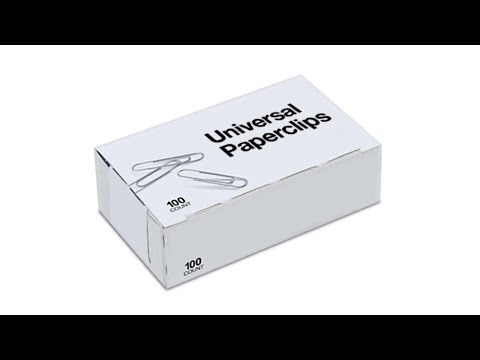
A study of Frank Lantz, founding chair of the NYU Game Center and maker of Universal Paperclips and Drop7, drawn from his own essay The Truth in Game Design (2010), a long Thought Economics interview (2024), PC Games Insider (2017), and his own notes on his work. Grounded only in his public statements, it reads his philosophy of games as an art of systems and as psychology experiments we run on ourselves, his obsession with embodying abstract ideas, the failure of Bite Me answered by "solving it all too well" in Leviathan, the dilemma of comfort versus truth, and the influences he acknowledges himself — Bostrom, Stapledon, Wittgenstein and von Neumann.
Michael Brough 的哲学 —— 缩小棋盘,只留下选择
本文从四篇本人访谈出发,考察《868-HACK》《Imbroglio》《Cinco Paus》的作者、“Broughlike”这一流派名称的由来——出身新西兰的设计师 Michael Brough(迈克尔·布拉夫)。我们将读到:棋盘越缩小,设计反而越自由的悖论;削去多余、直抵单一机制核心的执念;因野心过大而搁浅的未完成 roguelike 这一失败;商业性与作者性之间的两难,以及对暴力的不安;还有数学与 Rogue 这两大灵感来源。
Inside Jason Rohrer's Philosophy — playing life and death through constraint
A study of Jason Rohrer, who with the five-minute Passage told a whole life and death through rules, drawn from three interviews: Critical Inquiry (2011), Handmade Pixels (2017) and Gamasutra (2011). Grounded only in his public statements, it reads his philosophy of speaking through interaction rather than narrative, his obsession with turning constraint into an expressive tool, the failure of trying to eliminate tedium and his change of heart toward "punishment," the dilemma of highbrow versus accessible, and the influences he acknowledges himself — Rod Humble, Raph Koster and Scott McCloud.
Inside Hiroyuki Imabayashi's Philosophy — The Cargo That Blocks Its Own Removal
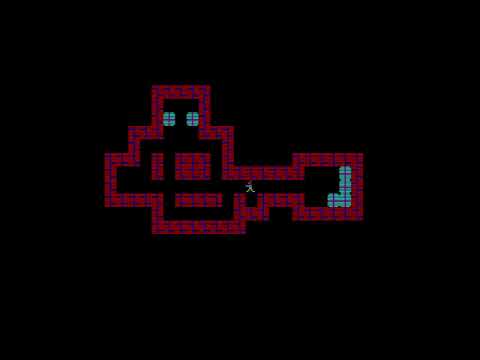
A study of Hiroyuki Imabayashi, creator of Sokoban (1982), drawn from three primary sources: his own greeting on the official site, a 1983 LOGiN magazine interview (in translation), and a long 2020 conversation with collector Carlos Montiers Aguilera. His consistent claim that 'the fun of the stage is the whole point,' his fixation on cargo that obstructs its own tidying, the failure and criticism around 'breakable walls' and how he answered it, the puzzle-versus-gimmick dilemma he named himself, and the Hudson action game that sparked the idea — all grounded only in his public statements.
Inside Marc ten Bosch's Philosophy — Discovered, Not Invented
A study of Marc ten Bosch, author of Miegakure and 4D Toys, drawn from his own blog, his 2011 Indiecade talk, an NYU Game Center interview, and a Gamasutra IGF interview: his consistent 'discovered, not invented' philosophy, his discipline of narrowing to a single button, his use of mathematics as a design tool, the failures he has voiced, the dilemma of correctness versus beauty, and his acknowledged debt to Flatland — grounded only in public statements.
Inside Jon Ingold's Philosophy — Keeping the Story Alive by Letting You Keep Failing
A study of inkle's Jon Ingold through his interviews and his own essays. We read the philosophy behind 'the job of a designer is to replicate the feeling of the experience', his insistence on embedding deduction in dialogue rather than a UI, and his obsession with letting the player 'fail forward' — neither losing nor winning, but squeaking through.
Alexey Pajitnov 的哲学——制造秩序的游戏,绝不让它结束
跨越 Tetris 之父 Alexey Pajitnov 本人的多篇采访做一次考察:游戏是心理产物的哲学、对学习曲线与随机性的执着、耗时十年仍未攻克的多人对战、强度与"不结束"之间的两难,以及五格骨牌这一影响源头。将他解读为一位只守护核心、放手表层的设计师。
Inside Jason Roberts's Philosophy — Turning the Space Outside the Frame into a Playground
A study of Jason Roberts — who made Gorogoa, drawing and coding almost all of it alone — drawn strictly from his own GDC talk and interviews: a philosophy of the 'frame' born from an abandoned comic, the obsession of a visual acrostic that gives everything two faces, the failure of a man who thought he couldn't finish anything, the commerce-versus-authorship dilemma that meaning must be real, and influences from Escher to a puzzle book (Maze) he never solved. It closes with one paragraph reading him as a designer who believes in the outside of the frame.
Inside Kim Swift's Philosophy — Manipulating the Player Into Feeling Clever
"After people play our game, I want them to feel clever." That is how Kim Swift describes designing Portal. She is a designer who bet not on hard puzzle walls but on invisible guidance — steering the player's eye and feelings without them noticing. Her philosophy, obsessions, failures (a boss fight that died three times), dilemmas and influences, read through her own interviews and a GDC postmortem.
Inside Ron Gilbert's Philosophy — Never Waste the Player's Time
"What makes most games tough to play is that the puzzles are arbitrary and unconnected." Ron Gilbert wrote that in 1989 while designing Monkey Island. This is a study of the man widely regarded as the finest thinker on adventure-game puzzle design — his philosophy, his obsessions (the Puzzle Dependency Chart), his failures (Maniac Mansion), his dilemmas and his influences — read through his own essays, blog and interviews.
Kyle Gabler 的哲学——骨骼最少,皮肤最多
仅凭本人的文字,解读『World of Goo』与『Human Resource Machine』的作者Kyle Gabler。把20年前那篇传奇论考《如何在7天内制作一款游戏》与为数不多的几次访谈并列阅读,便会浮现出「复杂性对趣味而言并非必需」「先做玩具」这一贯彻始终的态度。本文考察他既是一个做减法的人、又是一个堆砌过量反馈(juice)的人,这两面之间的张力。
Inside Fumito Ueda's Philosophy — Subtracting Toward Emotional Space
A reading of Fumito Ueda, creator of ICO, Shadow of the Colossus, and The Last Guardian, drawn from four of his own interviews. What did the man behind "design by subtraction" actually remove, and what was he trying to keep? His philosophy, obsessions, failures, dilemmas, and influences, grounded only in his own words.
Inside Bennett Foddy's Philosophy — Designing Failure to Fight Meaninglessness
A study of Bennett Foddy (QWOP, Getting Over It) drawn strictly from his own interviews and blog: a philosophy that starts from the paradox that "games don't matter," the obsession of cataloguing frustration by "flavor," his admission that he couldn't beat his own game, the dilemma between encouragement and taunt, and influences from Sexy Hiking to the unfair old games of his childhood. It closes with one paragraph reading him as a designer who fights the absence of meaning.
Zach Gage 的哲学 —— 把大家都知道的游戏,重新做一遍
本文仅以 Zach Gage 本人的访谈为依据,考察《SpellTower》《Really Bad Chess》《Good Sudoku》《Puzzmo》的作者 Zach Gage:他重新构建人尽皆知的经典之作的设计思想、源自平面设计的“三次视线”与动手制作的原型、闯入自己讨厌的类型这一习惯、拒绝无限投入的伦理与对概率的处理方式,以及从母亲的报纸、Spelunky,到反面教材 Sid Meier 等影响来源。最后,我会用一段篇幅添上自己的一点看法:把他读作“走出画廊的观念艺术家”。
Inside Greg Lobanov's Philosophy — Making Creation, Not Combat, the Main Verb
A study of Greg Lobanov (Wandersong, Chicory). Building his games around creation — singing, drawing — as the main verb, he makes puzzles and story work without combat. His philosophy, obsessions, failures, dilemmas, and influences, read strictly from four of his own interviews.
Inside Alexander Bruce's Philosophy — Doubt conventions down to their reasons
A study of Alexander Bruce, author of Antichamber, based only on his interviews and GDC talks: a philosophy of doubting conventions down to their reasons, an obsession with removing death and menus, candid failures and pivots, the dilemma of when to stop iterating, and his acknowledged influences.
埃里克·夏伊的哲学——把不足,转化为留白
本文基于2011年的GDC事后剖析演讲与多篇采访,考察《Another World(另一个世界)》的作者埃里克·夏伊(Eric Chahi)。内容涵盖他把制约转化为即兴创作的方法论、押注于玩家记忆的设计、如暗示与标点般的演出手法,以及他本人谈及的失败与两难处境,还有他的影响源——一切均只依据公开发言进行解读。
Zach Barth 的哲学——留下的不是解,而是诚实的问题
本文从本人撰写的复盘文章与访谈出发,考察『SpaceChem』『Opus Magnum』的作者 Zach Barth(Zachtronics)。内容涵盖他对开放式解、直方图、GIF 的执着,他亲自解剖的『SpaceChem』的失败,易上手与本格取向之间的两难,直到那句「不想被同一件事束缚住」的告别之言——全部仅以他本人的公开发言为依据来解读。
Daniel Mullins 的哲学 — 把画框翻过来的人
从本人访谈与GDC事后总结演讲出发,考察以《Inscryption》闻名的Daniel Mullins。本文只以公开发言为依据,解读他『在规则之外抓住玩家』的哲学、对颠覆预期的执着、他自认的失败——难度调节,以及『背叛』本身变成招牌风格所带来的两难。
Inside Daniel Cook's Philosophy — Fewest Rules, Return to the Human
A study of Daniel Cook (Danc)—maker of Triple Town and Cozy Grove, and author of the design blog Lost Garden for over twenty years—drawn from four of his own signed essays. We read his early idea of dissecting play into 'skill atoms', his obsession with the 'evergreen puzzle' that yields the most play from the fewest rules, his publicly told failures (a collapsed MMO, being cloned), the paradox of a 'puzzle-hater' who keeps building puzzle-like systems, and his arc from trust in systems toward a wariness about filtering out our humanity.
Sam Barlow 的哲学——抛弃容器,在观众脑中上演故事
以Sam Barlow 的本人访谈与 GDC 演讲为依据,考察这位《Her Story》的设计者。"抛弃容器"哲学、对真实表演与检索型结构的执着、花费三年后被取消的项目这一职业最大失败及其升华、放弃控制的两难,以及影响来源——仅凭公开发言加以解读。
Inside Maddy Thorson's Philosophy — Keep It Hard, Make It Kind
A study of Maddy Thorson (TowerFall, Celeste) built from her own blog, interviews, and GDC talk: a philosophy of keeping difficulty while making it kind, an obsession with fudging things "a little" in the player's favor, and the dilemma of authorial intent versus letting go.
Patrick Traynor 的设计哲学——将设计视为发现而非发明
通过 Patrick Traynor 本人的访谈与 GDC 2024 演讲,考察这位独自完成《Patrick's Parabox》的制作者。他将递归称为「宇宙角落里的真实」,将自己定位为发现者而非发明者;本文聚焦其设计思想、对「可接触性」的执着、难度曲线与规则制定上的失败与突破,以及发现者的伦理。
Stephen Lavelle 的哲学 — 以「不解释」为作品
「Nah I don't feel like it(不,我不想说)」——面对玩家希望他解说自己作品设计的请求,Stephen Lavelle(increpare)只给出了这样简短的回答。这位为独立游戏开发者做了免费拼图引擎 PuzzleScript、并凭一己之力制作了被誉为《史上最难的索科班》的《Stephen's Sausage Roll》的开发者,500多部作品中的大多数都以免费形式公开发布。本文通过分析本人的博客与采访,考察其工作方式与哲学。
Alan Hazelden 的哲学 — 先大量制作,为「思考」命名
「制作优秀游戏最有效的方法,是先大量制作并不优秀的游戏」——伦敦谜题作家 Alan Hazelden(Draknek)持续创作着不依靠文字、仅靠关卡配置来传授机制的「thinky」谜题。从本人的发言解读其哲学、执着、失败、两难困境与影响源。
杰佩·卡尔森的哲学 — 谜题建于「信任」之上
横读杰佩·卡尔森(《Limbo》《Inside》首席玩法设计师、《COCOON》之父)三篇本人访谈的考察。他以「信任」与「可玩性」为一贯哲学、以简单抵消复杂的手法、忍痛删减心爱内容之苦,以及他承认的任天堂与 Playdead 影响,皆仅以核对过原文的发言加以追溯。
水口哲也的哲学 — 设计的是感官,而非类型
横读水口哲也(Rez、Lumines、Tetris Effect 之父)四篇本人访谈的考察。他设计感官而非类型、以「让人落泪」为终点的一致哲学,给经典加什么的两难,以及从康定斯基到一夜音乐节的影响来源,仅以核对过原文的发言加以追溯。
Arvi Teikari 的哲学 — 因为想惊吓玩家,所以让规则本身来玩
「对我来说最大的动机,就是单纯想做自我表达」——芬兰个人开发者 Arvi Teikari(Hempuli)以《Baba Is You》——把规则当作单词方块摆在盘上、再让玩家自己改写——让世界吃了一惊。本文从他本人的发言里读他的哲学、坚持、失败、两难与影响来源。
Lucas Pope 的哲学 — 没有问题,就没有兴趣
「没有问题,我就没什么兴趣。可一旦有约束、有限制,兴趣就突然来了」——Lucas Pope 始终把自己称为「工程师」。把平凡的工作反转、削掉、把剩下的交给玩家的想象力。本文从他的访谈与讲座中读他的哲学、坚持、失败、两难与影响来源。
Jonathan Blow — 揭示真相的装置,与不肯让步的意义
说着「游戏是揭示真相的装置」,却对自己的作品断言「连一个词都已经定好意义」。本文从本人访谈与讲座里,读 Jonathan Blow 的哲学、坚持、两难、代价与影响来源。